


Published Jan 22, 2026 | 11:26 AM ⚊ Updated Jan 22, 2026 | 12:06 PM

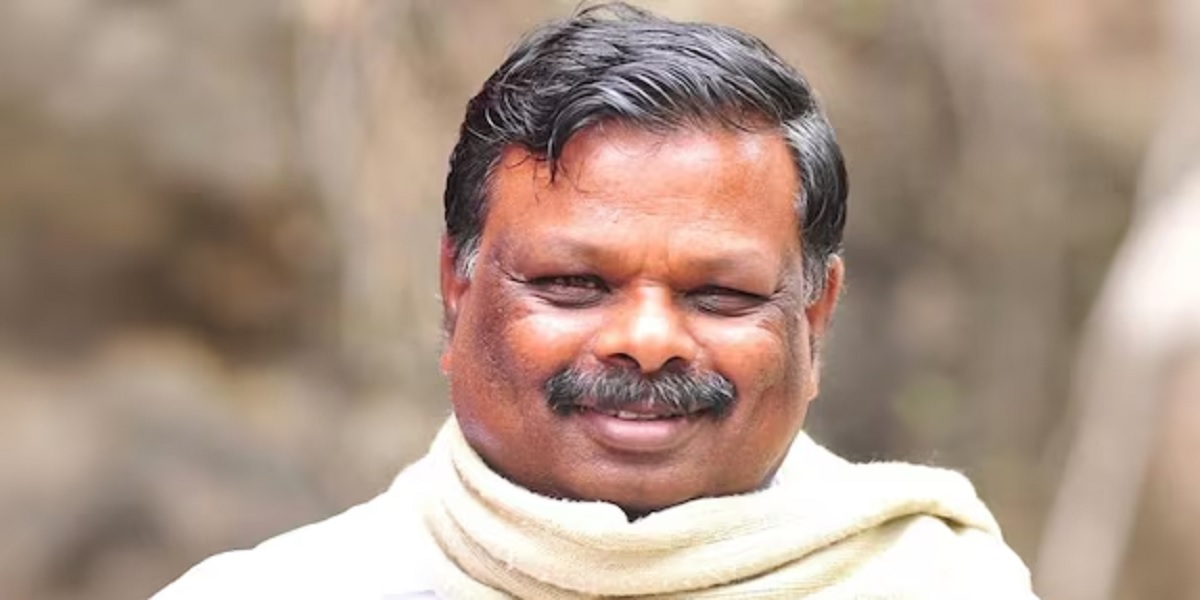
S Rajendran
Synopsis: Former CPI(M) leader and three-time Devikulam MLA S Rajendran has joined BJP, marking a major shift in Kerala’s plantation belt. Once a grassroots organiser among tea estate workers, Rajendran cites CPI(M)’s neglect of worker leaders and stalled welfare projects as reasons. He plans cooperative initiatives, stresses development over ideology, and seeks to consolidate support among Tamil-speaking and plantation communities.
After Aisha Potty’s recent switch from CPI(M) to Congress, another senior Left leader from Kerala’s high ranges has crossed over—this time to BJP. S Rajendran, once a prominent CPI(M) face in Idukki district, has formally joined the saffron party, marking a significant political shift in the plantation belt.
Rajendran was a three-time MLA from the Devikulam Assembly constituency, representing CPI(M) in 2006, 2011, and 2016.
He was regarded as a strong grassroots leader, particularly among tea estate workers and the Tamil-speaking minority population in the high ranges of Idukki. A close aide of CPI(M) veteran and former minister MM Mani, Rajendran was once considered one of the party’s most influential district-level leaders in the region.
In a conversation with South First, Rajendran outlines his political plans and speaks about his ambition to ”bloom the lotus” in the high ranges of Idukki.
Q: You began your political career as a leader of plantation workers. Communist ideology traditionally connects easily with workers. After shifting your loyalty to BJP, is it easy to convince them to accept a new ideology?
A: I thought deeply about this question for a long time—especially about how I would convince my people. I travelled on the same political track for nearly 40 years. Suddenly, I cannot change every quality of the ideology I developed over decades.
For a worker, economic development and improvement in quality of life are the primary ideologies. Earlier, I fought for the rights of the working class, and that fight will continue. But today, people are fed up with endless struggles without results.
I did not change my political loyalty overnight or in a few days. I waited for nearly five years, hoping for a positive response from the CPI(M), but it never came.
Q: What specifically made you lose faith in the CPI(M) and finally decide to leave?
A: When I was young, leaders like V Abdul Khader, Sundara Manickam, Manickam, Vaikundam, Balraj etc, were prominent figures in the high ranges. Except Abdul Khader, have you heard any of these names?
They received no recognition from the party. After extracting the fruits of their hard work, the party sidelined them. They were ignored and passed away without appreciation. I witnessed their pain and struggles closely. That is when I became certain that I, too, would end up like them.
I waited for justice from the party, but it was denied.
Today, protests for workers’ rights in Kerala’s plantation sector are almost paralysed due to the lack of leaders to guide them. The Pombalai Orumai protest gained momentum, but what happened to the promises made?
Once, trade unions were active and workers trusted them. Now, trade unions have lost their relevance. Interaction between workers and leaders has reduced, and trust in the system has eroded. This was a crucial point that made me consider joining BJP.
Even basic rights of plantation workers are being denied, and the new generation has started echoing this frustration.
Q: Plantation housing (layams) and man-animal conflict remain unresolved in highranges?
A: There was an LDF project aimed at improving the lives of plantation workers living in layams. The agreement was that plantation companies would bear half the cost of new houses and the government the other half. But the project stalled, citing a lack of funds.
When I discussed this issue with Rajeev Chandrasekhar and explored the possibility of linking the project with the Plantation Corporation and central government funds, he gave a positive response. Proper fund allocation alone can significantly improve the lives of plantation workers.
Another major issue is man-animal conflict, which has not been addressed effectively so far.
Pinarayi Vijayan recently criticised the Wildlife (Protection) Act, 1972—enacted during Indira Gandhi’s Congress rule saying it is too rigid and obstructs solutions to the rising human–animal conflict. In 1977, AK Antony intervened to find solutions. Even now, Kerala is demanding amendments from the Centre.
Since the Act is a central law, the State keeps shifting the blame instead of finding practical solutions. I am not choosing any hate politics. I am choosing a politics that promises solutions to these struggles.
Q: You had earlier spoken about forming a society to address the welfare needs of plantation workers. What is the current status of that project?
A: The society is being planned as a multi-cooperative organisation, and we are preparing for its inauguration on 30 January. It will function as a sister concern of the BLM Housing Society, as we currently lack the funds to operate it independently.
BLM will extend financial assistance not only to plantation workers but also to others in need.
The organisation is active across Tamil Nadu, Kerala and Puducherry, focusing on affordable housing and broader social welfare initiatives. A Union minister is also expected to attend the inaugural ceremony.
Also, the formal BJP membership-taking ceremony is scheduled for 8 February, and it will be held in the presence of other local party leaders.
Q: When Aisha Potty joined Congress, she faced criticism. Similarly, MM Mani said Rajendran’s decision would not affect the CPI(M). How do you see this kind of criticism?
A: I am not criticising them back. What they say comes out of pain. When someone who has worked for a party for decades suddenly changes loyalty, it naturally hurts—both politically and personally. We once shared a strong bond, and my decision was not taken for personal gain.
Q: You have so far enjoyed the support of both the Parayar and Pallar communities in the Devikulam Assembly constituency. Are you confident they will stand with you if you contest on an NDA ticket as well?
A: They will stand with me, whether I contest or not. People ultimately look at whether we are able to deliver on the promises we make.
UDF has done nothing for them, and LDF has also failed to keep its promises. So this time, they are definitely looking for a change. There is no rule that people must choose only between LDF and UDF—we have other options too, and people know that very well.
Q: For a border constituency like Devikulam, which also has a significant Tamil population, have you faced pointed comparisons from people between Tamil Nadu and Kerala politics?
A: It is not appropriate to directly compare the politics of Tamil Nadu and Kerala, as each has evolved under different social and political contexts. Traditionally, Kerala politics has been shaped more by ideological loyalty, while Tamil Nadu politics followed a different model.
However, in the post-Modi era, politics in both states has undergone visible changes. Today, governments in both Kerala and Tamil Nadu started focusing on welfare initiatives and development-oriented governance rather than old political patterns.
Q: Have your differences with A Raja MLA been resolved? Earlier you were suspended from CPI(M) over allegations that you attempted to defeat him in the 2021 Assembly elections.
A: No. I don’t wish to have any association with him anymore.
(Edited by Amit Vasudev)


