

Published Feb 18, 2026 | 8:00 AM ⚊ Updated Feb 18, 2026 | 8:00 AM

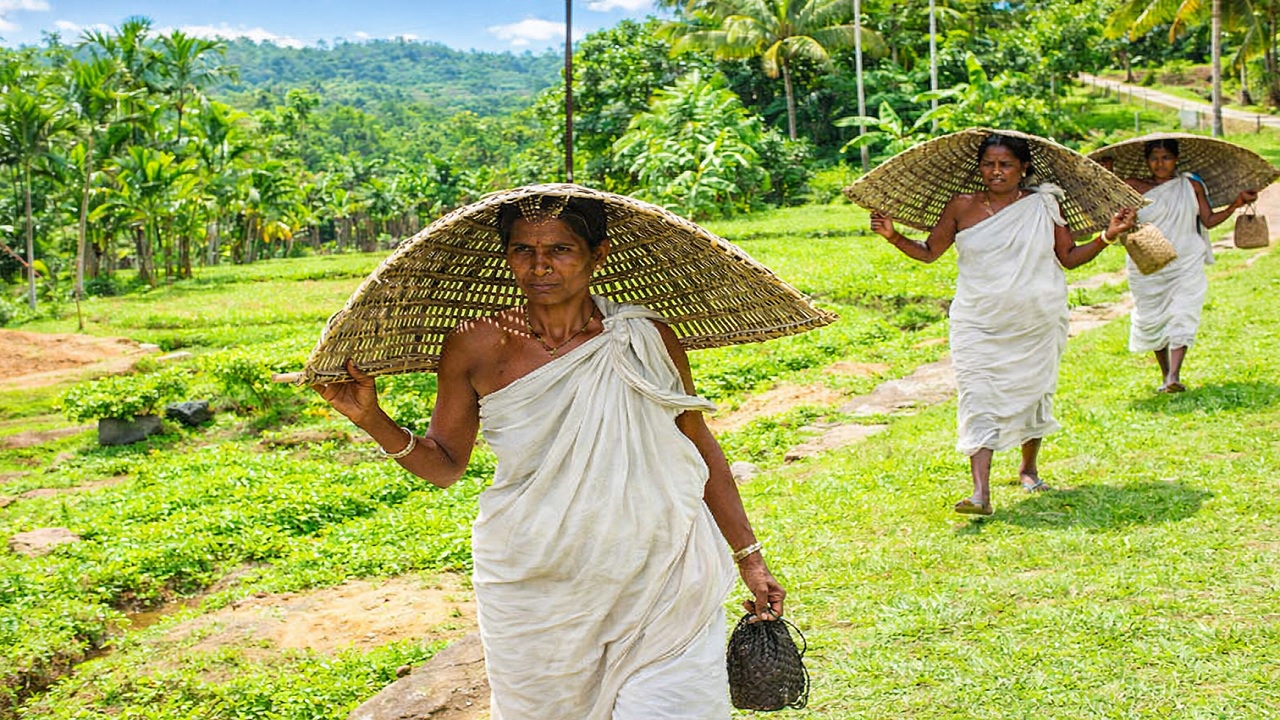
While the Paniya form nearly half of the tribal population in the district, they have never been politically represented by any of the major fronts.
Synopsis: Kerala’s Wayanad district has two Assembly seats reserved for its sizeable Scheduled Tribe population, yet political representation has largely been limited to two of the three dominant tribal communities. Most major parties have repeatedly nominated candidates from the Kurichiya and Kuruma communities since 1967, even though communities such as the Paniya account for nearly half of the tribal population.
Wayanad, a largely mountainous and forested district in north-eastern Kerala, has the highest proportion of indigenous people in the state. Two of its three Assembly seats, Mananthavady and Sulthan Bathery, are reserved for Scheduled Tribes and are home to communities such as the Paniya, Adiya, Kattunayakan, Kuruma (Vettukuruman), Kurichiya and Oorali (Urali).
Political representation, however, has not reached them equally. Since 1967, the LDF, UDF and NDA have together nominated 28 candidates in the two reserved constituencies. Of these, only four were from the Adiya community, while 24 were from either the Kurichiya or Kuruma communities.
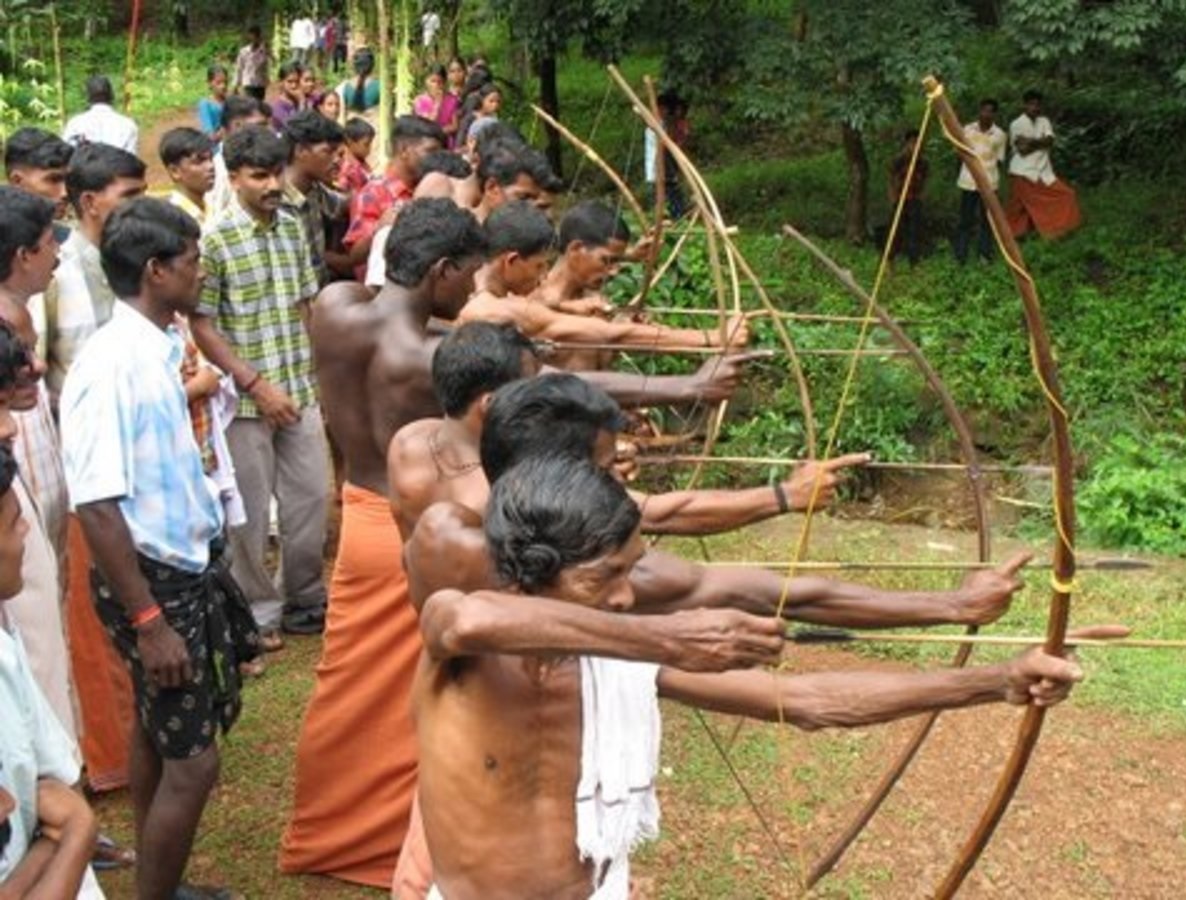
Kurichiya Tribe
None of the political fronts has ever nominated candidates from the Paniya, Oorali, Kadar, Malavettuva, Kattunayakan or Cholanayakan communities. This is despite Paniyas making up nearly half of Wayanad’s tribal population, at close to 70,000 people.
Ahead of the Assembly polls, five of these marginalised communities, Kattunayakan, Adiya, Paniya, Urali and Vettukuruman, are organising under the banner of the KAPUV Tribal Welfare Society to create a unified platform and field their own candidates.
Kerala’s strong record in implementing reservations has not ensured that benefits reach all sections within reserved groups, according to Anil Chandran S, Assistant Professor and Head of the Department of Demography at the University of Kerala.
“Even in poverty eradication programmes, the most marginalised are left out because they are not properly counted. To address this gap, the government has begun micro-level planning to ensure that the extremely marginalised are not excluded. They also lack the capacity to raise their demands,” he told South First.
Wayanad’s total tribal population is 1,17,491. Paniyas make up 46 percent, Kurichiya 20 percent, Adiya 9.28 percent, Kuruma 9 percent and Kattunayaka 8.4 percent.
Yet the Kurichiya, who account for less than one-fifth of Wayanad’s tribal population, have secured the highest number of nominations.
The community is often described as the “Brahmins among Adivasis” because they are major landholders with traditional wealth and are comparatively organised and educated, Ammini K, a founding member of the KAPUV Tribal Welfare Society and a member of the Kuruma tribal community, told South First.
“They do not eat with, marry into or even enter the homes of other tribal communities. If they visit other tribal homes, they perform purification rituals before entering their own homes. ST reservation in government jobs and educational institutions is largely occupied by them,” said Dr Ammini, who is also President of the Tribal Women’s Movement.
“Except among the Kurichiya and Kuruma tribes, school dropout rates are high, and cases under the POCSO Act, as well as other instances of abuse, are frequently reported among other tribal groups because of poor social conditions.”
Currently, IC Balakrishnan of the Congress represents Sulthan Bathery, while Mananthavady is represented by OR Kelu, Minister for SC/ST Welfare. Both belong to the Kurichiya community.
Up to the 2021 Assembly polls, 14 candidates were from the Kurichiya community: four fielded by the LDF, three by the UDF and seven by the NDA.
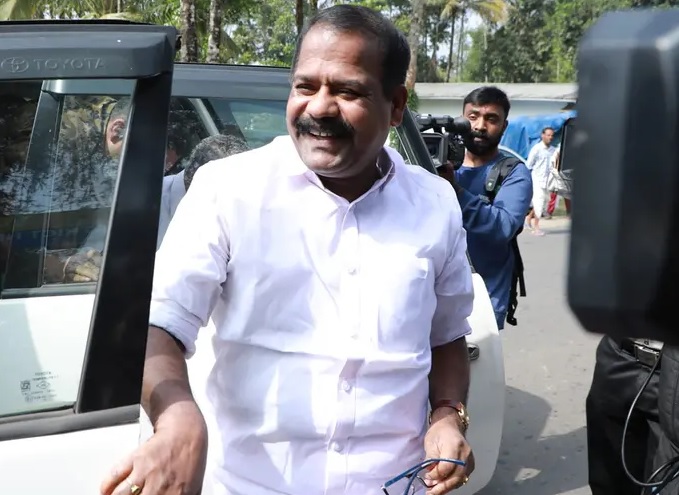
Sulthan Bathery MLA I.C Balakrishnan
The Kuruma community had 10 candidates, six from the LDF and four from the UDF, while the NDA fielded none. Only four candidates were from the Adiya community: two from the UDF, one from the LDF and one from the NDA.
Among the Adiya (Ravula) candidates who contested earlier were activist CK Janu and her father M Kariyan, who contested as an LDF-backed Independent from Mananthavady in 1970. Janu contested as the leader of the Janadhipathya Rashtriya Sabha (JRS) under the NDA banner from Sulthan Bathery in 2021.
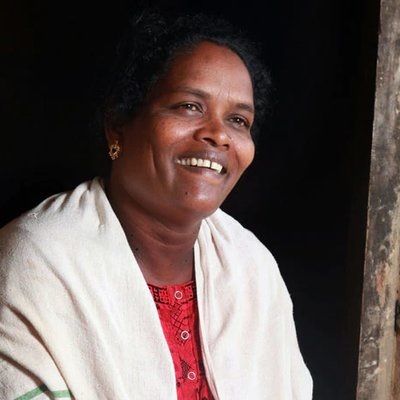
C.K Janu
In December 2025, the UDF inducted CK Janu’s Janadhipathya Rashtriya Party (JRP) as an associate member. Earlier, Janu said UDF leaders had promised two seats for the 2026 Assembly polls when the party joined the alliance. She later said there were signs that the leadership was backing away from this commitment and trying to deny the party its share of representation.
Janu told South First that talks are still under way and no final decision has been taken on whether to contest independently.
Meanwhile, PK Jayalakshmi, another Kurichiya leader who served as a minister in the Oommen Chandy government, is being considered again for Mananthavady, according to local Congress leaders. Balakrishnan is also reportedly pressing for a relative to be fielded.
Kerala’s 2 percent reservation for Scheduled Tribes in government jobs has largely gone to a small number of relatively better placed communities among the state’s tribal groups, such as the Kurichiya, Mullukuruma, Malayaraya, Ulladar, Mavilar and Karimbala, according to Manikuttan Paniyan, a political observer from Wayanad who belongs to the Paniya community.
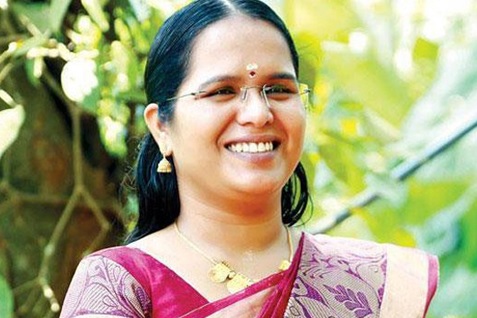
Former Congress Minister P. K Jayalakshmi
“Even in panchayat wards reserved for STs that include several Paniya settlements, candidates are often brought in from outside communities like the Kurichiya,” he told South First.
Manikuttan demanded a fair chance for all tribal communities within the common reservation framework.
“Without political representation, we cannot work for the upliftment of our community. If this exclusion continues, our people and our traditions will soon disappear from Kerala,” he said.
The Paniya, Adiya and other highly marginalised communities require focused support, including special training and educational assistance, to help them access employment and leadership roles, he said.
Manikuttan Paniyan told South First that in 2024 the Supreme Court of India recognised that ST communities are not homogeneous and that targeted support is essential to achieve real equality. He said sub-classification within STs is necessary to ensure a fair share in reservations.
He also called Minister OR Kelu’s claim that their demands are an attempt to divide tribal communities an excuse to dismiss their demand for fair representation.
(Edited by Dese Gowda)


