

Published Feb 11, 2026 | 8:00 AM ⚊ Updated Feb 11, 2026 | 8:00 AM

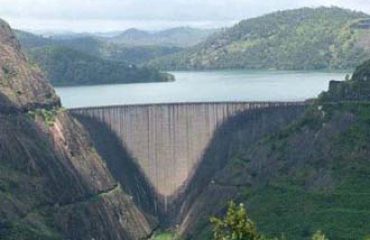
Front view of Idukki Arch Dam.
Synopsis: As Kerala marks 50 years of the Idukki Hydroelectric Project, the story revisits how a century-old idea—rooted in the forests of the Western Ghats and realised through Indo-Canadian cooperation—grew into one of India’s most iconic engineering achievements. Even five decades after its commissioning, the Idukki project remains the backbone of the state’s power system, underscoring hydel energy’s enduring role in Kerala’s electricity landscape.
Half a century ago, deep in the rugged embrace of the Western Ghats, Kerala quietly rewrote its power story.
On 12 February, 1976, the thundering waters of the Periyar were harnessed and dedicated to the nation by then PM Indira Gandhi, marking the birth of the Idukki Hydro Electric Project (IHEP).
As the state-run Kerala State Electricity Board (KSEB) prepares to celebrate the golden jubilee of that historic moment, IHEP stands tall as an engineering marvel that remains the backbone of the state’s power system even after 50 years.
Conceived over a century ago, realised through Indo-Canadian cooperation, anchored by the iconic Idukki arch dam wedged between the sheer rock faces of Kuravan and Kurathi mountains – flanked by Cheruthoni and Kulamavu dams- and the project’s 780-MW underground powerhouse, Idukki is not just a power station but a landmark in India’s hydroelectric history.
The story of the IHEP begins quietly in 1919, long before concrete, turbines, or transmission lines entered the picture.
That year, EJ Jacob, an engineer serving the erstwhile Travancore kingdom, submitted a far-sighted report suggesting that a dam could be constructed at Idukki and a power station established at Neryamangalam.
At a time when hydropower was still a distant dream for the region, the proposal remained only an idea on paper—but one that refused to die.
A few years later, in 1922, the dense forests of Idukki witnessed a moment that would change Kerala’s energy history.
Karivellayan Kolumban, the respected elder of the Araya tribal community, guided the Malankara Rubber Estate Superintendent, WJ John, and his companion Thomas through the rugged terrain during a hunting expedition.
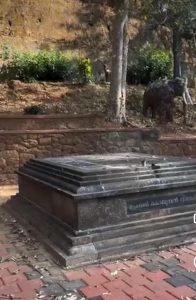
A memorial to Kolumban on the dam site.
Standing between the towering Kuravan and Kurathi hills, Kolumban spoke of local legends tied to the mountains. What struck Thomas most was not the folklore, but the immense force of water rushing through the narrow gorge. It was here that the seed of the present-day Idukki Arch Dam was truly planted.
Recognising the potential of the site, WJ John formally submitted a report to the Travancore government in 1932, highlighting the feasibility of harnessing the Periyar’s waters for power generation.
He went further, envisioning a massive reservoir formed by linking the Kuravan and Kurathi hills and diverting water through a tunnel to Moolamattom in the Muvattupuzha river valley.
The idea was ambitious, daring, and decades ahead of its time.
The Travancore government took note.
In 1937, two Italian engineers – Angelo Omedeo and Claudeo Marcell- were commissioned to conduct a detailed technical study.
Their findings marked a turning point: they proposed damming the Cheruthoni stream to create a vast integrated reservoir—an idea that would later become central to the project’s final design.
Progress was slow but steady.
In 1949, Joseph P John, then Chief Electrical Engineer, submitted a revised proposal that merged earlier recommendations with the Italian engineers’ plans.
After the formation of Kerala, by uniting erstwhile princely states and provinces, the sheer scale of the project prompted the state government to seek national support.
Then in September 1956, then Union Minister for Irrigation and Power Gulzarilal Nanda formally inaugurated the investigation of IHEP. After that, the Central Water and Power Commission was tasked with preparing a detailed project report, while the KSEB carried out extensive field surveys.
The origins of the IHEP can be traced back to a scheme finalised in September 1961, which envisaged the creation of a single reservoir formed by three dams.
Acting on this proposal, the Planning Commission sanctioned the project in January 1963 at an estimated cost of ₹49.23 crore. Preliminary works soon began, even as efforts were under way to secure external assistance from friendly countries. As detailed surveys and studies progressed under the KSEB, the scope of the project expanded considerably.
Late V Ranganathan, then Chief Engineer in charge, played a pivotal role in reimagining the project in its present, more ambitious form.
Canada subsequently agreed to extend financial and technical assistance, appointing the Montreal-based firm M/s Surveyer, Nenniger and Chenevert Inc. as consultants.
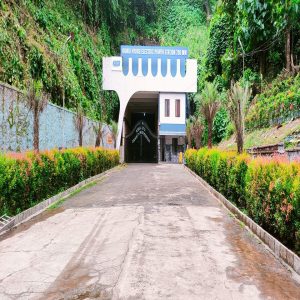
IHEP
Source : KSEB
Their involvement led to refinements in reservoir levels and structural design. A revised project report was prepared in 1966 and approved the same year by the Planning Commission. The formal aid agreement between India and Canada followed in 1967.
The contract for constructing the Idukki Arch Dam was awarded to Hindustan Construction Company Ltd in December 1966.
Canadian consultants, supported by specialists in geology, rock mechanics, concrete technology and dam engineering, were stationed at the site, with senior experts making periodic visits from Canada.
A major milestone came on February 12, 1968, when the Idukki–Cheruthoni dams were inaugurated by James George, the then Canadian High Commissioner to India.
The scale of work was unprecedented in Kerala, employing more than 1,600 personnel at its peak.
The arch dam across the Periyar was completed in 1974, incorporating advanced seismic-resistant design and state-of-the-art monitoring instruments.
Along with the Cheruthoni and Kulamavu gravity dams, it created a vast reservoir holding nearly 2,000 million cubic metres of water.
Today, the Idukki Hydel Project, with an installed capacity of 780 MW, remains Kerala’s largest power station.
Dedicated to the nation by former prime minister Indira Gandhi in 1976 and completed to full capacity in 1986, it stands as a lasting symbol of international cooperation and engineering excellence.
With an installed capacity of 780 MW, generated through six massive 130 MW units, Idukki is not just the largest hydroelectric project in the state but also a landmark in Indian engineering history.
Designed for an annual generation of 2,398 million units, the project plays a decisive role in meeting Kerala’s power demand.
The project is anchored by three major dams—the Idukki Arch Dam, Cheruthoni Dam and Kulamavu Dam—together forming a vast reservoir system on the Periyar basin.
In addition to natural inflows, water is diverted from neighbouring catchments such as Azhutha, Vazhikkadavu, Narakakkanam, Kallar, Erattayar, and Vadakkepuzha, maximising the reservoir’s potential and ensuring year-round generation.
One of Idukki’s most remarkable features is its underground powerhouse, a technological achievement that was unmatched in the country at the time of construction.
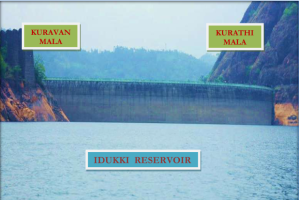
a view of Idukki dam from upstream of reservoir
source : KSEB
The cavern, measuring 141 metres in length, 20 metres in width and 34.5 metres in height, houses six vertical Pelton turbines—each a giant in its own right.
Access to this cavern is through a 599-metre-long tunnel, carved painstakingly through hard rock.
Power generated underground is transmitted through 220 kV oil-filled cables to a switchyard located outside the cavern, from where seven 220 kV feeders carry electricity to major load centres across the state.
After generation, water is released through a 1,220-metre-long tailrace tunnel into the Thodupuzha river.
This tail water continues to serve a larger purpose—supporting power generation at the Malankara Small Hydro Electric Project and supplying irrigation and drinking water through the Malankara irrigation dam.
Whereas the spill water of Idukki reservoir flows to Periyar River.
Mentioning why it has been decided to commemorate this milestone, a senior KSEB official told South First,
“The decision to commemorate the golden jubilee of the IHEP was taken because this is not just another power station for Kerala. It has been the backbone of the state’s electricity system for five decades and continues to play a crucial role even today. It is important for us to recognise the engineers, workers and visionaries who built a project of this scale at a time when the state had very limited resources. The golden jubilee is an opportunity to acknowledge that legacy and remind the younger generation of what careful planning and engineering can achieve.”
At the same time, officials from the Generation Wing of the KSEB told South First that while a decision has been taken to commemorate the 50th anniversary of the commissioning of the IHEP, the event may not be held on 12 February—the exact date the milestone was marked in 1976.
This is because the availability of Electricity Minister K Krishnankutty on that day is yet to be confirmed.
If the programme cannot be scheduled then, the commemoration is likely to be held towards the end of February or in the first week of March.
Hydel power continues to be the backbone of Kerala’s electricity sector.
As of 31 March, 2025, the state’s total installed power capacity stood at 4,412.14 MW, with hydel projects accounting for a dominant 2,284.42 MW — nearly 52 percent of the total.
KSEB remains heavily reliant on this renewable strength, with its installed capacity at 2,409.8 MW, largely driven by 44 hydel stations generating 2,196.4 MW.
Thermal power, solar plants and a small wind farm together play a supporting role, underlining how rivers and reservoirs continue to power Kerala’s energy landscape.
(Edited by Amit Vasudev)


