

Published Mar 09, 2026 | 3:44 PM ⚊ Updated Mar 09, 2026 | 4:35 PM

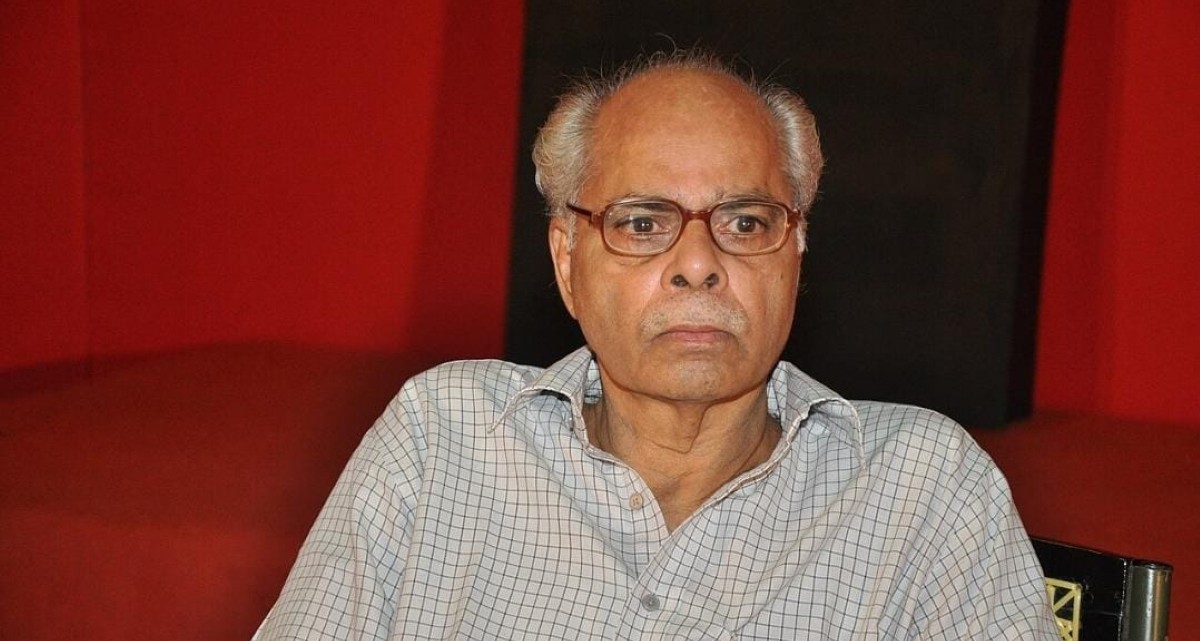
KN Panikkar. (Supplied)
Synopsis: An influential academic, Panikkar taught for many years at Jawaharlal Nehru University (JNU), New Delhi, where he mentored generations of students and scholars. Beyond academia, he played a significant role as a cultural activist and educationist, actively engaging in debates on history, culture and public policy.
Renowned historian and public intellectual Dr KN Panikkar (90) passed away at SUT Hospital in Thiruvananthapuram on Monday, 9 March.
Widely regarded as one of the foremost historians of modern India, Panikkar leaves behind a lasting legacy shaped by his scholarship, commitment to secular values and contributions to public life.
Often described as a steadfast defender of Indian secularism, Panikkar consistently used rigorous and objective historical research to challenge attempts to impose ideological interpretations on the country’s past. His writings and public interventions resisted the growing influence of Hindutva politics in historical discourse, a stance that frequently invited criticism and threats from communal groups.
An influential academic, Panikkar taught for many years at Jawaharlal Nehru University (JNU), New Delhi, from 1972 where he mentored generations of students and scholars. He also went on to serve in several key academic roles, including professor, head of the department and dean of the School of Social Sciences. Beyond academia, he played a significant role as a cultural activist and educationist, actively engaging in debates on history, culture and public policy.
Over the years, he was also invited as a fellow and visiting professor at several universities abroad.
Panikkar played an important role in shaping academic institutions in Kerala as well. He served as the Vice-Chancellor of Sree Sankaracharya Sanskrit University from 2000 to 2001, and later as the Vice-Chairman of the Kerala State Higher Education Council between 2007 and 2011. He was also the chairman of the Kerala Council for Historical Research from 2001 to 2017 and became president of the Indian History Congress in 2008. In addition, he was the founder president of the Kerala History Congress.
Among his influential works are Against Lord and State: Religion and Peasant Uprising in Malabar (1838–1921), Culture and Consciousness in Modern India, Culture, Ideology and Hegemony, Communal Threat and Secular Challenge, Before the Night Falls: Forebodings of Fascism in India, Colonialism, Culture and Resistance, History as a Site of Struggle, and Society and Culture in Kerala.
His passing comes just as the Kerala Council for Historical Research was preparing to mark his 90th birthday, making the loss particularly poignant for the academic and cultural community in the state.
Panikkar was born in 1936 into the Kandiyur family of Thykkad in Guruvayur. His full name was Kandiyur Narayana Panicker.
Prof. Panikkar is best remembered for his efforts to expose the political misuse of history, particularly during the tumultuous period surrounding the Ram Janmabhoomi movement and the demolition of the Babri Masjid in 1992.
When the Rath Yatra led by L.K. Advani intensified demands to replace the mosque in Ayodhya with a Ram temple, Panikkar and a group of historians intervened to challenge the historical claims being circulated.
They pointed out that there was no credible archaeological or historical evidence to support the claim that a Ram temple had been demolished to build the Babri Masjid. Through a widely circulated pamphlet, Panikkar and fellow historians explained how historical narratives were being misinterpreted for political ends and warned against the dangers of communal mobilisation around heritage sites.
The document was translated into several Indian languages and used in campaigns to shape public opinion across the country.
Panikkar travelled extensively across India delivering lectures on the issue, despite facing threats and intimidation. He also addressed audiences in universities in the United States, Britain, France and the Netherlands, highlighting the broader implications of religious intolerance toward historical monuments.
His scholarship combined cultural analysis with historical research, often drawing from Gramscian perspectives to examine power, ideology and social consciousness.
(With inputs from Dileep V Kumar)


