

Published Dec 11, 2025 | 10:37 PM ⚊ Updated Dec 11, 2025 | 10:37 PM

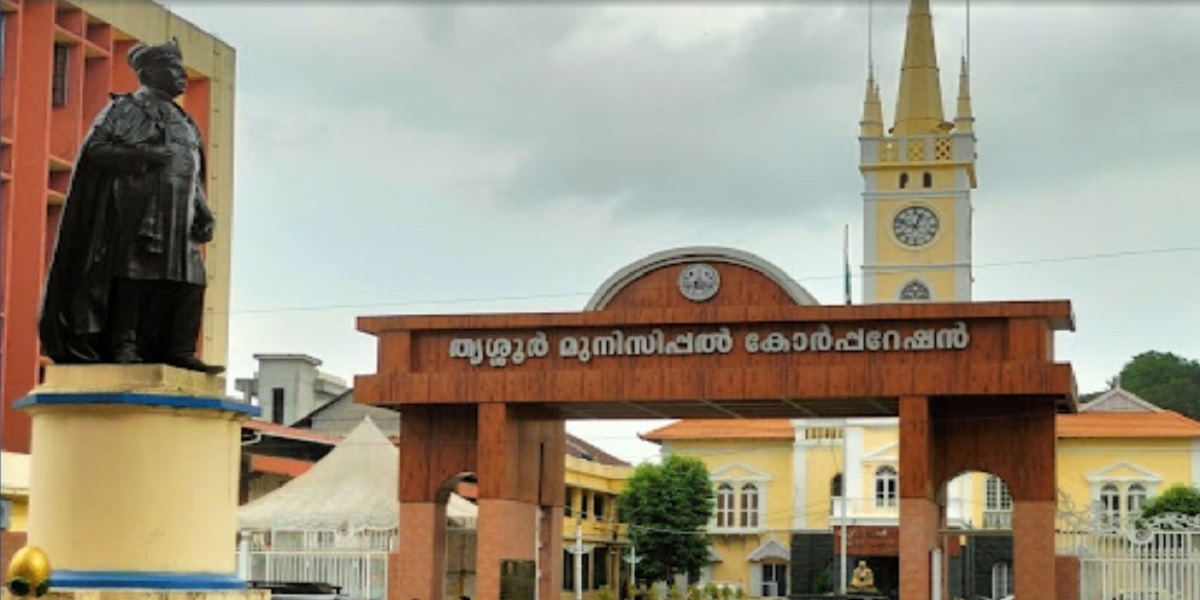
With the BJP hungry for a breakthrough in Thrissur, the LDF fighting to retain Kozhikode, and the UDF struggling to defend Kannur, 13 December promises answers that could redraw Kerala's urban political map.
Synopsis: Northern Kerala recorded a high voter turnout as the second phase of local body elections concluded on Thursday. Kannur, Thrissur and Kozhikode stood out amid fierce contests between the three main contenders: the BJP, hungry for a breakthrough in Thrissur; the LDF, fighting to retain Kozhikode; and the UDF, struggling to defend Kannur.
Thrissur’s political landscape today can be read in two chapters: before Suresh Gopi and after him.
The actor-turned-MP, who stormed into Parliament from Thrissur, has once again ignited debate during the local body polls by casting his vote in Thiruvananthapuram in the first phase, despite having voted in Thrissur during the Lok Sabha election.
The opposition has seized on the controversy, and the Election Commission’s clarification is still awaited. Yet long before Suresh Gopi entered the frame, Thrissur Corporation was already a theatre of intrigues, collapses and shifting loyalties.
Now, as Kerala’s final phase of local body polling concludes, the spotlight has shifted to three crucial corporations: Thrissur, Kozhikode and Kannur. Kozhikode and Thrissur remain LDF bastions on paper, while Kannur is the UDF’s lone fortress.
But the equations on the ground say otherwise.
With the BJP hungry for a breakthrough in Thrissur, the LDF fighting to retain Kozhikode and the UDF struggling to defend Kannur, 13 December promises answers that could redraw Kerala’s urban political map.
Kannur, Thrissur and Kozhikode stood out on Thursday, 11 December as polling for the second phase of the local body elections drew to a close. Voting officially ended at 6 pm, and by 6.30 pm updated figures showed that all seven northern districts had crossed 70 percent turnout.
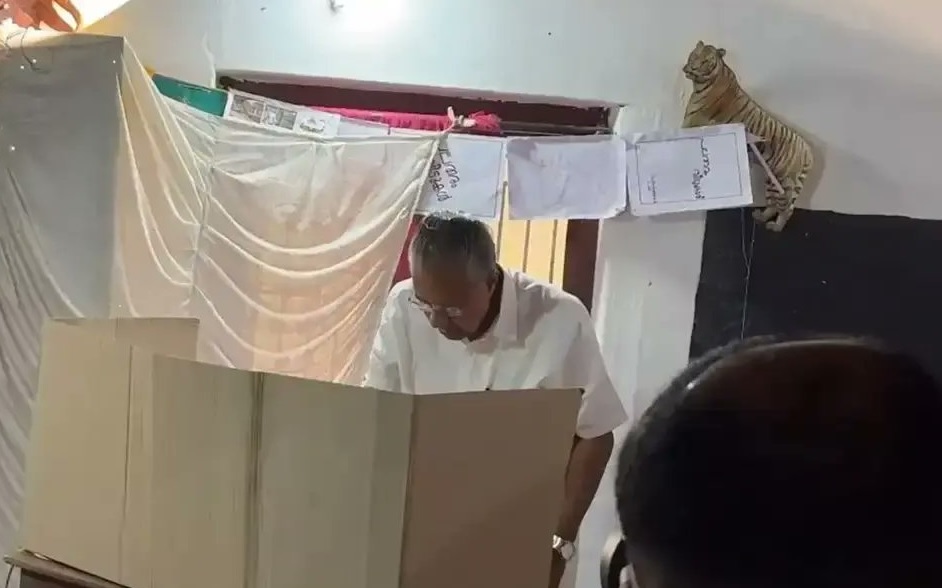
Kerala CM Pinarayi Vijayan cast his vote at Cherikkal JB School in Kannur
The phase covered Thrissur, Palakkad, Malappuram, Kozhikode, Wayanad, Kannur and Kasaragod, all of which reported brisk participation throughout the day.
The high turnout has renewed comparisons with the last local body elections in 2020, when Kozhikode had topped the list with 81.28 percent, followed closely by Kannur at 79.5 percent, while Thrissur had registered the lowest among the seven districts.
Chief Minister Pinarayi Vijayan, who cast his vote in Dharmadom, said he was confident of a strong LDF performance.
Meanwhile, KPCC president Sunny Joseph and senior Congress leader Ramesh Chennithala argued that public anger over the LDF government’s “anti-development” policies and the Sabarimala gold controversy would influence voter behaviour.
With polling complete, the State Election Commission has released guidelines for the transition to new councils. All newly elected members and councillors will take oath on 21 December 2025.
Thrissur, Kerala’s cultural capital famed for Pooram, is also the state’s gold hub and, politically, the BJP’s lone parliamentary foothold in Kerala.
Thrissur Corporation is unlike any other in the state. It runs its own electricity and drinking water supply, functions that elsewhere come under the Kerala State Electricity Board and Kerala Water Authority.
Winning Thrissur therefore carries weight beyond its 56 wards.
The polling-day mood hinted at a fierce triangular battle between the LDF, UDF and BJP in almost all divisions. The BJP, buoyed by its Lok Sabha performance where it led in 36 corporation wards, hopes to carry forward the momentum that Suresh Gopi’s victory generated.
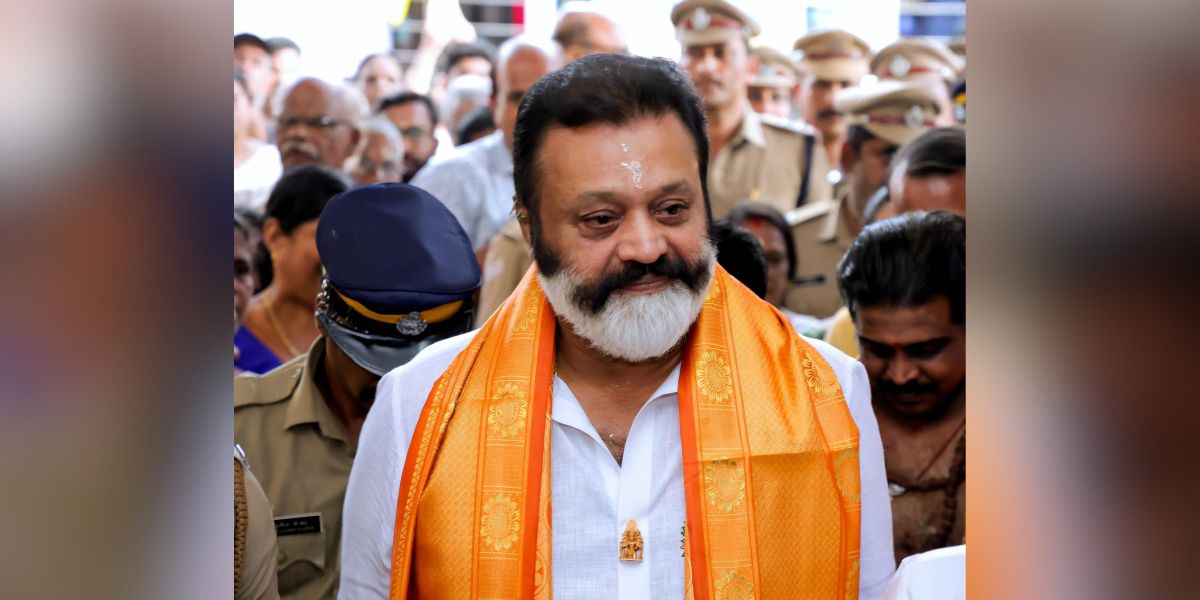
Union Minister of State Suresh Gopi.
“We are working to maintain our Lok Sabha lead and convert it into power in the Corporation,” local BJP leader Aneesh T told South First.
The LDF, in power for the last 10 years, is banking on completed and ongoing development works, including the IM Vijayan International Stadium and Sports Complex at Lalur and the newly concreted Kuruppam Road. Welfare schemes, they believe, will help counter anti-incumbency.
The UDF, meanwhile, is foregrounding allegations of corruption and mismanagement under the current council. Notably, it has fielded 32 women candidates, more than any other front, hoping that a renewed candidate profile will help them reach their target of winning at least 32 of the 56 wards.
The biggest subplot in this election, however, is the political theatre unfolding inside the corporation itself.
Thrissur Mayor MK Varghese, once a Congressman and now an Independent backed by the LDF, has long been at the centre of a storm. His visible camaraderie with Union Minister Suresh Gopi has rattled the Left. The CPI demanded his resignation, and the CPI(M) chose silence.
His absence from the LDF’s election campaign this time only deepened the cracks. The LDF has 25 seats plus the support of independents, including Varghese. The UDF has 24, and the BJP six.
Thrissur’s electorate is diverse, with Christian voters making up around one-fifth of the population and Muslims contributing close to 15–17 percent. In these communities, issues like the recent arrest of nuns and Suresh Gopi’s public silence during the episode were debated during the campaign.
At the same time, the city’s strong cultural identity, especially the emotional pull of Thrissur Pooram, has subtly influenced the political narrative, with all fronts attempting to tap into the festival-driven civic sentiment.
Kozhikode’s political terrain has always carried the same heat as its famed Paragon biriyani.
For decades, the corporation has been considered a stronghold of the Left, which consistently dominated local body elections even before the three-tier local governance system was introduced in 1995. But the 2010 local body elections marked an unusual shift.
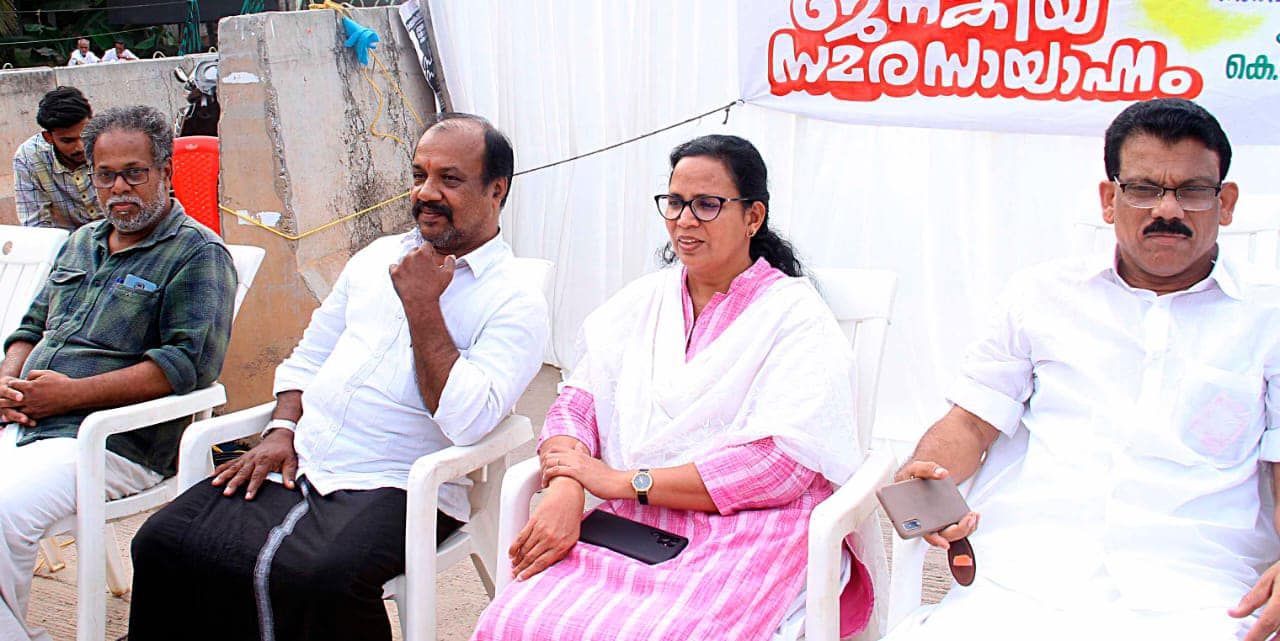
RMP member of the Kerala Assembly KK Rema. (Facebook)
The UDF made significant inroads, winning 34 of the 75 corporation seats and falling short of capturing the Kozhikode district panchayat by just one seat.
Internal rifts within the CPI(M), the emergence of KK Rema’s RMP and anti-incumbency against the then LDF government were widely seen as contributing factors.
It was also noted that the LDF held on to the corporation largely because Beypore, Elathur and Cheruvannur–Nallalam grama panchayats had been brought under its limits.
Despite the strong presence of the Indian Union Muslim League in the region, the LDF has governed the Kozhikode Corporation for the past 48 years.
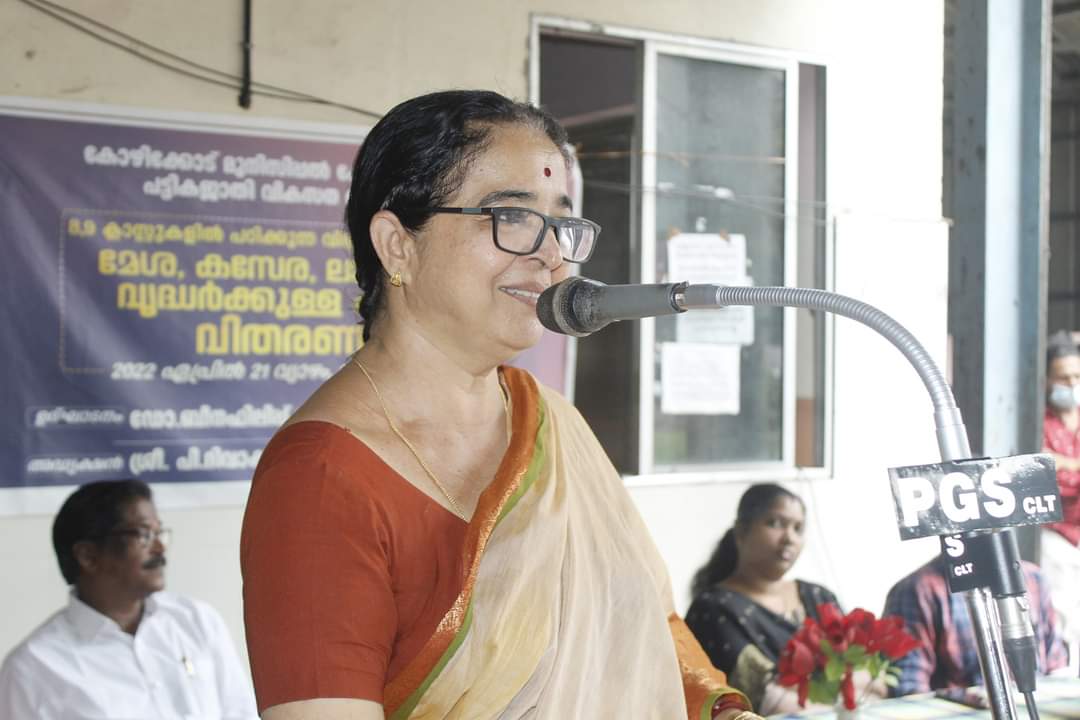
Kozhikode Mayor Beena Philip (South First)
After delimitation, the council expanded from 75 to 76 wards. In 2020, the LDF secured a commanding victory with 50 seats.
Projects such as the Palayam market redevelopment, the “senior citizen friendly city” initiative and Kozhikode’s distinction as one of the safest urban centres were key campaign highlights. Mayor Dr Beena Philip told South First that the development record would continue to work in the LDF’s favour this time also.
In both the 2015 and 2020 polls, the UDF managed only 15 seats, and allegations of irregularities at the Chevayoor Cooperative Bank further dented its prospects.
Meanwhile, the BJP has been registering slow but steady progress. The party maintained seven councillors in 2015 and 2020, but its vote consolidation was evident, finishing second in seven wards in 2015 and in 22 divisions in 2020.
Navya Haridas, who earlier contested against Priyanka Gandhi, is now in the fray for the corporation polls and told South First that the BJP would emerge as a “decisive force” in the corporation this time.
Beyond the three major fronts, outfits such as the SDPI and the Welfare Party also wield influence in select pockets, making their support crucial in tightly contested wards.
Kannur Corporation, established in 2015, is currently the only UDF-ruled corporation in Kerala. The front holds 34 seats (Congress 20, IUML 14), while the LDF has 19 (CPI(M) 17, CPI 2). The BJP and an Independent hold one seat each.
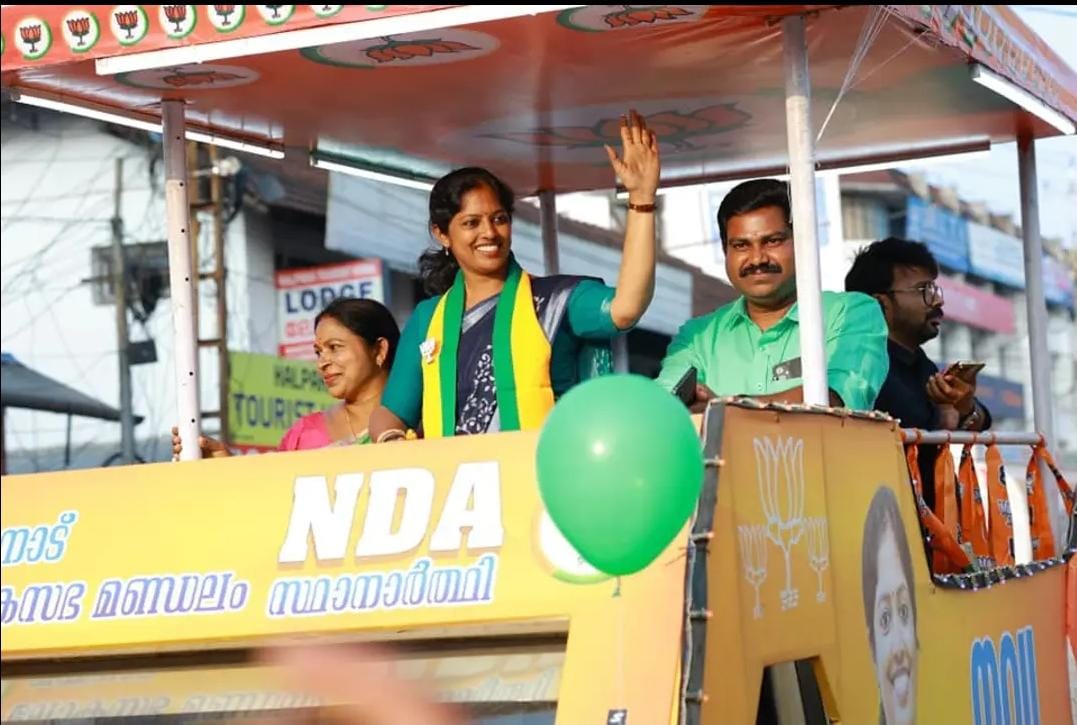
Navya Haridas, NDA candidate for Wayanad Lok Sabha Constituency
The current mayor, Muslih Madathil of the IUML, assumed office after Congress leader TO Mohanan resigned, and the two parties maintain a better understanding in the corporation.
Former mayor Mohanan told South First that Kannur has effectively managed the AMRUT fund and provides free water to every household, a unique service in the state. However, some projects remain incomplete due to lack of state cooperation.
CPI(M) leader N Sukanya criticised the UDF, saying public dissatisfaction is growing. This year, the UDF faces a serious challenge from the LDF, which hopes to win a narrow majority.
Rebel candidates in several wards, including Adikadalayi, Kokkenpara, Varam, Panthikkal and Pallippoyil, have complicated the contest. Key battles include Deputy Mayor P Indira defending Udayamkunnu, KP Tahir in Varam, and strong fights in traditional UDF strongholds like Vettalapalli and Thulicherry.
Even Pallikkunnu, the only BJP seat, is hotly contested.
Both alliances are promoting development agendas with visual campaigns on the streets. The UDF highlights its “Mission 2030” plan and ongoing projects, while the LDF presents a comprehensive roadmap for the city.


