

Published Apr 25, 2026 | 8:55 PM ⚊ Updated Apr 25, 2026 | 8:58 PM

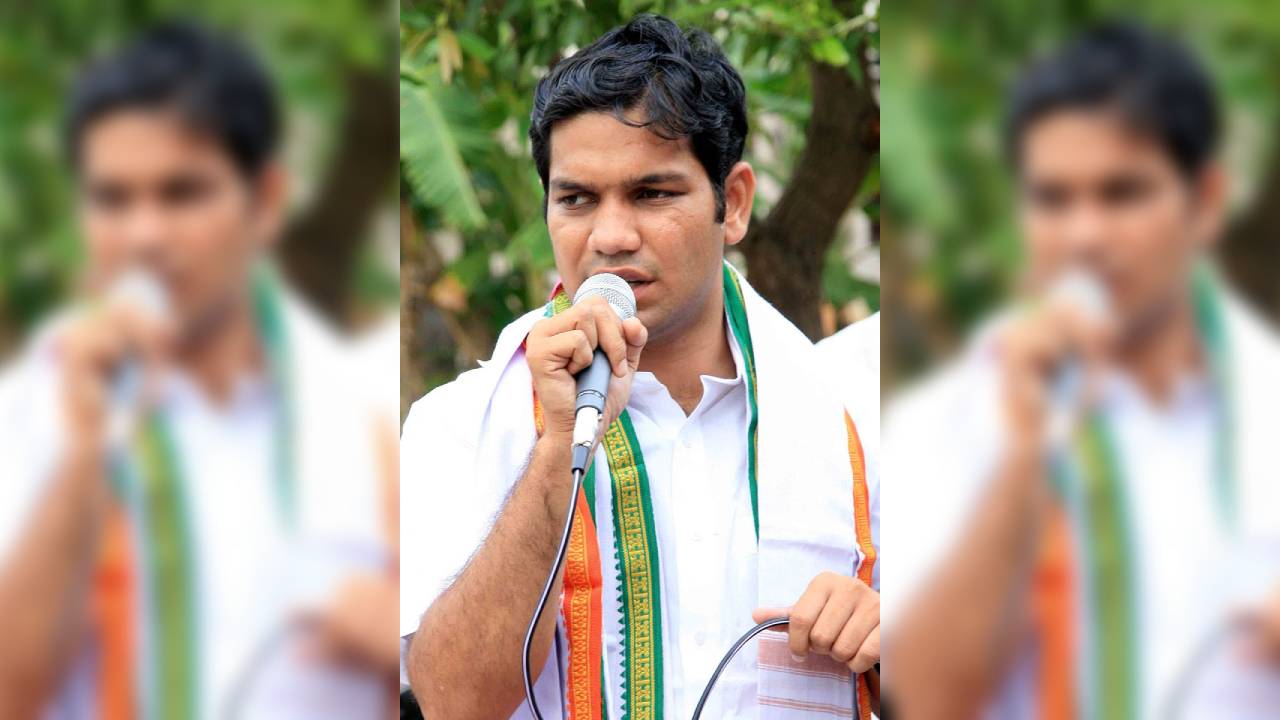
Hibi Eden, MP.

Synopsis: Amid rising internal friction and online spillover over leadership speculation ahead of the results, Hibi Eden has expressed his wish to step down as KPCC digital media cell head, even as the party leadership moves to clamp down on public debate over a potential chief ministerial face. The episode underscores the Congress’s struggle to maintain unity and message discipline in the final stretch before the verdict.
The Congress in Kerala is discovering that managing perception can be as tricky as managing power.
With just over a week left for the Assembly election results, internal conversations about leadership have begun spilling into places the party can’t fully control—social media, private groups, and the occasional public remark.
In the middle of this churn, Hibi Eden, MP, has chosen to step aside from a role that increasingly sat at the intersection of politics and online turbulence.
The Ernakulam MP, who also serves as a vice president of the Kerala Pradesh Congress Committee (KPCC), submitted his resignation as head of the party’s digital media cell on 14 April. The letter was addressed to KPCC president Sunny Joseph.
Also Read: Bihar fumes as Kerala PCC finds itself caught in thick beedi smoke
Eden’s explanation was measured. The responsibility, he wrote, had been assigned in the backdrop of the election campaign, and he had carried it out despite “limitations and crises.”
With the campaign phase over, he asked to be relieved.
However, he has dismissed any suggestion that his decision is linked to the growing friction within the party over who should be projected as chief minister if the United Democratic Front (UDF) returns to power.
Privately, though, the timing has raised eyebrows.
Meanwhile, neither he nor the KPCC leadership has responded to the development.
The digital media cell he led was not just pushing campaign content. It had also become a space where competing narratives around leadership quietly took shape. Some of its members were themselves drawn into the debate over a potential chief ministerial face, blurring the line between communication strategy and internal politics.
There had been murmurs for a while that not everyone in the leadership was comfortable with how the digital media cell functioned. Those concerns rarely surfaced in formal settings, but they circulated enough to become part of the backdrop to Eden deciding to press the exit button.
Also Read: Congress urges caution on Kerala CM debate
Eden had taken over the post after VT Balram stepped down following a controversy triggered by a post from the KPCC’s official X handle.
The message, which linked Bihar with bidis in the context of a GST rate cut, drew criticism and forced a quick reset within the party’s communication setup.
Eden’s appointment was meant to steady that space.
By his own account, the brief was clear—coordinate campaign messaging, integrate content from an external agency, and sharpen the attack on the Left Democratic Front led by Chief Minister Pinarayi Vijayan.
He later described the role as a “crown of thorns,” a phrase that now feels less like rhetoric and more like a summary.
Complicating matters further, some members of the digital media cell have reportedly approached the state police chief, alleging that malicious content was being generated in their names online.
The complaints point to how factional tensions are being mirrored—and sometimes amplified—in cyberspace.
The overlap between political rivalry and digital manipulation has added another layer of unease within the party.
On Saturday, 25 April, the party leadership moved to draw a line.
Sunny Joseph issued a fresh warning against public speculation on the chief ministerial question, calling such remarks inappropriate and potentially damaging to the party’s image. Statements in the press, on television, or across social media platforms, he said, would be treated as indiscipline.
The directive echoed similar instructions already issued by the All India Congress Committee, but the repetition suggested that earlier appeals had not quite worked.
The latest, however, comes amid growing discussions in political and online spaces about potential CM candidates if the Congress-led UDF returns to power.
Joseph noted that these conversations have triggered dissatisfaction among party cadres as well as sections of the public supportive of the UDF.
He also pointed out that the All India Congress Committee had already issued strict instructions discouraging such debates. Despite this, repeated instances of leaders and workers continuing to air their views have compelled the state leadership to reiterate its stance.
Meanwhile, this is not the first time such a warning has been issued by the party president.
He had earlier appealed to members to refrain from taking sides in leadership discussions.
The renewed advisory signals the leadership’s intent to enforce discipline more firmly as political activity intensifies ahead of the results.
Party insiders suggest the move is aimed at preventing factionalism and ensuring a unified front as the Congress prepares for the final verdict on 4 May.
Inside the party, the concern runs deeper than stray comments.
Conversations about leadership have begun to unsettle sections of the cadre and supporters and even allied members of the UDF. The fear is not just about optics; it is about coherence.
With the results scheduled for 4 May, the leadership is keen to avoid any impression of a divided house at a moment when unity could carry political weight.
Eden, for his part, has not spoken beyond his letter.
His exit leaves the digital media cell at a delicate juncture—caught between the need to sustain campaign momentum and the need to stay clear of internal fault lines.
For now, the message from the top is simple: wait for the verdict, keep the focus outward, and leave the leadership question alone. Whether that message holds, even for eight days, is another matter.
(Edited by Majnu Babu)



