

Published Mar 12, 2026 | 8:00 AM ⚊ Updated Mar 24, 2026 | 11:59 AM

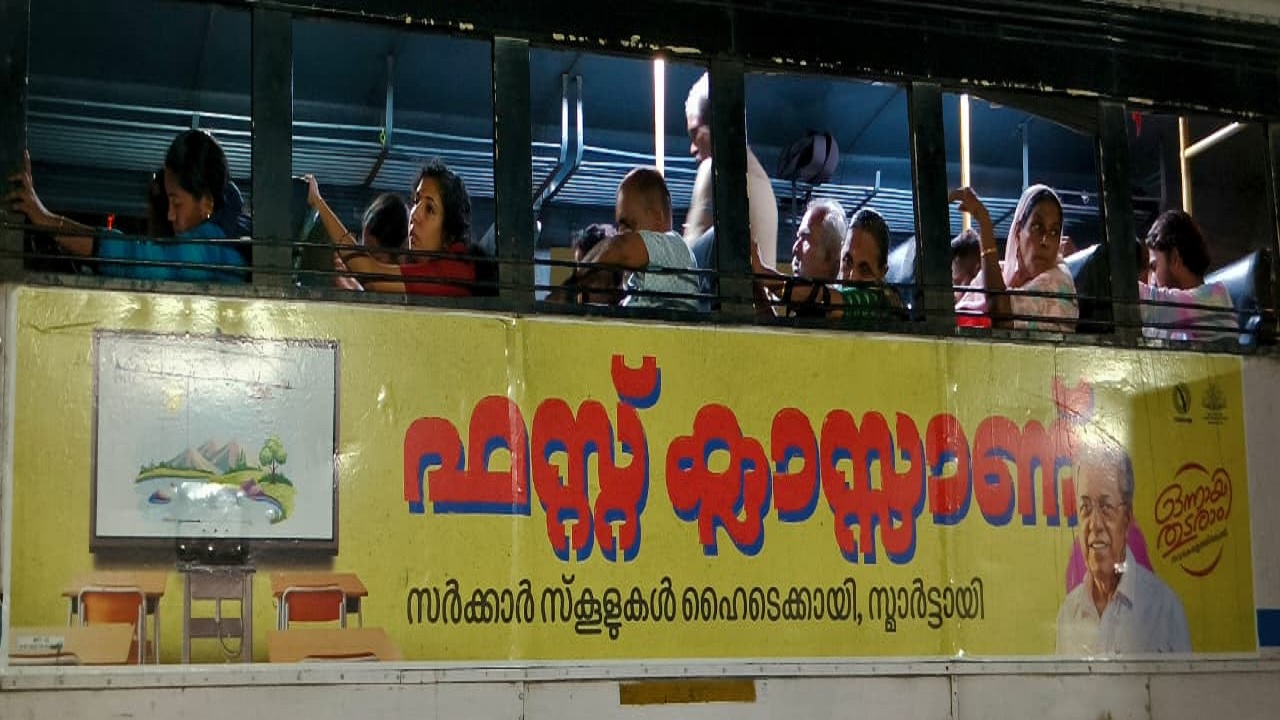
Like women in neighbouring Tamil Nadu and Karnataka, do women in Kerala really need free bus travel?
Synopsis: Ahead of the upcoming assembly elections, the Congress, as part of its poll promises, announced that it would implement a policy of free rides for women in Kerala. Working women welcomed the move, citing financial benefits. Activists noted that instead of targeting all women in the state, free travel should be provided to the deserving ones.
Haripriya steps off a crowded street in Kerala’s Kochi, her shoulders finally lighter. The young woman from Peroorkkada in Thiruvananthapuram now knows almost every lane and route in Kochi. Just six months ago, she arrived in the city carrying little more than hope, leaving behind her job as a nurse to begin a completely new chapter in life.
Now, as a marketing executive for SRS Sreyas Ayurveda Products, her days stretch across shops, small outlets and homes where she introduces her products, hoping for a sale. The week started well for her.
The rosemary water — the ₹250 product that gives her the highest commission of ₹80 per bottle — sold well. The same bag that is painfully heavy in the morning hangs almost empty by evening.
At the Aluva bus terminal, Haripriya waits for her usual Kerala State Road Transport Corporation (KSRTC) bus to Thrippunithura. Like many working women in the city, the KSRTC bus is part of her daily routine. Waiting at a crowded bus stand, Haripriya is unaware of the debate unfolding in the corridors of power.
Just days ago, senior Congress leader and Leader of Opposition in Lok Sabha Rahul Gandhi unveiled five ”Guarantees” for Kerala if the grand old party wins the upcoming Assembly election, and one of them was free travel for women in KSRTC buses.
However, the ruling Left Front, including Transport Minister KB Ganesh Kumar, has already ridiculed the proposal, warning that such a scheme could push KSRTC towards closure within two months.
Like women in neighbouring Tamil Nadu and Karnataka, do women in Kerala really need free bus travel? Or is the Congress offering a solution to a problem that many like Haripriya never asked for?
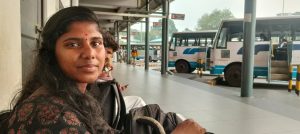
Haripriya
Haripriya begins her day with ₹50 in her hand, but spends hundreds of rupees on KSRTC buses daily. Her company provides the ₹50, and she can use cash from her sales to cover other expenses, including travel, which the company later reimburses.
“The fact that I don’t have to spend on travel from my pocket is a great relief. When I was in Thiruvananthapuram, I spent almost ₹4,000 every month just on travel. Even then, I depended on KSRTC, because private buses were never on time,” she said.
She added that it was financial strain that pushed her out of her nursing career.
“Even after working long shifts in private hospitals, once all expenses, including travel, were covered, there was nothing left to save. I left my nursing career because of that burden. Now, after all my expenses, I manage to take home at least ₹23,000,” she told South First.
Asked why she depends almost entirely on KSRTC buses instead of the Kochi Metro, which connects much of the city, Haripriya explained the arithmetic of her daily travel.
“Now I spend just ₹33 for the Thrippunithura–Aluva route in an ordinary KSRTC service. For the same distance in the metro, I have to pay around ₹60 — almost double. KSRTC also has many stops and frequent services to every corner of the city. With the metro having limited stations, I have to walk a lot to reach the sales points carrying this heavy bag,” she said.
Like several women who quietly bear travel expenses without complaint, Haripriya found hope in the Congress guarantee of free travel for women in KSRTC buses.
”At least women like me, who studied and pursued a career for years, may be able to continue working. At least there will be some savings at the end of the month,” she said, smiling faintly. But the smile carried a trace of pain. She still remembers the mockery from friends and relatives when she left nursing and switched careers.
As her bus arrived, Haripriya walked away quickly. Behind her, the voices of protesting nurses drifted through the street — slogans demanding better salaries, echoing the pain of the profession she once left behind.

Sunitha Beevi.
Sunitha Beevi, a private insurance agent with a passion for driving, learned to drive an automatic car later in life, hoping that one day she could travel freely across the city without depending on public transport.
Last year, the Kerala High Court allowed the use of automatic and electric vehicles for LMV driving tests, setting aside parts of a circular issued by the State Transport Commissioner that had restricted their use.
However, Sunitha said the reality on the ground was different.
“MVD (Motor Vehicles Department) officials told me to learn to drive a manual gear car first and then come for the licence test. Now, I have left the dream behind,” she told South First.
Today, she depends entirely on KSRTC buses for her daily commute, spending around ₹100 a day travelling between Aluva and Kakkanad. On days when she has client meetings, the expense rises as she has to travel to different parts of the city.
“Once, a conductor insisted that I buy a KSRTC Smart Card priced at ₹100. It is good for regular travellers like me,” she said. The card allows passengers to store prepaid credit and offers daily, weekly or monthly passes, with recharge amounts ranging from ₹50 to ₹2,000 and a validity of a year.
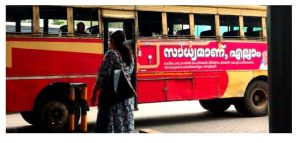
KSRTC bus with a government ad ahead of the Assembly elections.
For Sunitha, the Congress guarantee of free travel for women in KSRTC buses is a welcome move.
“We could use the money we save for other needs like our children’s education or insurance,” she said. However, she worries that the scheme may later come with conditions such as age limits or eligibility linked to ration cards.
“If free travel is introduced, it should apply to all women using public transport,” she said, adding that in ordinary families, a woman’s earnings and savings shape the household’s future, unlike the spending habits of many men in Kerala.
“At least the money won’t end up in lottery tickets or BEVCO (Kerala State Beverages (M&M) Corporation Limited) counters,” she remarked.
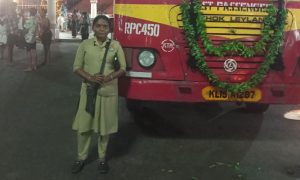
Smitha Gopal
Smitha Gopal, a woman conductor with KSRTC, welcomed the idea of free travel for women but expressed concern about the financial strain it could place on the corporation.
“We, the staff, are the first to feel the impact of KSRTC’s financial troubles. We started receiving salaries on time only after KB Ganesh Kumar took charge as the transport minister, although other allowances like incentive bata are still delayed,” she told South First.
She pointed out that while collections from KSRTC-SWIFT services have increased, the situation in regular services remains different. “Earlier buses could carry 113–120 passengers, but the new models accommodate only around 60. If a bus breaks down, depot mechanics often cannot fix it because of the new technology, and we have to wait on the road for company mechanics,” she said.
She added that most KSRTC passengers are women from the unorganised sector.
Dileep
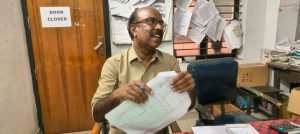
KSRTC Aluva station manager Dileep told South First that the minimum fare on KSRTC buses is ₹10 for a distance of 2.5 km.
He said the corporation already offers several concessions, including fare concessions for students up to Plus Two, free travel for cancer patients and war widows, and a 70 percent concession for people with over 40 percent disabilities.
Although he explained the existing benefits, he declined to comment on free bus travel for women and its possible impact.
A senior official from the transport department questioned why Kerala could not offer free rides for women if Tamil Nadu and Karnataka could succesfully offer it.
“In the 2022–23 financial year, the state earned ₹2,853 crore from excise and ₹11,892 crore from lotteries, totalling ₹29,513 crore in GST revenue. In Tamil Nadu, an average of ₹3,000–4,000 crore is allocated in the budget to run the Vidiyal Payanam free travel scheme. Even Karnataka manages to provide free rides for women through the Shakthi scheme. So why not Kerala?” he questioned while speaking to South First.
“It is not the responsibility of the people to shoulder the state’s financial burden. Citizens already pay taxes like everyone else and deserve something in return. The aim of public transport should not be to make a profit,” he added.
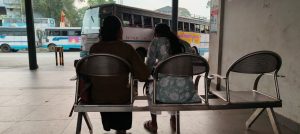
College students waiting for KSRTC buses.
South First also spoke to several college-going girls who depend on KSRTC buses, and many of them welcomed the proposal for free travel.
Two years ago, KSRTC had issued an order requiring the managements of unaided schools, self-financing colleges and recognised schools to bear 35 percent of the ticket charges for students, in addition to the 35 percent paid by the students.
However, the Kerala High Court later stayed the order.
Annie Varghese, a private school teacher in Thrissur who regularly travels between Aluva and Thrissur by KSRTC bus, said, “I studied in Coimbatore and enjoyed the benefit of free travel there. But here, I am not sure whether such schemes would continue in the long term. For now, the KSRTC charges are affordable for me.”
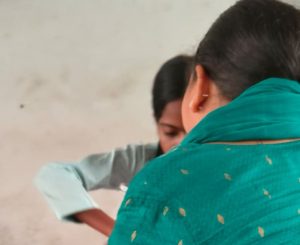
Gayathri and Chandrika (faces hidden for privacy reasons).
However, affordability still varies from woman to woman.
When South First spoke to Gayathri and Chandrika, two young women aged 19 and 20, respectively, who had just arrived in Aluva from Khalana village in Odisha, searching for jobs as domestic help, they expressed shock over the KSRTC bus fares.
Gayathri said, ”In our village, we can afford public transport for five rupees. But there are only two buses a day — morning and evening. At other times, we have to take auto-rickshaws.”
Dr Suja Susan George, a women’s rights activist, told South First that a blanket approach is not necessary, adding that the free travel should target deserving women.
“I welcome the guarantee, but a blanket approach isn’t necessary. Many women in Kerala are financially independent. The focus should be on the most deserving, like fisherwomen, Kudumbashree members and women from economically marginalised groups,” she said.
”Smart targeting beats sweeping promises every time,” she added.
Men’s rights activist Rahul Easwar criticised the proposal, saying that the benefit should be extended to men as well.
“Travel is everyone’s right. If free travel is offered for women, men should also get the same. Why discriminate against men?” he asked, urging the Congress to consider equal benefits.
Easwar argued that such schemes may have been necessary decades ago, but circumstances have changed now. He also said providing free travel specifically for working women is unnecessary and described such welfare measures as an old political playbook aimed at electoral gains.
Referring to policies often associated with the Aam Aadmi Party and left-of-centre welfare economics, he warned that such schemes could affect the economy. He said political parties must consider their affordability.
Aju Alex, a social media influencer from Kochi, told South First, “This guarantee seems election-driven. Instead of giving women free rides, most of whom are employed like men, it should go to students, who aren’t earning. Students need special buses and free travel.”
Dennis Joseph, who runs a preschool in Ernakulam, told South First, “This will add more debt to the government. The Congress party should cover the costs. I’m not willing to fund any freebies from my taxes.”
(Edited by Muhammed Fazil.)


