

Published Jan 06, 2026 | 9:00 AM ⚊ Updated Jan 26, 2026 | 8:50 AM

Muziris is not just heritage, and it deserves to be visited, felt and remembered.
For nearly a month now, artists, art enthusiasts, students and tourists have filled the streets of Kochi, Kerala, immersing themselves in Asia’s largest contemporary art festival.
Featuring around 66 artist projects from roughly 25 countries, including 45 to 50 new commissions, alongside live events and performances spread across 29 venues, mainly in Fort Kochi and Mattancherry, the festival links present-day Kochi to its historic and partly mythical predecessor, the port of Muziris.
Once a hub for Chinese, Arab, Jewish, Greek and Roman traders in the ancient and early medieval periods, the region later witnessed the arrival of the Portuguese, Dutch and British, first as traders and then as colonisers, entangled in shifting power struggles involving Travancore, Kochi, Calicut and Mysore.
The Kochi-Muziris Biennale takes visitors on a journey across time, invoking this long history of maritime trade and cultural exchange. Now in its sixth edition, the 120-day festival, which kicked off on 12 December 2025, will run until March 2026.
But to truly immerse oneself in the history of Muziris, one must travel north, roughly an hour away from the heart of the modern city.
Some 30 kilometres north of the city is the Muziris Museum at Kottappuram, located around Kottappuram Fort. It is part of the Muziris Heritage Project, a major conservation initiative spanning North Paravur to Kodungallur, undertaken by the State government with support from the Centre and UNESCO, to revive and preserve the ancient port city of Muziris and its surroundings.
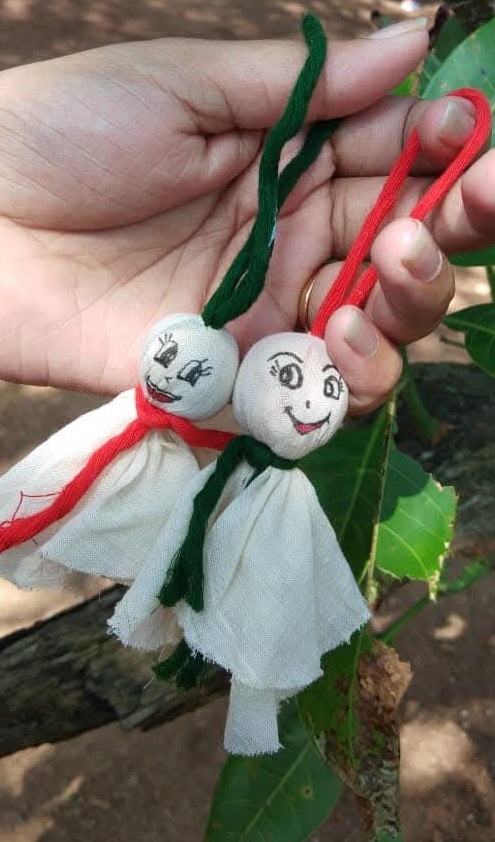
Chekkutty dolls
Sajna, the manager of the museum, opened a small box to gently remove a doll. It was Chekkutty, a hand-stitched doll made of old sarees. Not just any old sarees, but those soaked and recovered in the aftermath of the devastating 2018 floods that swept across Kerala.
Conceived by social entrepreneur Lakshmi Menon, these dolls, whose name comes from cheru (mud) and kutty (child), meaning “child of the mud”, originally served as a way to support the weavers of Chendamangalam, within the Muziris Heritage Area, who lost their livelihoods overnight.
The stained sarees were cleaned, boiled, chlorinated and reshaped by volunteers into unique dolls, each one carrying the marks of loss and recovery. While many weaving units have since returned to normal and the production of Chekkutty has slowed, Sajna believes it should never fade from memory.
“The looms may have recovered, but how can we forget Chekkutty?” she asked.
Near the museum is the Kottappuram excavation site, an archaeological dig within and around the fort. Part of the Muziris Heritage Project, it has offered crucial clues to the existence of the Muziris port.
At the entrance to the fort, itself a Portuguese-built structure at the mouth of the Periyar river, dated to 1523 CE, is a stark reminder of that rich past: the exhumed remains of a 20-year-old European male, believed to be of Portuguese origin, buried in the 1540s and discovered in 2010.
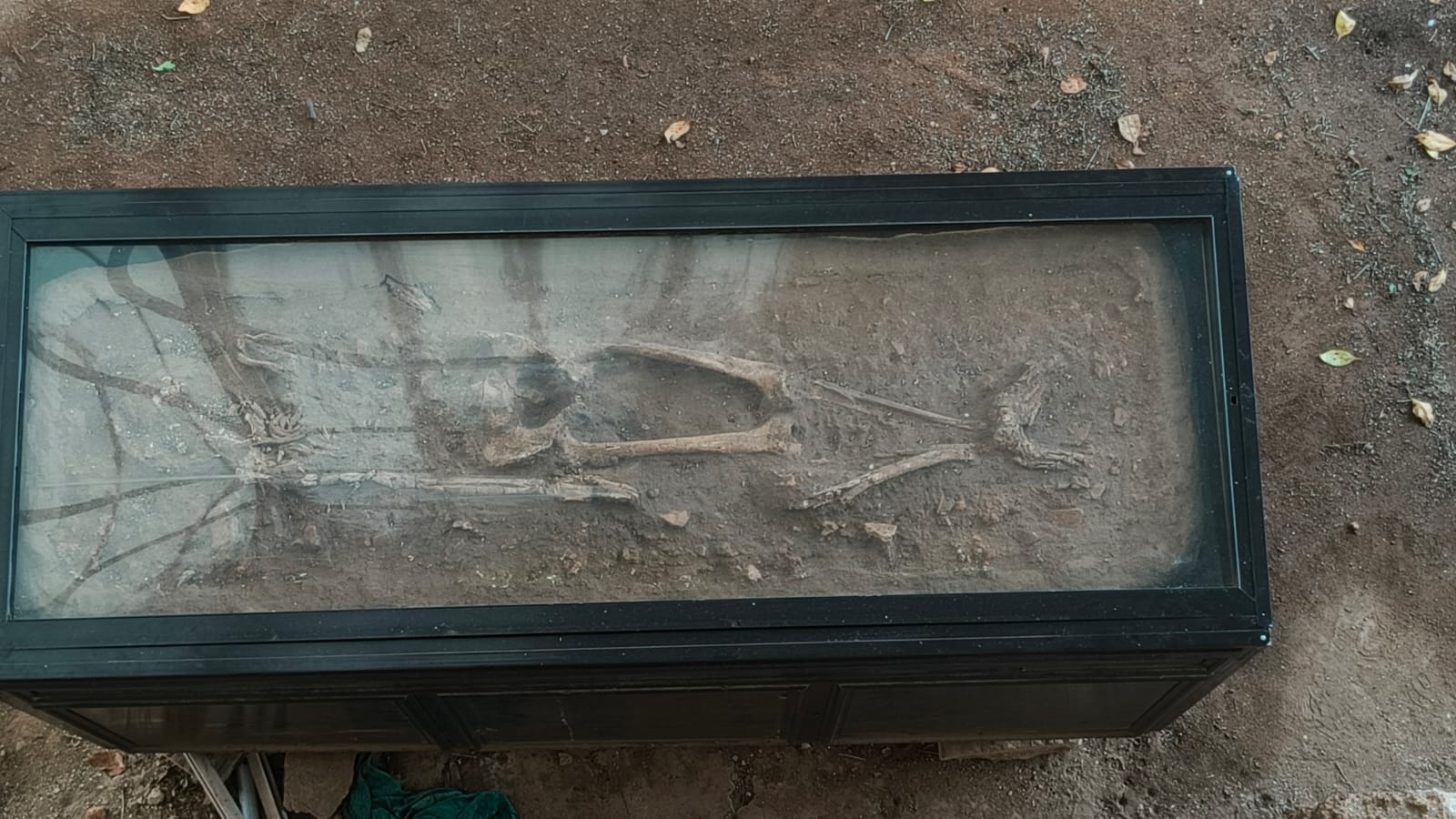
The excavated remains.
The remains, identified through an Accelerator Mass Spectrometry test conducted at the Delhi office of the US-based firm Beta Analytic, was unearthed alongside fragments of another human remain during excavations at the fort. Its thick laterite walls, arched cellars and lime-rich mortar helped preserve the bones for centuries.
Schoolchildren react with a mix of curiosity and awe, some crying at the sight of the skeleton, others peering closely and asking, “Was he from here? Why is he buried in Kottappuram?”
Through this young Portuguese man, the site offers a human connection to centuries of trade and cultural exchange that defined Muziris.
Kottappuram Fort changed hands multiple times in the first two centuries after its construction. The Dutch captured it in 1666, Tipu Sultan seized it in the 1790s, and parts of it were destroyed in the process.
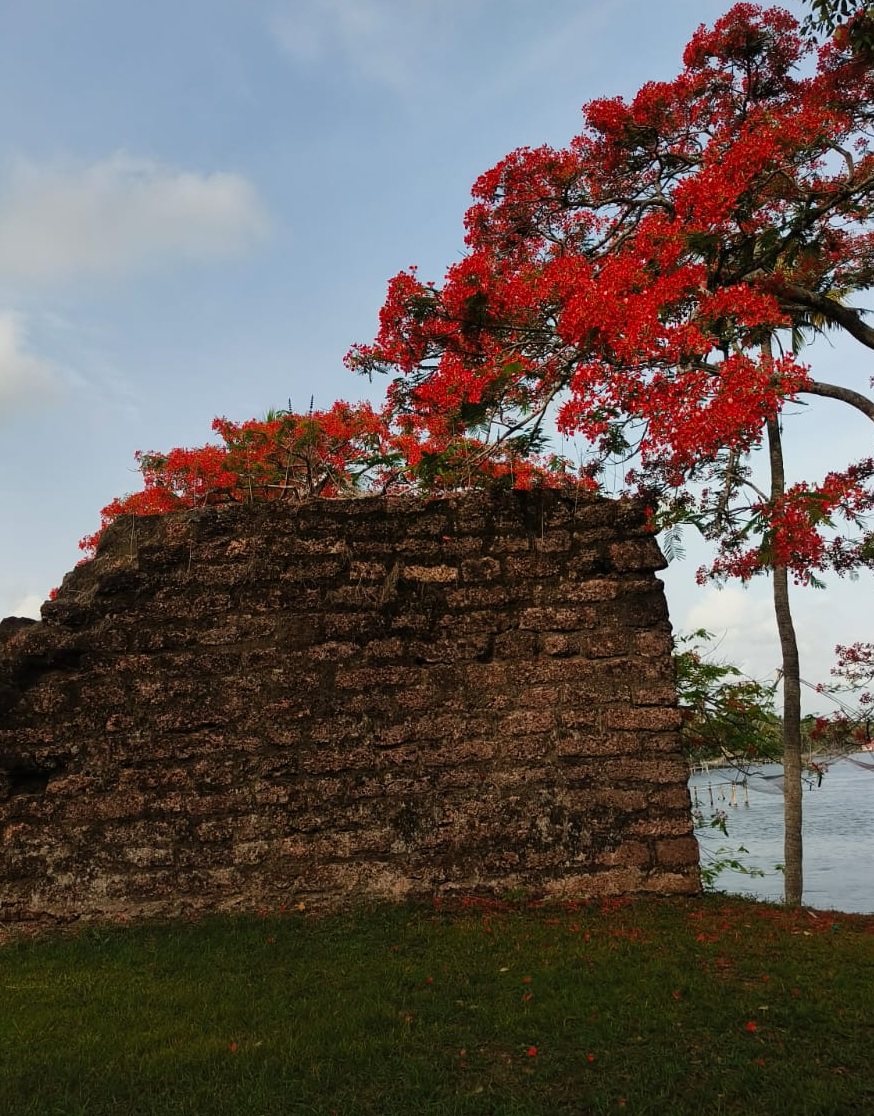
The laterite walls
Excavators also recovered around 40,000 artefacts, including megalithic tools, coins, ceramic pots, iron and stone cannon balls, foreign tiles and nails, reflecting the fort’s role as a hub of military and commercial activity.
Visitors to the site today see the fort lying quietly amid overgrown ferns, with its laterite steps sinking into the earth. But its northern walls hide a story more dramatic than many modern political battles.
Known as Ko-Ti kallu, or Kothikallu, these ancient boundary stones were used to demarcate the territories of Kochi (Ko) and Travancore or Thiruvithamcore (Thi).
The stones date back centuries and were placed along rivers, canals and roads, often leaving a narrow strip of no man’s land between rival kingdoms. They resolved disputes in an era when diplomacy was as literal as stone and blood.
After the Portuguese annexed Muziris in 1521 and built the fort in 1523, the region became a centre of intense political manoeuvring.
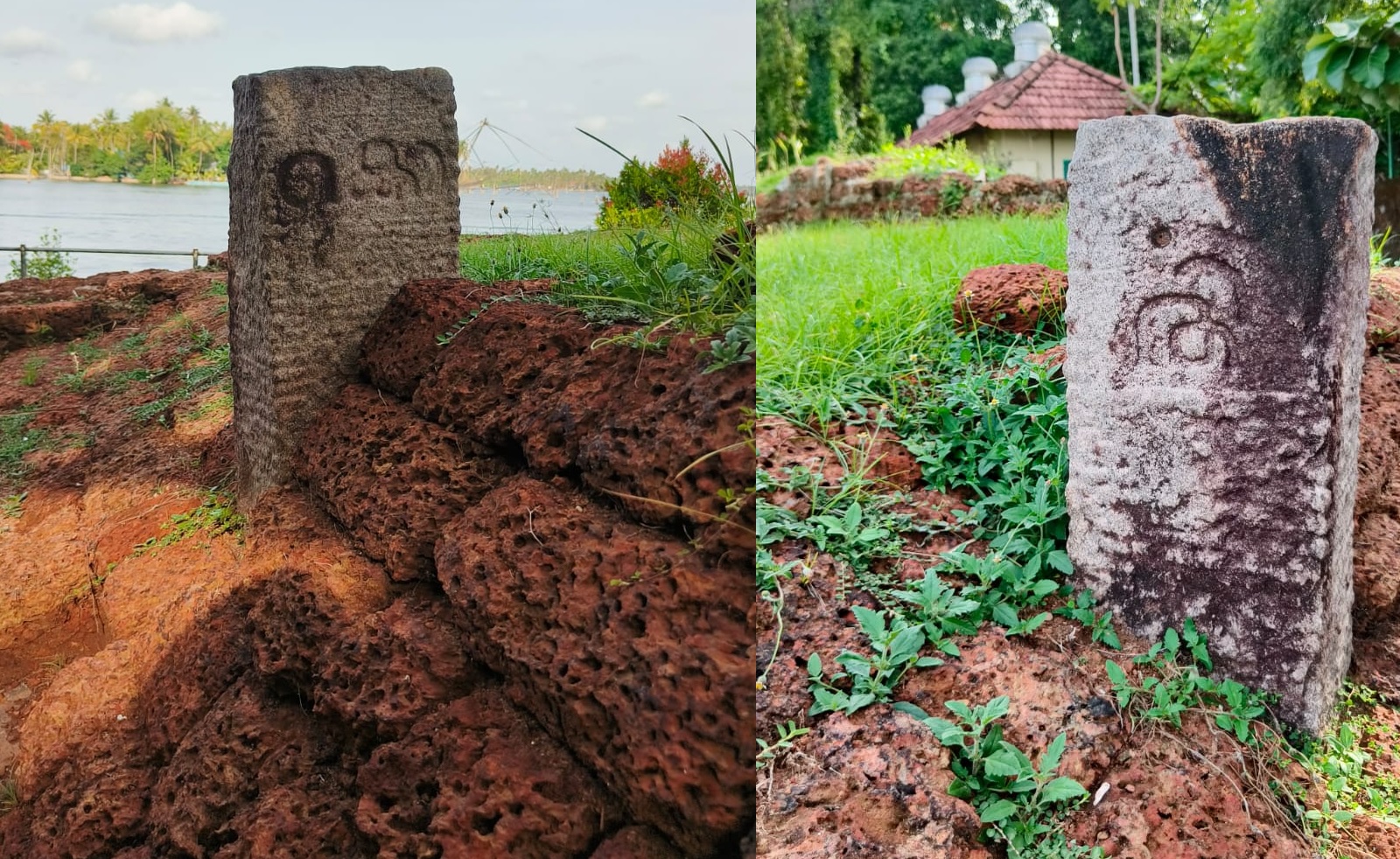
Ko-Ti Kallu
Kochi and Travancore remained independent princely states under British suzerainty until 1949, when they merged to form the State of Travancore-Cochin. On 1 November 1956, Kerala was formally established.
Despite development projects claiming many of these stones, a number still survive, preserved at Kottappuram Fort and the Sahodaran Ayyappan Museum in Cherai, silently narrating tales of rivalry, negotiation and territorial pride.
Walking through Kottappuram today, one sees layers of history, from Portuguese and Dutch fortifications to Tipu Sultan’s invasions, all woven together with the silent stories of people.
The Muziris Heritage region encompasses archaeological treasures such as Pattanam, religious landmarks including the Cheraman Juma Masjid, Kottakavu Church and local synagogues, alongside Dutch and Portuguese architectural legacies like the Paliam Dutch Palace and even Cherai Beach, all echoing Kerala’s centuries-old spice trade and multicultural past.
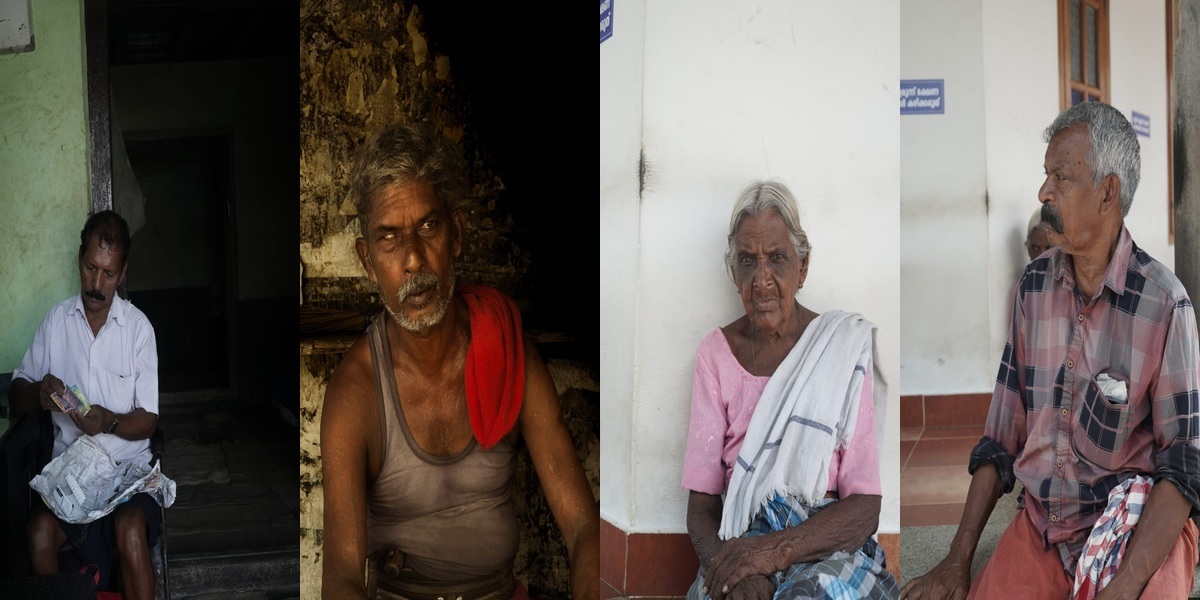
Yet perhaps its heart is the Kottappuram market. Here, South First met porters, traders and ordinary residents who shared stories passed down through generations.
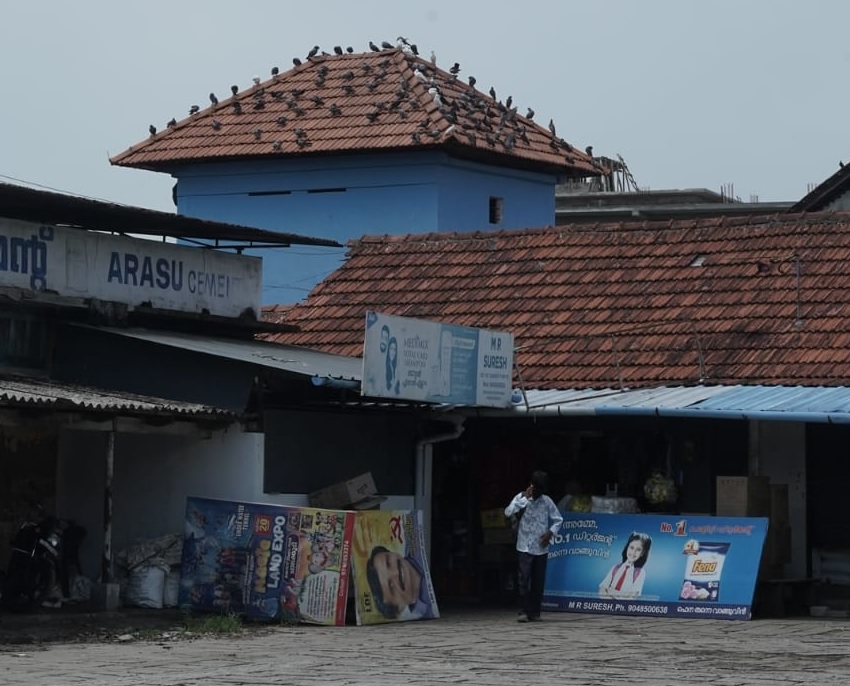
Kottappuram Market
“Porters have been active here for centuries. Foreign traders needed manpower to unload goods from the port. Many worked as slaves, stripped of dignity and identity. Today, we have our identity back,” one Centre of Indian Trade Unions worker explained.
“Unions are active, people know their rights, and we live with dignity. The buildings still stand. These are the same paths we walked, the same footprints that carried loads on our heads.”
Managing Director Sharon Veetil of the Muziris Heritage Project stressed the collaborative approach to their work.
“We are planning new initiatives across the 25-kilometre Muziris region, all rooted in local participation. Experts alone cannot sustain this project. We need locals, entrepreneurs, product movement and revenue generation to ensure the community benefits,” he told South First.
Starting Tuesday, 6 January, the Biennale will also host a one-of-a-kind three-day conference at the historic Bolgatty Palace in Ernakulam, revisiting the ancient Spice Routes as a cultural corridor linking Kerala’s Muziris port to the Middle East, Africa, Asia and Europe.
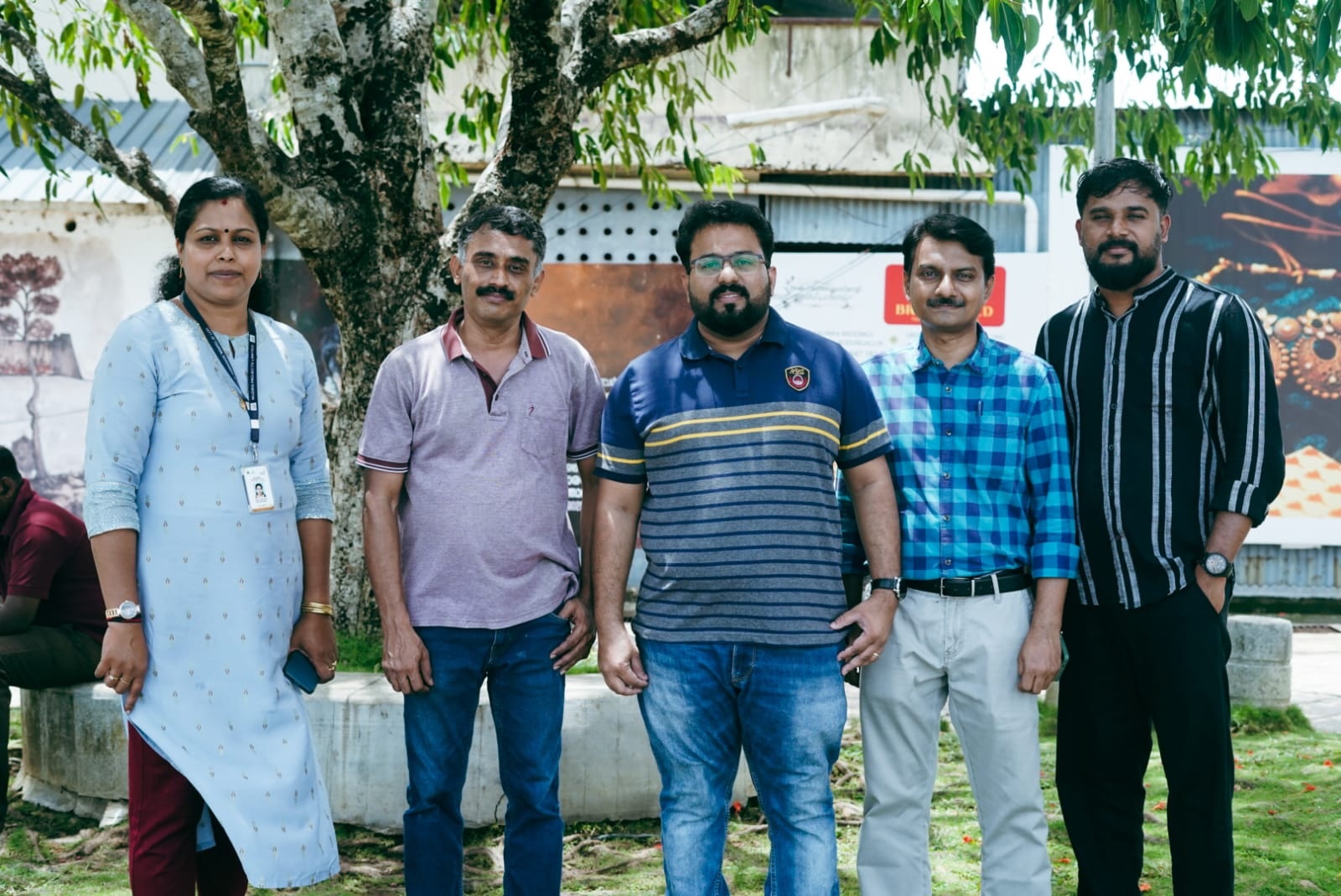
Sajna and Sharon (center) with the experts visiting the Muziris Heritage site.
It will explore maritime trade, migration, knowledge and cultural exchange across the past two thousand years and feature 38 international delegates from 22 countries, alongside academicians, historians, archaeologists, diplomats, policymakers, artists and performers.
“This conference positions Kerala not just as a destination, but as a crossroads of history, culture and global exchange. It opens new avenues for heritage tourism while celebrating centuries-old connections with Asia, Africa and Europe,” Tourism Minister Shri Mohamed Riyas noted.
Special exhibitions and performances, including Riyas Komu’s Aazhi Archives, Chavittu Nadakam by Thampi Asan, and Migrant Dreams, will complement the discussions, offering visitors a multi-sensory encounter with Kerala’s maritime past.
Beyond trade and commerce, the conference will highlight the human stories and cultural ecosystems shaped by the Spice Route, underscoring southern India’s enduring influence on world history.


