

Published Mar 31, 2026 | 11:39 AM ⚊ Updated Mar 31, 2026 | 11:39 AM

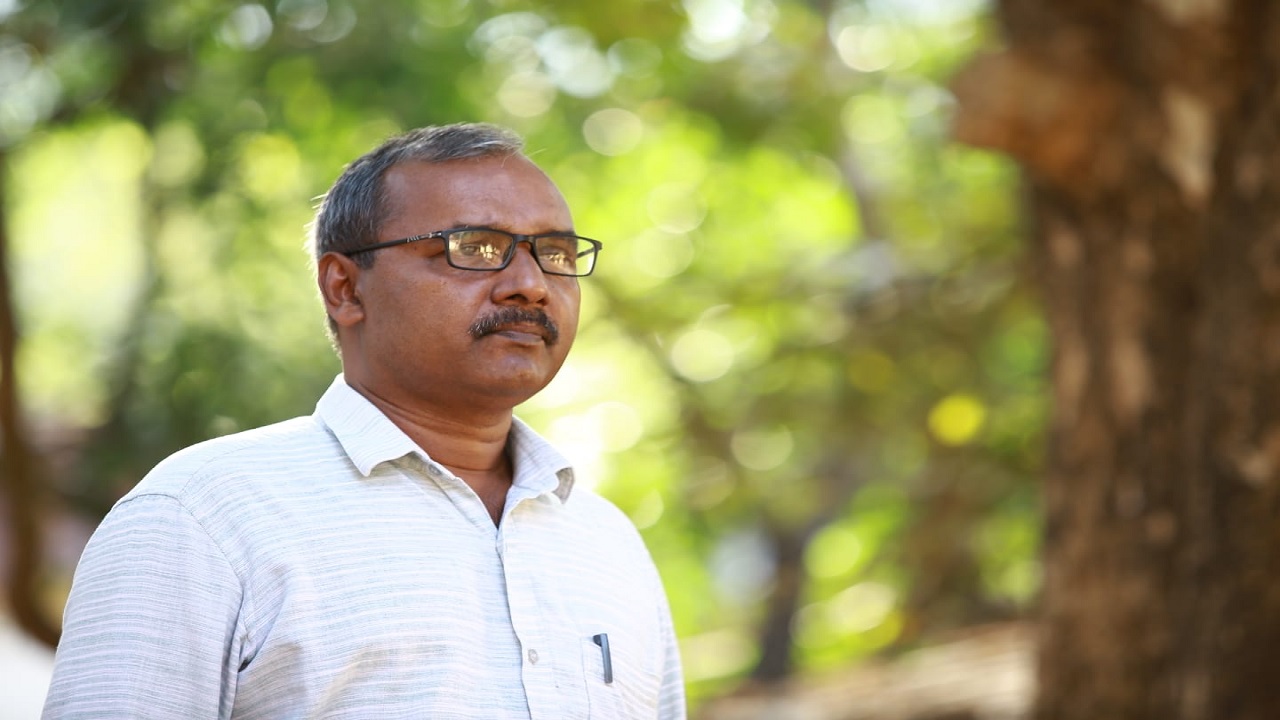
K.K Surendran
Synopsis: Retired teacher KK Surendran waged a prolonged legal battle to prove his tormentors — Kerala Police, in this case — were wrong. But the price he paid still haunts him, as sudden pain pierces through his body. Today, he is a relieved man. He is no longer branded a Maoist. Further, a court has ordered the State of Kerala to compensate him with money recovered from the police officers who had tortured him in custody.
Surendran wraps himself in multiple layers of clothing before stepping out of his residence in Wayanad.
A slight chill is enough to send a sharp pain in his damaged left ear. Injuries inflicted in police custody years ago remain with him, through sleepless nights, medical visits and memories that refuse to fade.
Now, even more than two decades after the brutality, Surendran cannot live like he once did.
For KK Surendran, a retired lecturer at the District Institute of Education and Training (DIET) in Sulthan Bathery, the brutality of February 2003 has never ended.
This week, the Wayanad District Court verdict offered him something he had been waiting for more than two decades — that what had happened to him was illegal, cruel and unforgivable.
Upholding a 2021 Sulthan Bathery Sub Court order, the District Court directed the State government to pay Surendran ₹12.5 lakh as compensation for his illegal arrest, custodial torture and prolonged humiliation.
The court also ordered that the amount should later be recovered from the personal assets of the police officers responsible for Surendran’s ordeal.
The verdict is not just about money for Surendran.
”The mental trauma my family suffered, the public humiliation and the irreversible physical damage erased many productive years from my life.” he told South First.
The morning chill was biting on 23 February 2003, like any other winter day in Wayanad. Surendran got ready for work and reached DIET, where he worked as a teacher trainer. Little did he then know that his life was about to change.
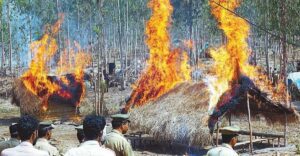
Police violence after the Muthanga tribal agitation in Wayanad, Kerala (Supplied)
The change was not minor. His life was upended unexpectedly.
”Suddenly, Sub-Inspector Viswambharan barged in, took me by the scruff of my neck and bundled me into the police vehicle. I did not even get the time to ask what I had done wrong,” Surendran recalled.
The Muthanga agitation, which culminated in the police firing 18 rounds, was then at its peak.
Led by tribal leader CK Janu, the protest began on 3 January 2003, demanding land rights for the tribespeople. Many families from tribal colonies had moved into the Muthanga forest area.
Surendran’s only connection to the agitation was through his work.
A teacher involved in tribal education, he frequently visited tribal colonies in Wayanad. During the agitation, he realised that many tribal students, especially those preparing for the SSLC examination, were missing classes. He feared that the agitation would cost them their chance to sit for one of the most important examinations of their lives.
”As a teacher, my only concern was about the children. I did not want them to lose their opportunity to write the SSLC exam” he said.
Surendran visited the Muthanga protest site and spoke to tribal activist M Geethanandan. He urged him to ensure that students were allowed to attend the examinations.
That brief conversation was later twisted into ”evidence” against him.
According to Surendran, Geethanandan wanted to note down his name and office details for future follow-up. Unable to find a pen, he borrowed one from Surendran.
M. Geethanandan
It was an ordinary office pen filled with green ink.
Geethanandan wrote down Surendran’s name and office details in his personal diary using the pen.
Later, when Geethanandan was arrested, the police recovered the diary. Surendran’s name, written in green, immediately caught their attention.
”Without any enquiry, without asking any questions, they labelled me a Maoist,” Surendran said.
The police were also investigating the presence of a man from Tamil Nadu in the Muthanga protest site. They suspected him of having LTTE links.
”They kept asking me whether I was from the Paniya tribal community, whether I was a Maoist, whether I had links with the LTTE,” Surendran said.
”They were in a hurry to connect me with somebody. They wanted to brand me either a Maoist or an LTTE activist.”
Though the local police later filed a chargesheet alleging extremist links, the Central Bureau of Investigation (CBI), which took over the case, eventually cleared Surendran of all allegations.
But then, it was too late for Surendran, who had already become a punching bag.
Surendran said the violence began soon after he was taken into custody.
”Circle Inspector Devarajan first punched me in the stomach. Then, SI Viswambharan started beating me. Finally, they handed me over to the reserve police.” he said.
Most of the policemen were young, he recalled. They used all their might on his body. ”They hit me on the ears, rupturing my eardrum.”
According to court records and his affidavit, Surendran was dragged on the floor in front of students and colleagues, thrown into the police jeep, stamped on with boots and repeatedly punched in the abdomen. He was denied food and water. Both his ears bled. He fainted after police struck him on his temples.
VS Achuthanandan. (X)
The torture continued from morning until night at the Sultan Bathery Police Station.
He was not produced before a magistrate within 24 hours, as required by law. His family was not properly informed about his arrest. Three criminal cases related to the Muthanga agitation were later slapped on him.
Three days after his arrest, former Chief Minister VS Achuthanandan visited him at the Kannur Central Prison.
”I still remember the reassuring words of VS,” Surendran said.
”I could not even walk properly then. My internal organs were badly damaged. He (VS) made sure that I got treatment and emotional support,” Surendran said, adding that Achuthanandan stood by him throughout his long fight for justice.
The legal fight did not end when the CBI exonerated him.
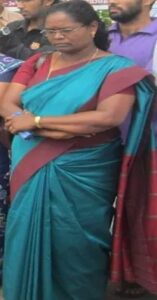
CK Janu.
Surendran spent years in court seeking compensation for the torture he had suffered. In 2021, the Sulthan Bathery Sub-Court directed the state government to pay him ₹5 lakh. But instead of accepting the verdict, the State challenged it.
”The government always says it stands with those who suffered during the Muthanga agitation. But the same government went on appeal against me” Surendran said.
Now, the District Court has enhanced the compensation to ₹12.5 lakh with six per cent interest from the date of filing the suit. The court also made a significant observation: after paying compensation, the State should recover the amount from the police officers responsible.
The amount is to be recovered jointly and severally from the personal assets of former Sub-Inspector P Viswambharan and Circle Inspector V Devarajan within three months.
Referring to previous custodial torture cases, including that of ISRO scientist Nambi Narayanan, the court observed that officers responsible for such abuse should not be allowed to go scot-free.
For Surendran, however, there is still uncertainty.
”A new government will come after the elections. I do not know whether they will implement the order or go on another appeal,” he said.
He also remembered those who stood by him. There were very few.
He thanked advocates KV Eldho and KN Mohanan, who fought the case for years. ”They did not stand with me for money. They stood with me for justice,” he said.
He also recalled the doctors who gave honest medical reports despite pressure and CK Janu, who appeared in court to support him during the legal battle.
Surendran said Janu called him after the latest verdict.
Surendran’s case is not only about one man. It is also about the larger question of what happens when the police misuse their power.
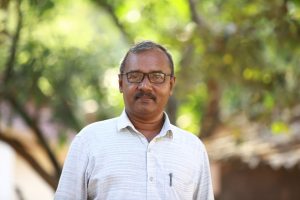
KK Surendran
Legal experts point out that most people are unaware that victims of state violence can seek compensation directly through constitutional remedies.
”Police misconduct does not end with suspension. There are constitutional consequences” an advocate told South First.
Public law remedies, rooted in Articles 32 and 226 of the Constitution, allow courts to intervene directly when the state violates fundamental rights.
Courts can issue writs, injunctions and in serious cases like custodial torture, order compensation. For Surendran, the verdict cannot restore his hearing, undo the damage to his spine or erase the humiliation of being branded a Maoist.
But after more than two decades, it has at least done one thing: It has officially said that what happened to him was wrong!
(Edited by Majnu Babu).


