

Published Nov 23, 2024 | 8:40 AM ⚊ Updated Nov 23, 2024 | 8:40 AM

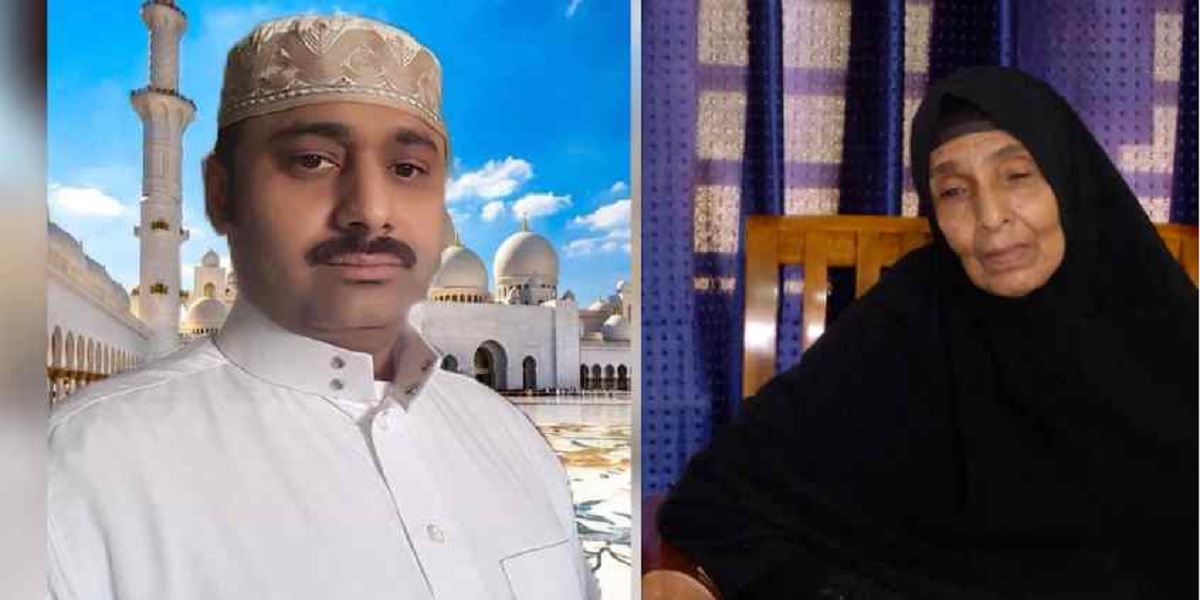
Abdul Rahim and Fathima.
In the quiet hours between Subah and Maghrib, sunrise and sunset, and as the day winds down to Isha, night, 75-year-old Fathima’s heart remains steadfast in prayer.
For 18 years, she has asked Allah for only one thing — that Abdul Rahim, her son, return to her.
Zeeyath Manzil Fathima and Abdul Rahim, from Kodampuzha village, Kozhikode district, are well-known in Kerala.
Malayalees across the world contributed funds to prevent the execution of Abdul Rahim in Saudi Arabia, after he was sentenced for the accidental death in 2006 of the disabled 15-year-old Saudi citizen in his care.
Rahim Niyamasahaya Samiti, the legal aid committee that was formed to help Abdul Rahim, raised ₹47.87 crore, from nearly nine lakh donations; ₹36.27 crore was spent towards payment of blood money to the teenage boy’s family and towards legal expenses.
When South First reached out to Fathima over the phone, she said she was in the middle of Asar prayers, the third of the five daily prayer times in Islam that occurs at midday, when one’s shadow is the same size as one’s height.
After her prayers, she called back. Despite her health struggles, Fathima finds comfort in the protection of her son, Nazeer, who guards her like the apple of his eye.
Fathima has five other children — three daughters and two sons — besides Abdul Rahim.
Fathima’s hearing loss makes conversations challenging, and we need to speak a bit louder to communicate with her.
Waves of emotions overwhelm her as she speaks about her younger son Abdul Rahim, and her voice trembles when his name is mentioned.
She visited Abdul Rahim just nine days ago, when she met him in the Saudi jail where he is currently lodged.
“When I first tried to see him in jail, he refused. He was in pain too, unable to face me in such a place. The next day, he agreed to meet me. Before seeing him, I performed Umrah (pilgrimage to Mecca). When we finally met, we hugged and cried a lot. The jail authorities were kind and allowed us nearly half an hour together, which was unusual. They even served us chai and snacks. Now, I hold onto hope that my child will soon return,” she said.
Abdul Rahim’s elder brother Nazeer told South First that there had been an unexpected delay in his brother’s release.
“We were optimistic that his release would follow shortly after his death sentence was commuted. However, the Riyadh court has postponed the case for another two weeks, citing procedural delays.
Despite our persistent efforts, the final release order remains unsigned. Had the court approved it during the Sunday hearing (17 November) as scheduled, Rahim could have been freed by now. Now, his release is expected to be reconsidered in two weeks. We expect his release order to be issued on 8 December.”
Nazeer said the legal aid committee had announced plans to utilise the remaining ₹11.6 crore in the trust account for philanthropic activities once Rahim gets home safe.
Nazeer vividly remembers the day Abdul Rahim decided to go abroad. “He was just 24 then,” Nazeer recounts.
In 2006, Rahim, an auto-driver in Farook, Kozhikode district, left for Saudi Arabia in search of better opportunities. He found work as a family driver in Riyadh, but it came with an added responsibility — care of a differently-abled boy in the household.
“That left him anxious,” Nazeer recalls.
Mobile phones were not as accessible back then, but Rahim managed to call home often, expressing his struggles and saying he couldn’t cope with the job.
“We thought it was just the challenge of youth,” Nazeer admits, “the kind that everyone faces when confronted with the harsh realities of life.”
But fate took a devastating turn. One day, while Rahim was driving with the boy, a medical device the boy relied on to breathe accidentally slipped and fell inside the car. The boy lost consciousness and tragically passed away. Although it was unintentional, Rahim was charged with murder under Saudi law and sentenced to death.
The boy’s father, who initially pursued the case, later passed away, leaving all legal matters in the hands of the family’s lawyer.
For years, Rahim’s family clung to the hope of mercy. Finally, after 18 long years, the boy’s family agreed to accept blood money in April 2024 — a sum of ₹34 crore. (Islamic law has a provision called Diya, the payment of compensation to the victim or kin in cases of murder, bodily harm or property damage by mistake.)
The ordeal, Nazeer says, remains a haunting chapter in their lives, a stark reminder of how life can change in an instant.
Just three days before Abdul Rahim’s scheduled execution, Malayalis worldwide managed to raise a staggering ₹34 crore. More money would flow in; the collections would exceed what was required, and the committee then put out an announcement that the sum had been collected; people could halt further donations.
According to Nazeer, both the Saudi authorities and the family of the deceased boy were astonished by how quickly the funds were collected.
“At that moment, we regained hope,” he remarked. The action committee spearheading the effort launched a mobile app called SAVEABDULRAHIM to facilitate crowd-funding. In addition to the app, a significant number of people directly contacted the committee to contribute.
Reports indicate that ₹24 crore was gathered within just four days. Rahim’s home, serving as the campaign’s operational hub, saw an influx of supporters.
As 8 December approaches, the date when Saudi authorities are expected to declare Abdul Rahim’s final verdict and release date, his family clings to hope.
Fathima reflects on the toll these years have taken.
“I lost my husband six months after Rahim was jailed,” she said, her voice heavy with emotion. “Since then, I haven’t stepped out of the house, except to visit my son a few days ago. I never attended any functions, not even my grandchildren’s weddings. I stopped celebrating Ramzan and Eid altogether. All I have now is this hope — that the verdict will come as the end of our trauma.”
Nazeer described the recent meeting. “We couldn’t even take a picture with him,” he said, his words tinged with regret. “Mobiles are not allowed there. Umma still holds onto an old photograph of him, gazing at it every day. She’s waiting for the moment she can finally embrace her beloved child again.”
(Edited by Rosamma Thomas)



