

Published Feb 13, 2026 | 8:00 AM ⚊ Updated Feb 13, 2026 | 8:00 AM


Out of the 30 constituencies the LDF currently holds 20 seats while the UDF has 10, making these seats politically important for both alliances.
Synopsis: An old narrative suggests that churches dominate high-range politics in Kerala, much like in coastal regions. In reality, other communities also play a significant role. With the UDF holding 10 seats and the LDF 20 in the High Ranges, a new challenger, KIFA, is targeting this political space ahead of the Assembly polls, claiming that both Fronts have been turning a blind eye to farmers’ issues. From crop losses to shifting community equations, religion and local issues continue to shape high range politics.
February and March are the peak harvest months for pepper in high altitude areas in Kerala — popularly referred to as the high range. However, this season, the gardens have reached harvest time without the fruit. Across Wayanad, Idukki, Kannur, Pathanamthitta and Kozhikode, vines that once glowed with green spikes now stand bare.
Flocks of birds have plucked the harvest, leaving behind only empty creepers where pepper should have hung.
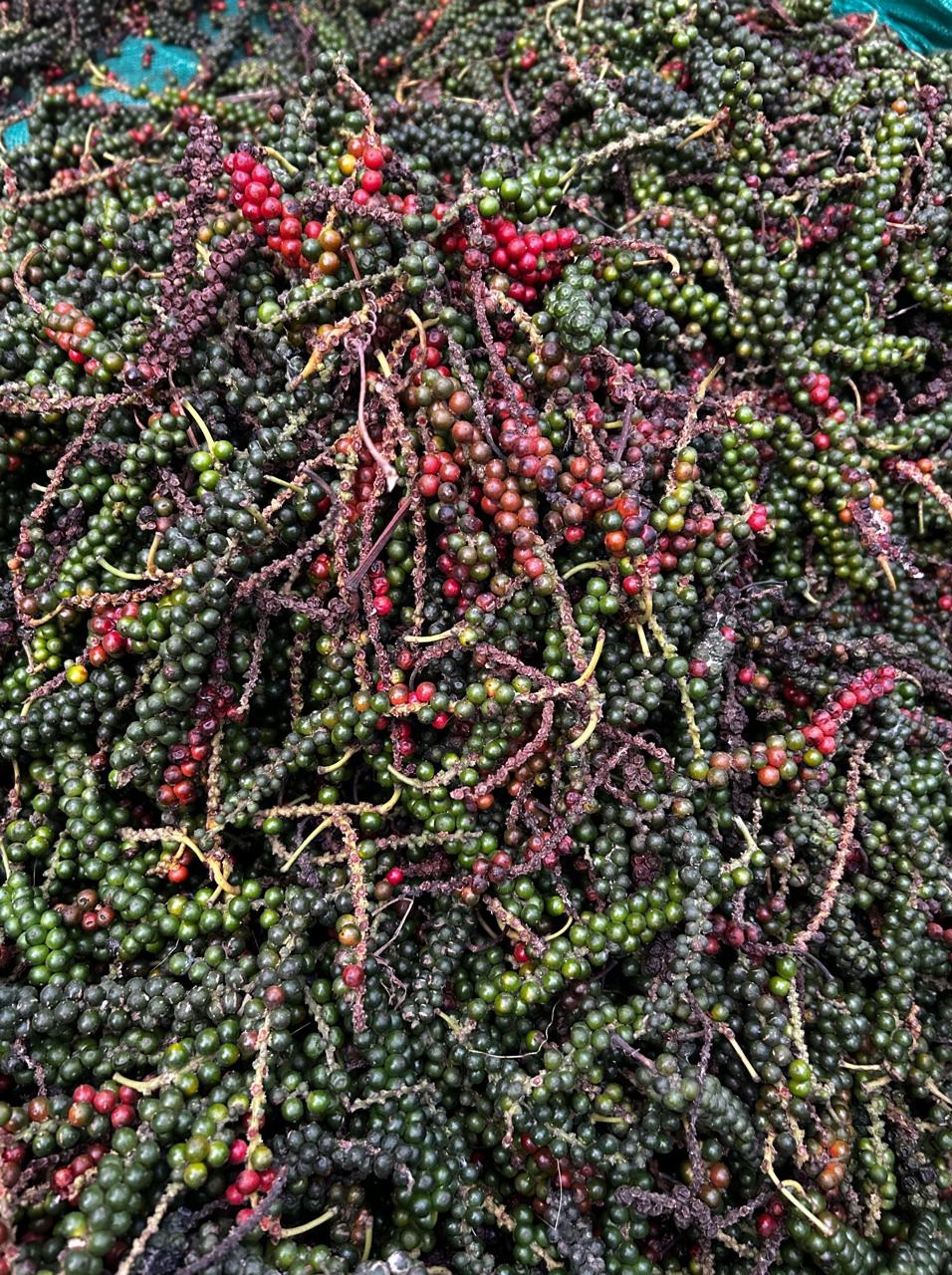
Pepper harvested across the Attappady region is being damaged by birds.
Data shared by the Spices Board shows that black pepper production is declining in Kerala. Farmers estimate output for the 2025–26 financial year at around 55,000–58,000 tonnes, a sharp fall from 126,038 tonnes in 2023–24.
Thomas Mathew, a black pepper farmer from Idukki, told South First, “Black pepper prices in the Kochi market are now only ₹700–₹720 per kg, which is very low. The yield is not export-worthy because damage caused by birds and climate change has reduced its quality. Has any political leader in Kerala raised this issue? The media shows man–wildlife conflict as the only problem in the high ranges, but it is just one of many.”
Now, high-range farmers in Kerala have decided to raise their own political voice.
The Kerala Independent Farmers Association (KIFA) has announced it will contest in 30 Assembly constituencies to ensure farmers’ issues are heard on the floor of the Assembly.
As farmers step into high-range politics, new questions arise — who stands to gain, and who stands to lose?
KIFA chairman Alex Ozhukayil told South First that, ”To revive the farming sector, a support price based on the MS Swaminathan Commission’s recommendations is essential. The minimum price should be ₹250 for rubber, ₹70 for coconut and ₹35 for paddy.”
“Relaxation of the Land Reforms Act, legal clarity on killing wild animals in self-defence, regulated culling, and improved compensation for wildlife attacks are crucial. We are ready to cooperate with any political front that accepts these demands and reflects them in its manifesto. Our candidates will be announced in the first week of March after parties make their stand clear.”
“In Peravoor, Sunny Joseph won in 2021 by just 3,172 votes. Even a swing of about 1,500 votes could change the result this time,” he said. He mentioned Peravoor as a possible constituency from which he may contest, noting that it has a significant presence of farmers.
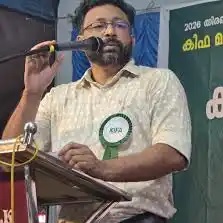
KIFA chairman Alex Ozhukayil
KIFA has announced that it will contest in the constituencies of Kanhangad, Irikkur, Peravoor, Mananthavady, Sultan Bathery, Kalpetta, Thiruvambady, Perambra, Nadapuram, Nilambur, Wandoor, Mannarkkad, Nenmara, Alathur and Kongad, as well as in Chalakkudy, Chelakkara, Ollur, Kothamangalam, Muvattupuzha, Devikulam, Idukki, Peermade, Udumbanchola, Ranni, Konni, Poonjar, Punalur, Kottarakkara and Parassala.
Out of the 30 constituencies, the LDF currently holds 20 seats while the UDF has 10, making these seats politically important for both alliances.
In February 2025, Kerala’s Leader of the Opposition VD Satheesan launched a political campaign called the Malayora (high-range) Samara Yatra, focusing on what he described as the state government’s failure to effectively address human–wildlife conflict.
Kerala’s terrain gives this issue added political weight — the high ranges cover about 48 percent of the state’s land area, compared to 42 percent in the midlands and only 10% along the coast.
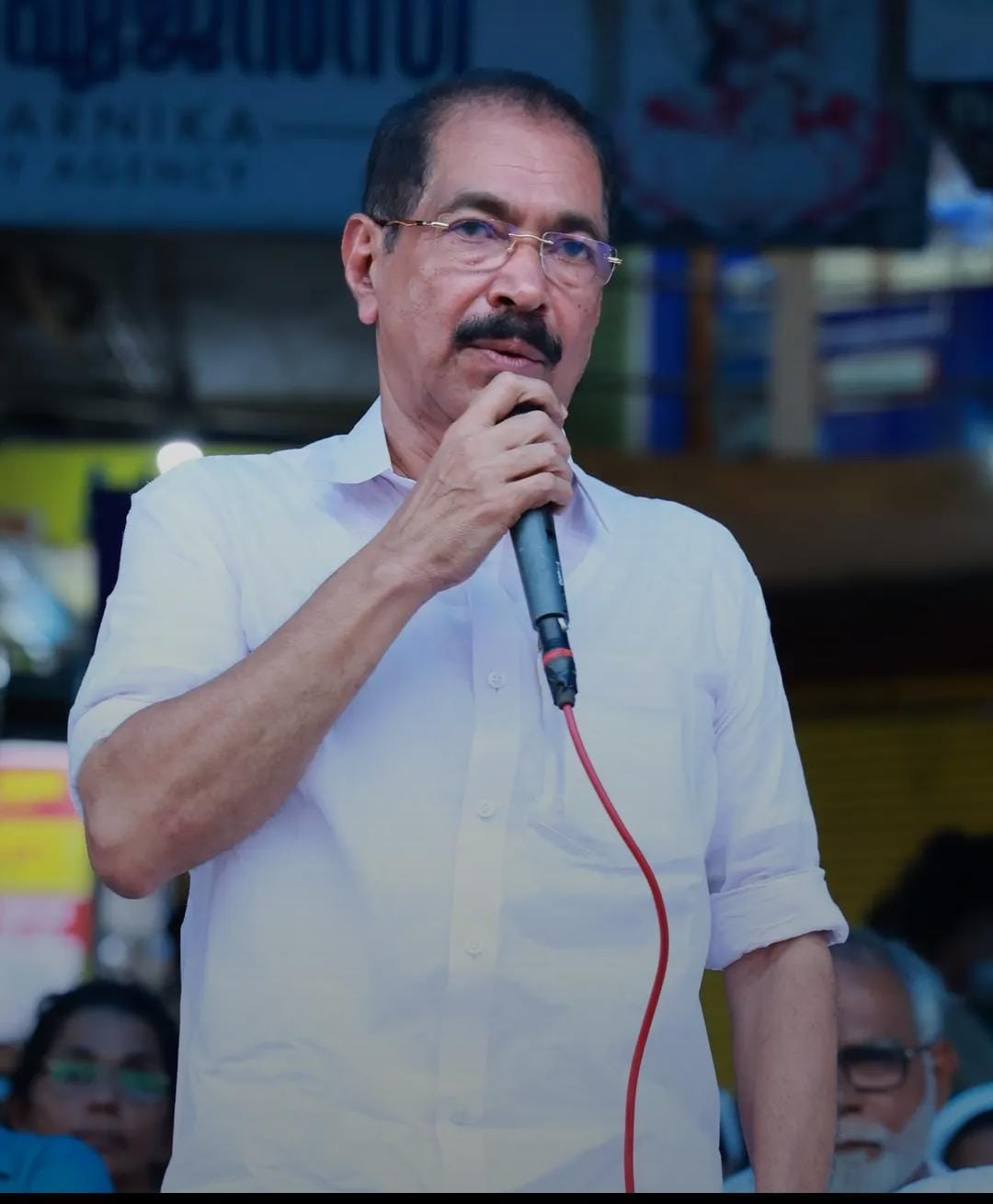
Sunny Joseph
Irikkur and Peravoor are the high-range Assembly constituencies of Kannur district, both currently represented by the Congress— Irikkur by Advocate Sajeev Joseph and Peravoor by Kerala Pradesh Congress Committee (KPCC) President Sunny Joseph.
These regions were shaped by the Malabar Migration that took place from the early 20th century until the 1980s, and today Christians form over 30 percent of the population in both constituencies.
Irikkur has elected Congress-backed Christian candidates since the 1980s, while Peravoor has followed the same pattern over the last decade.
“My ancestors migrated from Kottayam (Central Travancore) to Malabar in search of farmland. The influence of Thalassery Bishop Joseph Pamplany was once decisive in these areas, but after his remarks were seen as favouring the BJP, sections of the community- mainly Syrian Catholics and Roman Catholics have begun distancing themselves from clerical political guidance,” said Tittu Jacob, a farmer from Peravoor speaking to South First.
Mananthavady (ST), Sultan Bathery (ST), and Kalpetta are constituencies with a significant presence of farmers. Currently, Minister OR Kelu of the CPI(M), IC Balakrishnan and T Siddique of the Congress represent these constituencies respectively.
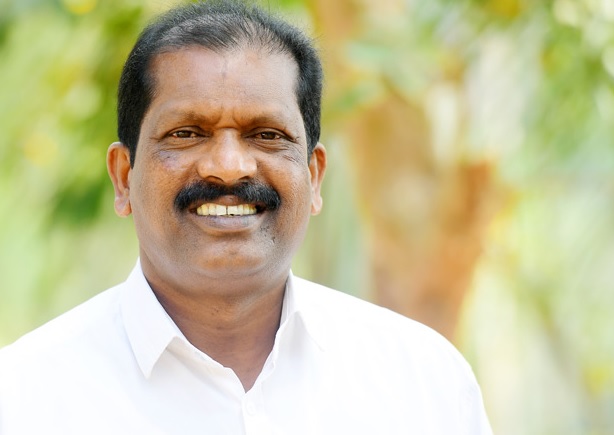
Minister OR Kelu of the CPI(M)
“Mananthavady has Hindu, Christian and Muslim voters with about 11 percent Scheduled Tribe population and an agriculture-based economy. Sultan Bathery has a large settler population along with Paniyar and Kurumar tribes and a strong farming base, while Kalpetta has Muslim-majority areas like Vellamunda and Panamaram, IUML strongholds,” Vineesh Ravi, a political observer from Wayanad, told South First.
“The idea that Wayanad farmers are mostly Christians is false. In these three constituencies, results largely depend on tribal votes. Except for Kurichyas, tribes are not politically organised and are often influenced by cash and liquor. Mananthavady alone has about 40,000 Kurichya voters. Adiya and Paniya communities traditionally support CPI(M), while Muslims are politically flexible,” he said.
“In Bathery and Pulpally, Christians from central Travancore back Congress. CK Janu’s own Adiya community does not support her in Mananthavady. Christian voters in Nadavayal, Pulpally and Mullankolli also favour Congress. KIFA raises wildlife conflict issues but will not gain politically,” Ravi added.
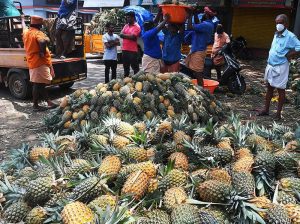
Vazhakkulam Market
Kothamangalam and Muvattupuzha are represented by CPI(M) MLA Antony John and Congress MLA Mathew Kuzhalnadan, respectively, and both constituencies in Ernakulam district have a significant presence of Syro-Malabar Catholics and Jacobites.
Ernakulam District Congress Committee (DCC) President Muhammed Shiyas told South First that the UDF has set an ambitious target of reclaiming all 14 Assembly seats in the district, including Kalamassery, Vypeen, Kochi, Kunnathunad and Kothamangalam, which it lost in 2021.
In Muvattupuzha, a member of the KIFA who is also a pineapple farmer from Vazhakkulam, said the region — India’s largest pineapple-producing belt — continues to suffer from price fluctuations and export bottlenecks.
“Traditionally, farmers supported Congress and Kerala Congress. Now Kerala Congress is with the Left, and Congress is trying to regain lost ground. But unless the concerns of farmers and small industrialists are addressed, no party can make headway here,” he told South First.
In Idukki district, Devikulam and Idukki constituencies have also emerged as key battlegrounds, where religion intersects with class politics. CPI(M)’s A Raja draws support from the working class, while Kerala Congress (M) minister Roshy Augustine enjoys backing from sections of the Catholic community.
Raja told South First that central laws have created severe hardships for farmers in the high ranges. He said the Kerala government had already passed a resolution to address the human–wildlife conflict, including measures such as culling wild boars, but it is still awaiting approval from the Governor and the President since the matter falls under the Concurrent List.
Raja also alleged that the Union Budget offered nothing for farmers and stressed the need for several amendments to the Wildlife Protection Act of 1972. He added that the state government has introduced floor prices for many crops as a relief measure and reaffirmed that the Left government stands firmly with farmers. “Unlike the Congress, which claims to support farmers but does nothing for them, we are consistently working for their welfare,” he said.

A cardamom farmer in Idukki refused to provide a picture of his plantation since his plants were not looking good after the summer. He later arranged the photograph of a ‘healthy’ plantation. (By special arrangement)
The JB Koshy Commission report has added to the political churn in Idukki’s Catholic belt, with Church authorities questioning Chief Minister Pinarayi Vijayan’s claim that most recommendations have already been implemented.
Moncy Cherian, a Roman Catholic Church leader from Idukki, told South First that the assertion appeared aimed at consolidating Christian votes ahead of the elections.
The Eparchy of Idukki serves around 2.45 to 2.66 lakh Syro-Malabar Catholics across more than 150 parishes, in a region where Christians constitute over 43 percent of the population.

A Raja, the sitting MLA of the Devikulam constituency. (Facebook)
“The government must publish the commission’s recommendations before the Election Commission issues the poll notification. There is also a lack of clarity on the proposed welfare fund for Sunday school teachers,” he said.
“Cardamom, tea, pepper, cocoa and rubber are the major crops here. Has anyone addressed the losses farmers are facing? Not everyone who owns these plantations is wealthy. Many are struggling badly due to climate change–induced crop loss, but there has been little support, except for the assistance given to cardamom growers last year,” Siju Gopalan, a cocoa farmer from Idukki, speaking to South First.
However, Alex Ozhukayil said the political discourse often ignores the role of the Ezhava community.
“The narrative suggests that only the Christian vote matters in Idukki, but nearly 40 percent of farmers belong to the Ezhava community, which has traditionally backed the CPI(M). While Christian farmers once trusted Kerala Congress, many now question its claims of representing high-range farmers,” he said.
“Earlier, people followed Bishop House directives, but this time farmers are recognising the political agenda behind such moves,” he added.
He also flagged the crisis in the tourism sector, pointing to a sharp decline in foreign tourists and incidents of attacks on foreigners in places like Munnar.
(Edited by Muhammed Fazil.)


