

Published Aug 07, 2026 | 9:00 AM ⚊ Updated Aug 07, 2026 | 9:00 AM

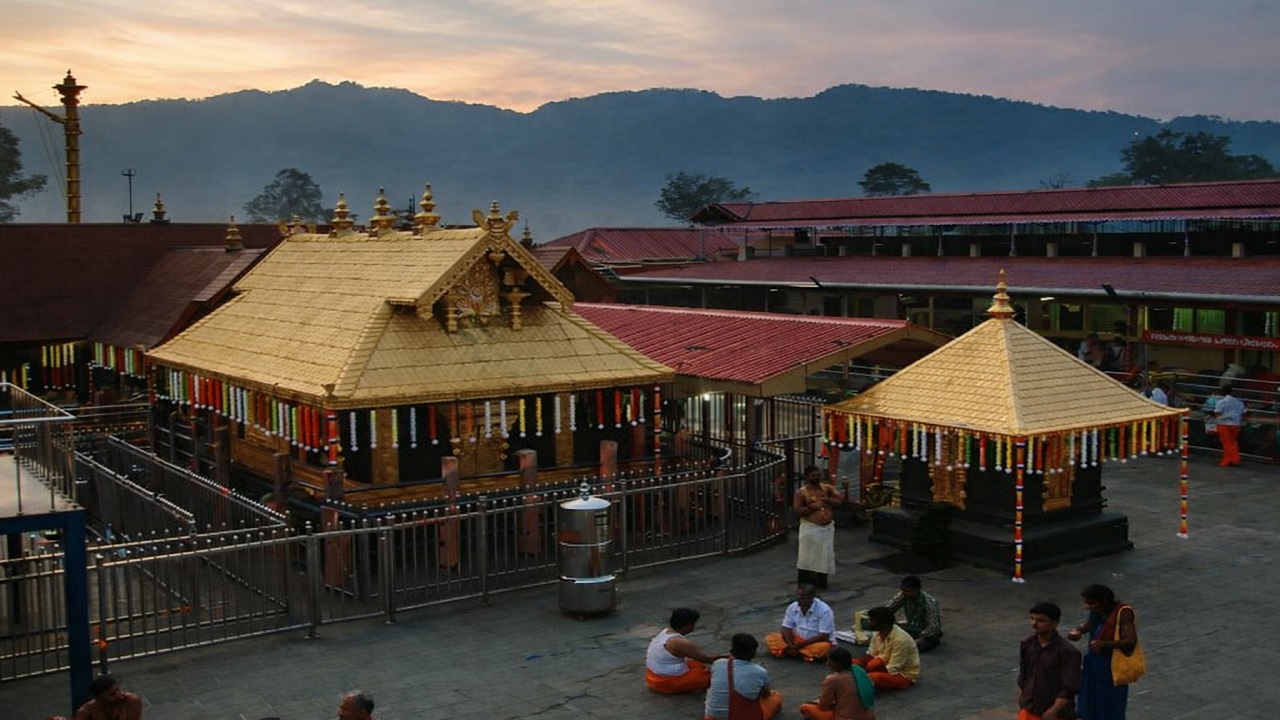
Woman in the age group of 10 and 50 are traditionally not allowed to visit the Sabarimala temple.

Synopsis: Prominent pilgrim centre Sabarimala is once again at the centre of a controversy—this time over the procurement of ghee used for preparing aravana prasadam during the 2025–26 pilgrimage season. The issue began after the Travancore Devaswom Board cancelled an ongoing e-tender, in which the lowest bidder had quoted ₹369 per litre, and instead purchased 1.65 lakh litres of ghee from Milma at ₹510 per litre. A preliminary inquiry later raised questions over the procurement process, alleged financial loss of ₹2.27 crore, discrepancies in the supply and accounting of over 1.61 lakh litres of ghee and the absence of proper quality verification.
Barely a few months ago, Sabarimala dominated headlines over an alleged gold theft case. Now, the hill shrine has once again found itself at the centre of a controversy, this time over ghee used in preparing an offering.
For many Keralites, one of the strongest memories of the Sabarimala pilgrimage is preparing the neythenga — a coconut filled with ghee — before embarking on the pilgrimage to the hill shrine. The ghee is offered to Lord Ayyappa during Neyyabhishekam, making it one of the most sacred offerings in the temple.
Ghee is also an essential ingredient in preparing the aravana prasadam, Sabarimala’s iconic offering.
That ghee is now at the centre of a raging controversy. It has been alleged that the ghee for Sabarimala might have been procured through irregular procedures, causing financial loss to the Travancore Devaswom Board (TDB). It was also alleged that there were discrepancies in its supply and quality.
What started as a small finding has now become one of the biggest controversies related to Sabarimala.
Also Read: After gold, revenue from ghee misappropriation exposed
The case relates to the procurement of ghee for preparing aravana during the 2025–26 Mandala-Makaravilakku pilgrimage season. The TDB initially floated an e-tender to procure the required quantity of ghee.
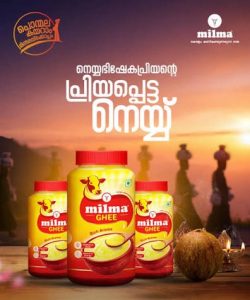
Milma ghee
Six companies participated in the bidding process.
According to records that the Kerala High Court later examined, Kumkuma Raj Dairy of Tamil Nadu emerged as the lowest (L1) bidder. It quoted ₹369 per litre.
However, before finalising the tender, the then TDB Administrative Officer Murari Babu allegedly recommended cancelling the tender and purchasing ghee directly from Kerala Co-operative Milk Marketing Federation, popularly known as Milma, a state government-run cooperative society.
Babu reportedly argued that Milma’s ghee was of superior quality and that only seven litres of ghee would be required to prepare a batch of aravana, compared to the usual 10 litres, thereby reducing overall consumption.
Acting on this recommendation, the then TDB president PS Prasanth and board member Aji Kumar approved the purchase of 1.65 lakh litres of ghee from Milma at ₹510 per litre, abandoning the ongoing e-tender process. The difference between Milma’s price and that of Kumkuma Raj was ₹141 a litre.
However, the Sabarimala Commissioner strongly objected to the proposal.
According to the inquiry report, the Commissioner pointed out that there was no scientific evidence to support the claim that Milma ghee required lower consumption or produced better-quality aravana. The Commissioner also questioned why the Board chose a significantly more expensive option despite an existing competitive tender.
Also Read: The myth of Sabarimala’s Makaravilakku is bust
The controversy escalated after TDB’s Chief Vigilance and Security Officer conducted a preliminary inquiry. The report, later submitted by the Sabarimala Special Commissioner before the High Court, questioned the procurement process, transportation, quality verification and accounting of the ghee.

TDB’s former president PS Prasanth.
One of the most significant findings was that the TDB could have saved approximately ₹2.27 crore if it had accepted the lowest bid instead of purchasing from Milma.
The inquiry also questioned whether the entire 1,61,535 litres of ghee shown in Milma’s records as supplied had actually reached Sannidhanam, the Sabarimala Sree Dharma Sastha Temple. It cited discrepancies in transportation records, receipt registers and stock accounting, while also noting the absence of proper quality testing of the consignments that had reached the temple.
Instead, officials allegedly relied largely on third-party quality certificates.
Another aspect that drew attention was Milma’s procurement pattern.
The inquiry found that Milma had purchased around 24,970 kilograms of ghee from Pune-based Sonai Co-operative Dairy on 17 August 2025 at ₹497 per litre, even though the TDB had placed the supply order with Milma’s Pathanamthitta unit on 26 July 2025.
Milma reportedly explained that the Pune purchase was intended to meet the demand during the Onam festival season, but the inquiry found the explanation unconvincing.
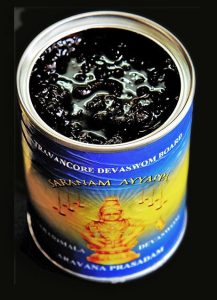
The ghee was procured for preparing the famed aravana prasadam.
The report also pointed out that substantial quantities of leftover ghee from Neyyabhishekam were already available at Sabarimala, raising doubts over the necessity of procuring such a large quantity of fresh ghee at a higher price.
However, allegations also surfaced that ghee collected from Milma was diverted during transportation, sold elsewhere and replaced with sub-standard clarified butter sourced from Tamil Nadu before reaching Sabarimala.
While these allegations are under investigation, Milma has denied any wrongdoing.
Also Read: The unsolved arson of Sabarimala Temple
After examining the Special Commissioner’s report, a High Court Division Bench of Justices V Raja Vijayaraghavan and KV Jayakumar observed that the preliminary inquiry prima facie indicated a possible coordinated course of action involving certain TDB members and officials, resulting in substantial financial loss to the Board and the possible supply of substandard ghee for aravana.

TDB’s former Administrative Officer Murari Babu (Supplied)
The court also noted the Chief Vigilance and Security Officer’s serious apprehension regarding whether the entire 1,61,535 litres of ghee reportedly supplied by Milma had actually reached Sannidhanam.
Terming the allegations serious, the High Court directed the Vigilance and Anti-Corruption Bureau (VACB) to register a criminal case, conduct a comprehensive investigation through a Special Investigation Team (SIT) and submit a progress report within one month.
The High Court also directed the VACB Director to submit a report within 10 days after ordering a vigilance probe by a special team into the alleged misappropriation of ghee supplied to Sabarimala. VACB Superintendent of Police MJ Sojan heads the SIT and includes Deputy Superintendent CS Hari, Inspectors Saji Shankar AS, Sreejith S, and Ratheendra Kumar.
The investigation is now expected to widen to examine the role of former TDB president Prasanth, former board member Aji Kumar and former Administrative Officer Babu, who died on 13 June.
The inquiry report said the Board under Prasanth’s leadership approved the direct purchase from Milma despite objections from the Sabarimala Commissioner. Prasanth and Aji Kumar were recently taken into custody in the Sabarimala gold misappropriation case. Babu had also been named as an accused in that case.
Meanwhile, Milma constituted a five-member internal committee to examine allegations that ghee supplied under its contract may have been diverted and replaced with lower-quality ghee before reaching Sabarimala.
The committee has been asked to submit its findings within three weeks. The Kerala government has also ordered a parallel Crime Branch investigation.

K Muraleedharan
Announcing the decision, Devaswom Minister K Muraleedharan said the inquiry report contained “shocking findings” and described the alleged lapses as not merely food adulteration but “cheating, deceiving and exploiting devotees.”
He said future supplies of ghee to Sabarimala would undergo batch-wise quality testing. At the same time, digital tracking and a digital movement register would be introduced to monitor every consignment from the manufacturing unit to Sannidhanam.
As things stand, the controversy is no longer confined to a procurement dispute.
The investigation will seek to answer several crucial questions: Why was a valid e-tender cancelled? Was public money wasted by purchasing ghee at a higher price? Did the entire quantity of 1,61,535 litres actually reach Sabarimala? Was the ghee supplied of the promised quality? And if irregularities did occur, who should be held accountable?
(Edited by Majnu Babu)



