


Published Feb 09, 2026 | 8:00 AM ⚊ Updated Feb 09, 2026 | 8:00 AM

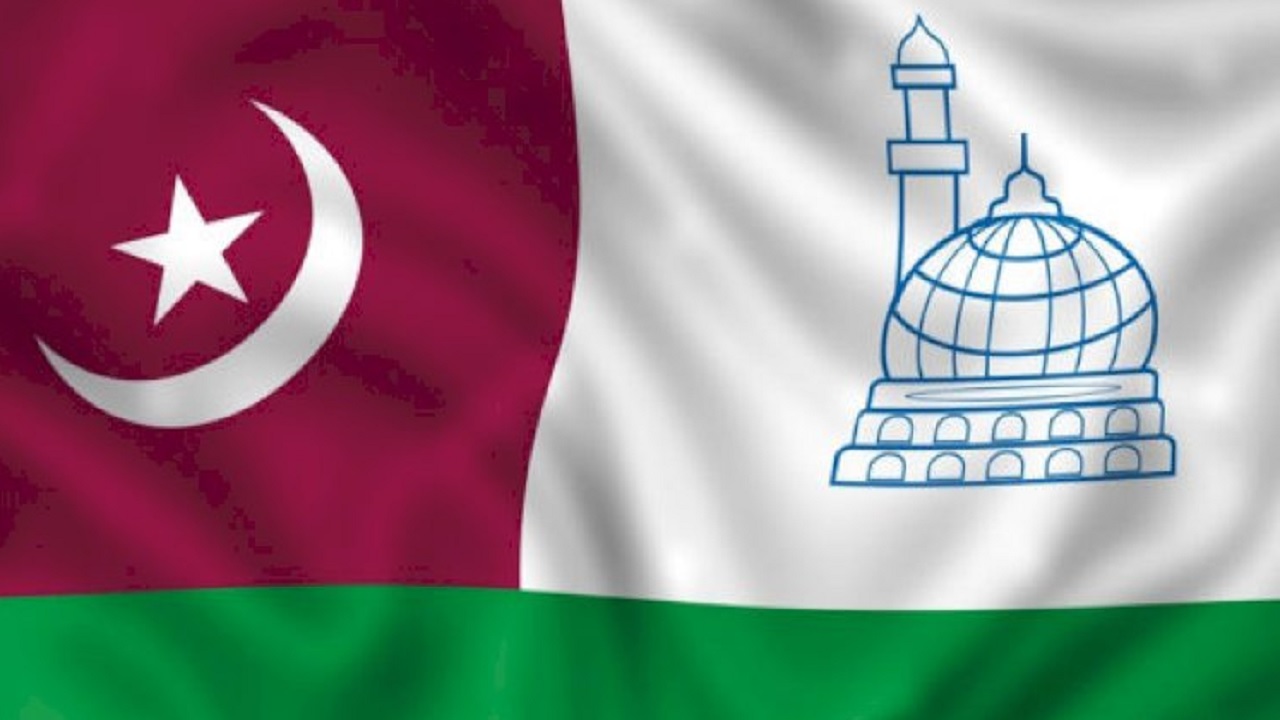
Samastha is the most powerful Sunni religious organisation in Kerala.
Synopsis: The Kerala government’s recent move to reconstitute the State Waqf Board gained attention not just for the appointments, but also for their political importance in an Assembly poll-bound state. At the centre of the development is the nomination of Ummer Faizi Mukkam, an influential Sunni-Shafi’i scholarly body of the Muslim community. The move is being perceived as the Left Front’s attempt to bring Samastha Kerala Jamiyyathul Ulama closer to it.
Since the formation of Kerala in 1956, the state has been governed by the Left Front and Congress-led alliances, including the UDF, for almost the same number of terms.
The votes of the Muslim community in the state — 26.56 percent of the total population, according to the 2011 census — are crucial for all parties seeking to form the government.
With the 2026 Assembly elections fast approaching, it is essential for the ruling CPI(M)-led LDF and the Congress-led UDF to ensure they have the backing of influential Muslim leaders.
In that backdrop, the Kerala government’s recent move to reconstitute the State Waqf Board gained attention not just for the appointments, but also for their political importance in an Assembly poll-bound state.
At the centre of the development is the nomination of Ummer Faizi Mukkam, a Mushawara (Supreme Council) member of Samastha Kerala Jamiyyathul Ulama, an influential Sunni-Shafi’i scholarly body of the Muslim community. His entry into the board ignited a debate due to his open criticism of the Indian Union Muslim League (IUML) and his perceived closeness to the Left Front.
Even though the government notification retained MK Sakkeer as chairperson, it brought in new members, including Rajya Sabha MP AA Rahim, Kuttiady MLA KP Kunhammed Kutty, Islamic scholar PU Ali, Kasaragod district panchayat member Sareena Salam, Kodungallur municipality vice-chairperson Sumitha Nisaf, businessman CK Usman Haji and Law Department Additional Secretary VM Rahana as an ex officio member.
Two seats reserved for non-Muslims, mandated under the amended central law, have been left vacant. The state has indicated that these appointments will be made later. The board was reconstituted more than a year after its term expired, following legal pressure and a public interest litigation (PIL) seeking fresh appointments.
The move is being perceived as the Left Front’s attempt to bring Samastha Kerala Jamiyyathul Ulama — popularly referred to as Samastha — closer to it, and thereby, a significant chunk of Muslim votes.
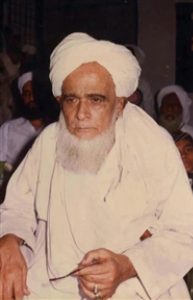
EK Aboobacker Musliyar
To understand the political implications, it is essential to understand the importance of Samastha in influencing Muslim votes. Founded in the 1920s, Samastha is the most powerful Sunni religious organisation in Kerala.
It supervises religious education, mosque administration and muslim charitable institutions across the state.
The organisation controls and guides an estimated 10,000 to 11,000 madrassas, making it one of the largest religious education networks in South India.
Its influence over community opinion, especially in Malabar and coastal belts, gives it major political weight during elections.
In 1989, Samastha split into two rival groups-
1. The EK faction, named after EK Aboobacker Musliyar, which is generally seen as the dominant and more established wing and has traditionally aligned with the IUML and UDF.
2. The AP faction, led by Kanthapuram AP Aboobacker Musliyar, which has often maintained an independent posture and has, at times, displayed a softer approach toward the LDF.
Both factions manage parallel networks of mosques, madrassas and colleges. Disputes between them over authority and property have been a recurring feature of Kerala’s Muslim organisational politics.
For decades, the EK faction’s close association with the IUML helped the League maintain strong grassroots connections. Any visible shift inside Samastha, therefore, carries political consequences.
Speaking to South First, Abdul Hassan Alavi, a Samastha EP faction activist from Uppala in Kasaragod, said, “We have a 40-member supreme council called the Mushawara, which takes major decisions. The EK faction is headquartered in Chelari, Malappuram, and controls over 10,000 madrassas and most mosques in Malabar. Both Samastha and IUML are traditionally led by the Panakkad Thangals.”
“The AP faction split from us in the late 1980s over differences on IUML support and views on Salafis. Led by Kanthapuram AP Aboobacker Musliyar, 10 members formed a parallel organisation claiming to be the real Samastha. They also have a 40-member council,” he added.
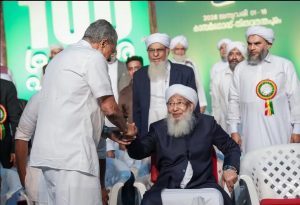
Chief Minister Pinarayi Vijayan with Kanthapuram A.P Aboobacker Musliyar.
Ummer Faizi Mukkam emerged as a controversial figure within the EK faction. He has repeatedly questioned what he describes as the political dominance of the IUML over Samastha.
His remarks about the Panakkad family, which leads the IUML, triggered sharp reactions within the organisation and from League leaders.
Sunni Mahal Federation, an IUML-leaning feeder body of Samastha, had recently passed a resolution demanding action against him. Samastha leadership later intervened and asked him to moderate his statements.
Despite this backdrop, the Left government chose him for the Waqf Board.
Politically, the move is being read as an attempt to expose cracks within the EK faction and weaken the IUML’s traditional support base.
Suresh Kumar, a senior CPI(M) leader from Kottayam, told South First that the nomination was based on his long-standing engagement with waqf issues and religious institutions and denied that it was aimed at targeting any party.
D Dhanuraj, Chairman of the Centre for Public Policy Research (CPPR) in Kochi, told South First that Samastha has always been relevant in Kerala politics. He said that the IUML’s core vote bank lies with Samastha, and currently, both the Left and the Congress are trying to appease the organisation.
And hence, he said, the entry of Samastha leaders into the Kerala State Waqf Board is significant.
“Based on the current political climate, the IUML could sweep the Malabar region in the upcoming Assembly elections; 28 percent vote share is a big number. The Left may manage to take up a maximum of five or six seats. But beyond that, I don’t see much scope. In an election-bound state, even small developments matter. Everyone is trying their best to pool votes from Samastha,” he said.
Ashiq Salam, a Youth League — the youth wing of the IUML — activist from Kozhikode, told South First that the LDF government is “trying to use internal differences within Samastha EK Faction to create confusion within the Muslim community ahead of the Assembly elections.”
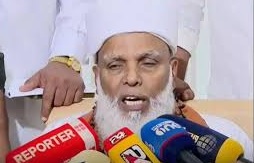
Ummer Faizi Mukkam
Soon after his appointment, Ummer Faizi reiterated that the Munambam land is waqf property. Speaking to reporters, he said the land had originally been given to Farook College in Kozhikode for educational purposes and that selling portions of it violated Islamic principles.
”This is an opportunity to protect waqf properties from encroachments,” he told the media, adding that Munambam was a clear example of how waqf land had been misused.
His remarks immediately revived political tensions, as they contradicted the high court ruling that had favoured the Munambam residents.
No recent waqf dispute has carried as much political weight as the one in Munambam coastal village in Ernakulam. Around 600 families have been protesting for over a year, claiming revenue rights over land that the Waqf Board says belongs to Farook College as waqf property.
Last year, the Kerala High Court ruled that the disputed land was not waqf property, bringing relief to the residents. Following the verdict, the state government began collecting land tax from them. A section of the protesters ended their hunger strike after the ruling.
However, the legal battle continues in the Supreme Court, Kerala High Court and the Waqf Tribunal. The next hearing at the tribunal is scheduled for February 12, 2026.
Despite the court ruling, the BJP has continued to mobilise around the issue, arguing that legal clarity alone will not resolve questions of ownership and security. In the recent local body elections in the Munambam Kadappuram ward, BJP candidate Kunjimon Augustine defeated the CPI(M) nominee by a narrow margin.
Philip Joseph, a member of the BJP’s Minority Morcha, told South First, “The BJP has no concern about whether any appointment is political or not. We have already proved our strength in the local body polls. Ummer Faizi is an aged man who has lost consciousness and may say anything, as seen in his comment on Munambam immediately after his appointment. We are waiting for the appointment of non-Muslim members to the Waqf Board. That is crucial. We are eager to know who will occupy those two seats.”
Joseph Benny, leader of the Munambam Action Council, told South First that, “Ummer Faizi does not know the ground realities in Munambam. We are legal buyers and owners of the land. We have documents to prove it. His appointment is a strategic move by the LDF government with the assembly elections in mind.”
“They are trying to create a divide between Muslims and Christians to gain political advantage.”
“This is not a full quorum of the Waqf Board, as the appointment of two non-Muslim members is still pending. This delay is deliberate because the LDF government knows that appointing non-Muslim members will cause a backlash from sections of the Muslim community,” he added.
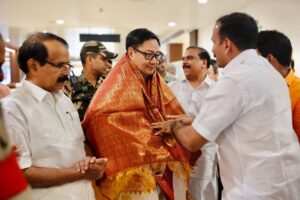
Union Minister Kiren Rijiju visited Munambam along with local BJP leaders in April 2025.
The Kerala State Waqf Board is responsible for managing and protecting waqf properties — religious endowments meant for charitable and educational purposes under Islamic law. These include mosques, madrassas, graveyards and large tracts of land donated for community welfare.
Kerala has thousands of such properties, many of which are under dispute due to alleged encroachments, sales and mismanagement.
Under the new central legislation, Waqf Boards are required to include two non-Muslim members with professional backgrounds. Kerala has not yet filled these seats, though the government has said the appointments will be made later.
The composition of the board, therefore, plays a crucial role in determining how forcefully it acts on land disputes — and whose interests it ultimately prioritises.
(Edited by Muhammed Fazil.)


