

Published Apr 30, 2026 | 7:05 PM ⚊ Updated Apr 30, 2026 | 7:05 PM

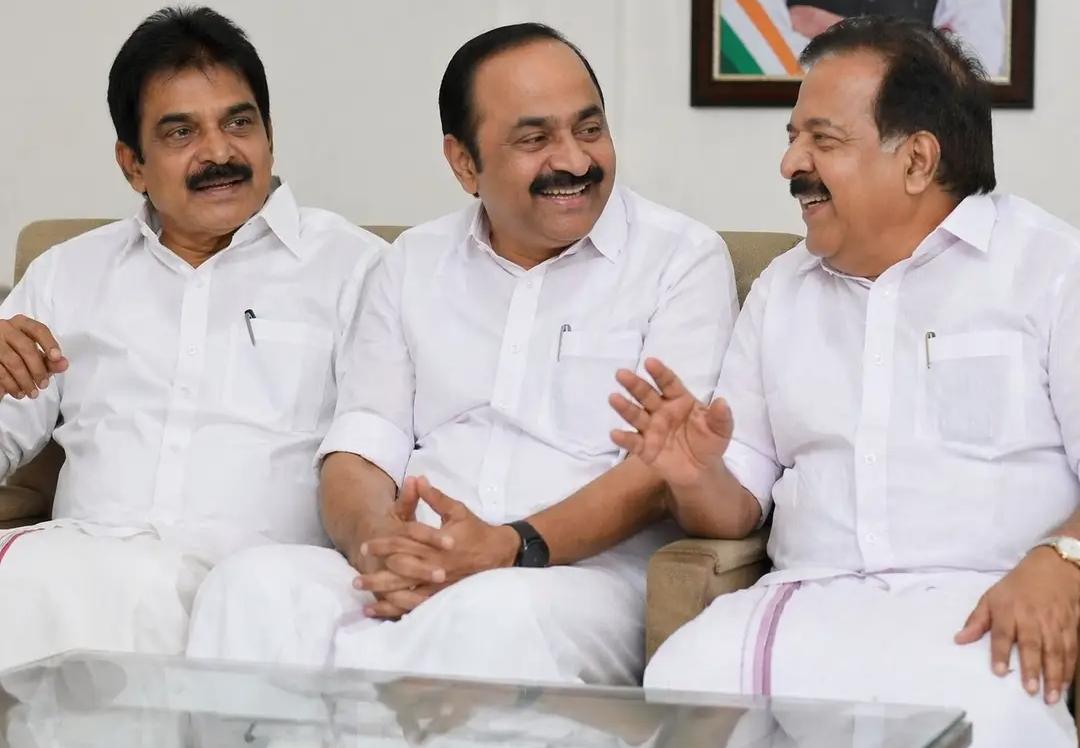
K C Venugopal, V D Satheesan and Ramesh Chennithala.

Even as television channels debated the exit poll results on Wednesday, 29 April, the Congress party in Kerala witnessed more significant developments and debates, albeit quietly. These discussions were not about governance or policy, but over the vexed question of the possible chief minister from the party.
A survey by Hyderabad-based People’s Pulse Organisation gave the Congress-led UDF a comfortable edge, projecting 75–85 seats in the 140-member Assembly. The CPI(M)-led LDF, it said, is expected to secure 55–65 seats, while the BJP-led NDA remains far behind.
The message was clear: Congress is heading towards a win.
Publicly, Congress leaders have maintained caution. AICC General Secretary KC Venugopal reiterated that the party would wait for the people’s verdict rather than rely on exit polls. It is a standard, careful and measured response.
But within the party, the situation was far more active.
In many ways, Congress’s real contest began after the exit polls. Sources indicated that internal discussions on Wednesday showed noticeable support for Ramesh Chennithala. His experience and standing within the party still carry weight, particularly when decisions move to the central leadership in Delhi.
However, within hours, the political signals began to shift.
As South First reported earlier regarding allies quietly backing VD Satheesan, that support has now come out in the open following the exit polls.
IUML supremo Sayyid Munavvar Ali Shihab Thangal publicly indicated support for Satheesan as the chief minister. Responding to the exit polls, he said that the acceptance Satheesan has received across multiple surveys reflected the people’s sentiment, not just the view of a single agency.
He added that the UDF and the Congress high command would consider the public mood while making a final call.
At the same time, he reminded that the League has always stood firmly with the Congress and the UDF and expressed hope that the party would receive what it deserves this time as well.
This is significant not just for what was said, but for the timing.
What was earlier a quiet signal from allies has now become a clear and public position: tilting the balance in Satheesan’s favour.
Satheesan’s political positioning also adds to this moment. He is the only leader who consistently projected a 100-seat victory for the UDF. If the final results come close to that mark, it strengthens his case as someone who read the public mood correctly and led from the front. If the numbers fall well short, that same confidence could be interpreted as overreach.
Meanwhile, Venugopal has been in a complex position. He is neither fully out of the race nor clearly ahead, but continues to be seen as a central figure around whom internal equations could shift.
Outside closed-door meetings, the messaging is becoming increasingly visible.
Flex boards across various districts have begun projecting Satheesan as the ”next Chief Minister” turning speculation into a more assertive claim.
At the same time, a full-page newspaper advertisement highlighting Chennithala’s political journey has reportedly led to disciplinary action, underscoring how sensitive the situation has become.
Symbolic gestures have also entered the scene.
A former Congress leader from Thrissur announced that he would perform a thulabharam at the Hemambika Temple in Palakkad in Venugopal’s name if he becomes the chief minister. Shortly after, a Youth Congress leader reportedly made a similar vow.
The contest has also spilt into the digital space. Allegations of coordinated online campaigns, counter-complaints, and even resignations from key digital media figures suggest that the internal rivalry is no longer confined to party rooms. It is playing out in full public view.
All of these points point to a clear conclusion.
While exit polls suggested a likely UDF victory, the Congress party’s real battle is only beginning. And in just a day, the shift from internal support for Chennithala to open backing for Satheesan- especially from key allies shows how quickly the balance of power can change.



