

Published Dec 08, 2025 | 11:12 AM ⚊ Updated Dec 08, 2025 | 12:03 PM


Actor Dileep
Synopsis: Ernakulam Principal Sessions Court found six people guilty in the 2017 case related to the abduction and assault of a leading female Malayalam actor. Actor Dileep, who was the eighth accused in the case, has been acquitted.
Ernakulam Principal Sessions Court Judge Honey M Varghese, on Monday, 8 December, found six people guilty in the 2017 case related to the abduction and assault of a leading female Malayalam actor.
Actor Dileep, who was the eighth accused in the case, has been acquitted. The court found that the prosecution failed to prove the conspiracy charge framed against actor Dileep. The court added that the charge of tampering with evidence will also not stand against Dileep.
The accused who were found guily are Sunil Kumar NS alias Pulsar Suni, Martin Antony, Manikandan B, Vijeesh VP, Salim H alias Vadival Salim, and Pradeep. Quantum of punishment for the convicts will be pronounced later. The court will consider the case again on 12 December.
The case involved nine accused. The defence witness examination concluded in April, and the case was posted for further hearing and clarification.
The other accused who have been acquitted are Charlie Thomas and Sanilkumar alias Mesthiri Sanil.
Another accused, Vishnu, had turned approver and cooperated with the investigation. Two individuals who were alleged to have received mobile phones from Sunil were subsequently acquitted.
The accused were charged under various provisions of the Indian Penal Code, including Section 120B (criminal conspiracy), Section 109 (abetment), Section 366 (kidnapping or abduction of a woman), Section 354 (assault or criminal force with intent to outrage modesty), Section 354B (use of criminal force with intent to disrobe), Section 357 (wrongful confinement), Section 376D (gang rape), Section 201 (causing disappearance of evidence), and Section 212 (harbouring an offender), read with Section 34 (acts done by several persons in furtherance of common intention).
They were also charged under provisions of the IT Act, 2008 for allegedly recording and circulating visuals of the assault.
Cultural Affairs Minister Saji Cheriyan said the government would issue a formal response only after examining the court order in detail. He reaffirmed that the state “stands firmly with the survivor,” and added that the next steps would be taken after consultations with all concerned.
Pulsar Suni
The verdict has brought legal closure to one of the most disturbing crimes ever reported from the Indian film industry. The case, which began with the abduction and assault of a leading woman actor in 2017, went on to redefine conversations on power, silence, gendered violence and accountability within cinema, particularly in Malayalam films.
What happened was not merely a crime against one individual, but a brutal reminder of how vulnerable women can be even within their own professional circles.
On 17 February 2017, the actress was travelling from Thrissur to Kochi for a shooting assignment when her car was intercepted. She was abducted, confined inside the vehicle and sexually assaulted.
The attack was not random. It was calculated, cruel and meant to psychologically destroy her. The assault was also secretly recorded.
Prosecutors told the court that an earlier plan to assault the survivor was made in January 2017 in Goa, but failed when she changed her travel plans.
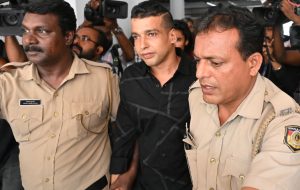
Within days, several members of the gang were arrested. The prime accused, Pulsar Suni, was taken into custody shortly after.
That night marked a turning point in the history of Indian cinema — it was among the first times a working female actor was attacked in such an organised and premeditated manner, involving someone from the industry itself.
Ahead of the verdict, new details surfaced showing that Dileep had sent messages to Chief Minister Pinarayi Vijayan and senior police officers claiming innocence shortly after the crime, allegedly fearing the probe would focus on him.

Manju Warrier
The case began to take a decisive turn with a single, courageous intervention by actor Manju Warrier. Just three days after the assault, the Association of Malayalam Movie Artistes (AMMA) convened an emergency meeting attended by more than 200 prominent figures from the Malayalam film industry, including Mammootty, Mohanlal, and Warrier, at the Kochi Darbar Hall grounds.
While the gathering was officially presented as a united stand against violence towards women, it soon became a defining moment in the unfolding narrative.
At the meeting, Warrier made a pointed reference to a possible ”conspiracy” behind the crime. What initially appeared as an emotional remark later gained sharper significance as investigators began to trace an alleged larger plot behind the attack.

From the Dileep–Kavya wedding ceremony
However, the prosecution constructed its central theory that Dileep had allegedly orchestrated and financed the abduction and sexual assault as an act of personal revenge. Investigators cited long-standing hostility towards the survivor as the motive.
According to the prosecution, the survivor had informed Manju Warrier about Dileep’s relationship with actor Kavya Madhavan, who would later become his wife.
The prosecution argued that Dileep allegedly blamed the survivor for the collapse of his marriage and nurtured this resentment over several years.
In a further development, the Kerala Crime Branch later registered a separate case against Dileep and five others related to a conspiracy to eliminate the officers investigating the assault.
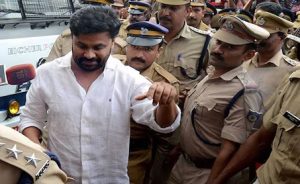
Dileep was arrested on 10 July 2017 for conspiracy and spent 84 days in jail.
Initially, the police filed a chargesheet against the direct perpetrators. But the investigation took a dramatic turn following developments inside Aluva Sub-Jail.
While in judicial custody, the prime accused, Pulsar Suni, allegedly sent out a handwritten note that shifted the direction of the probe.
In the letter, he claimed that actor Dileep had commissioned the crime and offered a payment of ₹1.5 crore for its execution.
This document became the immediate basis for Dileep’s arrest on 10 July 2017 on conspiracy charges. He spent 84 days in jail in connection with the case.
The arrest sent shockwaves across Kerala and the national film industry. Once, Dileep was fondly called the ”Janapriya Nayakan” (People’s Favourite Hero) because of his popularity among family audiences.
It was unprecedented, a mainstream star, deeply embedded in industry institutions, facing serious criminal allegations connected to the assault of a colleague.
WCC’s Statement
Film bodies, especially AMMA, under heavy public pressure, distanced themselves from him.
Her fight was not only for herself, but for countless women who remained silent in similar environments. It later paved the way for the formation of the Women in Cinema Collective (WCC), the Hema Committee, and the establishment of Internal Complaints Committees (ICC) on every film set to ensure safety.
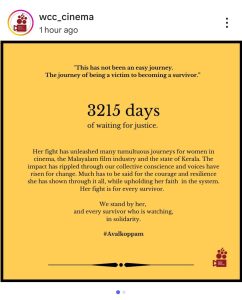
Just hours before the verdict, the WCC issued a strong statement in the Kerala actress assault case, expressing solidarity with the survivor.
Calling her journey one of courage and resilience, WCC highlighted the 3,215 days of waiting for justice and said her fight has become a voice for women across cinema and Kerala.
They reaffirmed their support with the message, ‘We stand with her and every survivor,’ using the hashtag #Avalkoppam (with her).
As the case dragged on for years, the survivor endured intense emotional and legal strain, while multiple witnesses either turned hostile or became unavailable. During the trial, 261 witnesses, many from the film industry, were examined.
Out of 261 witnesses, several turned hostile, and the lengthy trial involved hundreds of documents and material objects, with repeated delays postponing the final verdict.
Actors, including Siddique, Idavela Babu, Bhama, and Bindu Panicker, turned hostile.
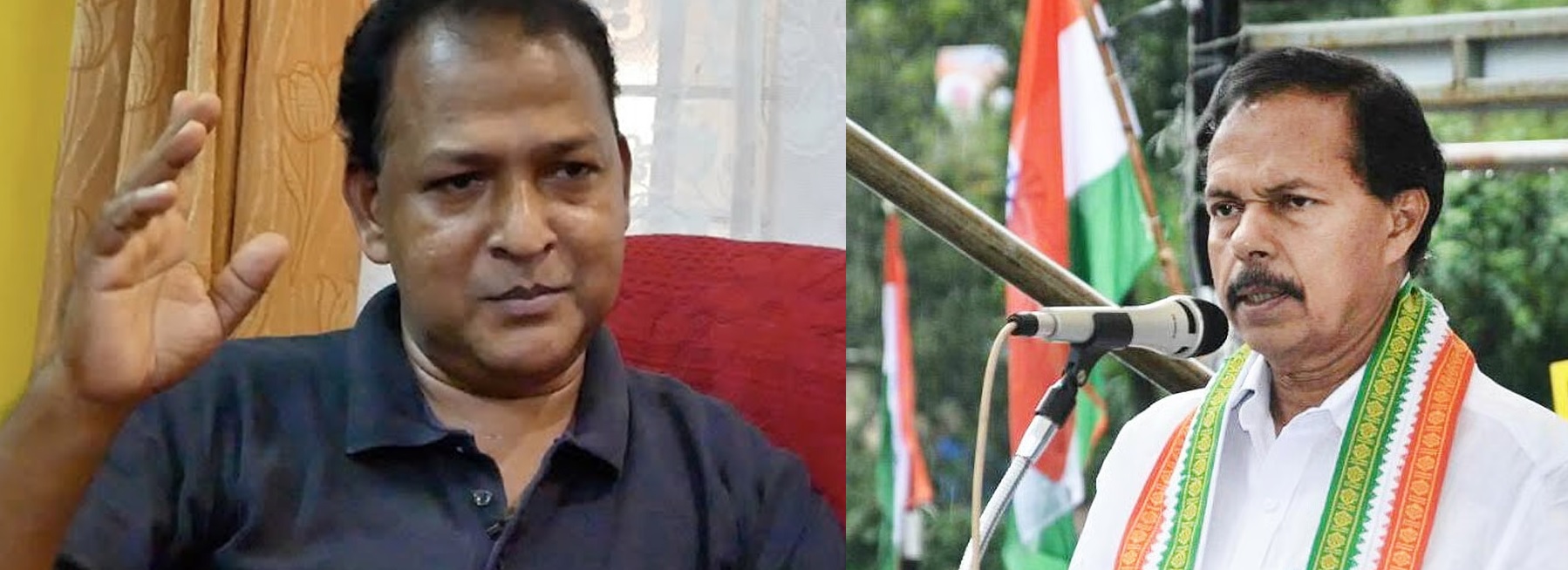
Balachandra Kumar and PT Thomas.
Several crucial witnesses died before the verdict.
Among them was Balachandra Kumar and senior Congress leader and former Thrikkakara MLA PT Thomas, who played a decisive role immediately after the assault. Kumar was listed as a key witness and was examined during the trial. He later died of a renal illness at a private hospital in Chengannur in December 2024.
Thomas was one of the first outsiders to reach the survivor, offering emotional support, protection, and the confidence she needed to file an FIR the very next day, helping prevent a possible retraction under pressure.
Thomas passed away in 2021 before completing his cross-examination. More recently, his widow and Thrikkakara MLA Uma Thomas revealed that he faced strong attempts to influence and silence him, but that he stood firm, stating he would say “nothing more and nothing less — only the truth”.

Judge Honey M Varghese
The trial was conducted in camera, respecting the survivor’s privacy. A woman judge presided over the proceedings as per the survivor’s request.
Over time, serious concerns arose regarding the handling of electronic evidence, especially the memory card that contained the horrific visuals of the assault. At one stage, the survivor moved the Kerala High Court seeking a court-monitored SIT probe into the alleged illegal access of the memory card containing the assault footage.
The State Forensic Science Laboratory found that the card had been accessed three times while in court custody — twice in 2018 and once in 2021 — and that its hash value had changed, indicating possible data alteration or copying.
This prompted the High Court to issue strict guidelines to safeguard digital evidence, while also expressing deep concern that the system had failed the survivor and underestimated the emotional and psychological harm she endured.
Audio leaks, counter-allegations and new witnesses further complicated an already complex case.
Advocate TB Mini, the survivor’s lawyer, has frequently highlighted the emotional turmoil the survivor endured over the years, as well as Dileep’s attempts to target her and undermine her career, simply because she stood in support of the survivor.
This case stood apart because the perpetrators were not strangers, but colleagues. The survivor was among the few women from the industry who repeatedly spoke about the safety and care she experienced, expressing pride in being part of that world in several interviews. Yet, she was attacked within the very professional space she believed was safe.
After years of hearings, hundreds of witnesses, thousands of pages of evidence and countless days of emotional strain, the court finally delivered its verdict.
The judgement was not just a legal outcome — it marked the end of a long, traumatic chapter for the survivor and a milestone moment in Indian cinema. Regardless of legal interpretations, this case forever changed how the industry spoke about consent, safety and the treatment of women.
The verdict closes a legal case, but it does not close the conversation. Real justice lies not only in courtrooms, but in transforming workspaces into places of safety, respect and equality.
What happened in 2017 must never be repeated. And the survivor must never be forgotten — not as a victim, but as a woman who stood her ground against unimaginable cruelty.
(Edited by Muhammed Fazil.)


