


Published Jan 01, 2026 | 11:00 AM ⚊ Updated Jan 01, 2026 | 11:00 AM

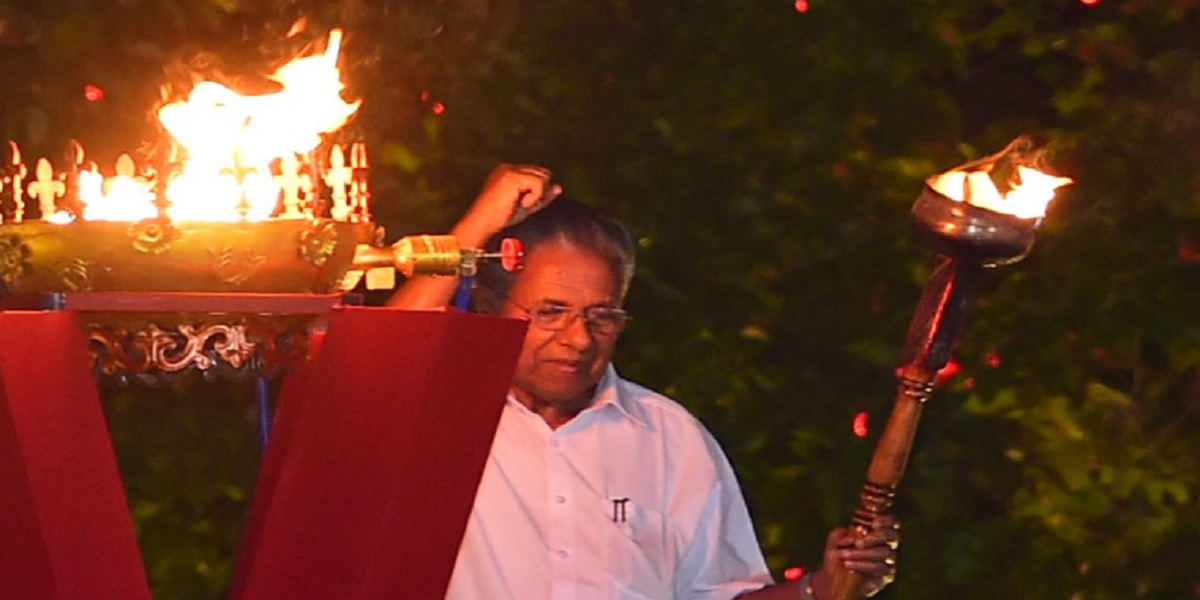
The CPI has also not hesitated to criticise what it calls Pinarayi Vijayan's ''one-man show'' accusing him of taking unilateral decisions on key matters.
Synopsis: The CPI and the CPI(M), primary constituents of the LDF in Kerala, are viewing the front’s setback in the recent local body polls differently. While the CPI(M) chose to explain the loss largely through external factors and organisational lapses, its closest ally, the CPI, has opted for a more blunt and inward-looking assessment.
The local body election setback exposed more than just electoral fatigue for the LDF in Kerala. It laid bare an uncomfortable truth — parties within the same alliance are reading the defeat very differently.
While the CPI(M) chose to explain the loss largely through external factors and organisational lapses, its closest ally, the CPI, has opted for a more blunt and inward-looking assessment.
This divergence is not merely about post-election introspection. It signals a subtle but significant shift within the Left space, one where criticism of Chief Minister Pinarayi Vijayan, once tightly managed within the CPI(M), is now being voiced more openly by allies, and even echoed quietly within closed-door meetings.
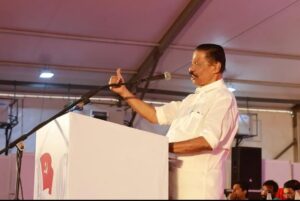
CPI(M) Kerala Secretary
MV Govindan.
CPI(M) State Secretary MV Govindan’s explanation for the defeat followed a familiar script. The party attributed the setback to issues such as the Sabarimala controversy, Opposition propaganda, overconfidence, organisational weakness, particularly in urban areas and regional lapses at the grassroots level.
Govindan argued that the LDF had entered the polls confident of victory, buoyed by government decisions, including the Cabinet’s 29 October announcements and welfare measures.
According to him, false campaigns run by the UDF and BJP, especially around Sabarimala, created confusion but did not fully succeed. The party, he said, would evaluate the loss and move forward with corrections before the Assembly elections.
On sensitive issues such as the Sabarimala gold theft case, the CPI(M) has maintained a cautious stance.
Despite the arrest of former Travancore Devaswom Board president A Padmakumar, Govindan ruled out immediate disciplinary action, stressing that the party would wait for the charge sheet. ”We do not act based on news reports” he said, reinforcing the party’s preference for procedural caution.
In essence, the CPI(M) narrative seeks to ring-fence the leadership and government by projecting the defeat as a product of external attacks and internal tactical failures, rather than a deeper political disconnect.
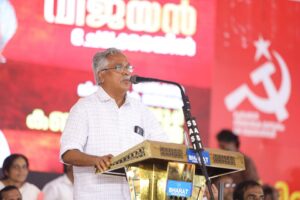
CPI state secretary Binoy Viswam
The CPI, however, read the verdict very differently and said so without ambiguity.
At its state secretariat and executive meetings, the CPI concluded that strong anti-incumbency against the state government was the primary reason for the LDF’s poor showing.
Leaders pointed to public distrust generated by certain positions taken by the chief minister and the CPI(M), arguing that these had raised doubts about the government’s intentions.
Particular criticism was directed at the silence of the chief minister and the CPI(M) over communally charged remarks made by Sree Narayana Dharma Paripalana (SNDP) Yogam General Secretary Vellappally Natesan.
The optics of Vellappally accompanying the chief minister to public events, including arriving together in the same vehicle, were flagged as politically damaging. CPI leaders observed that this association created serious suspicion among voters, especially minorities.
The CPI also questioned why decisive action was taken swiftly by the Congress against its MLA Rahul Mamkootathil following sexual assault allegations, while the CPI(M) hesitated to act against Padmakumar in the Sabarimala gold theft case.
This perceived double standard, the CPI argued, eroded the moral credibility of the Left.
Further, the CPI criticised the government’s attempt to sign the PM-SHRI agreement with the Union government, seeing it as evidence of a troubling ideological compromise. Although the agreement was later withdrawn following CPI opposition, the very move reinforced concerns about an ”undercurrent” of understanding between the CPI(M) and the BJP.
Importantly, CPI leaders acknowledged that welfare schemes and pension disbursements failed to translate into votes — a clear sign that governance delivery alone could not offset public dissatisfaction. They also flagged minority alienation and resentment against LDF-led local bodies as key warning signals.
The CPI has also not hesitated to criticise what it calls Pinarayi Vijayan’s ”one-man show” accusing him of taking unilateral decisions on key matters.

In the past, during his tenure as the party secretary, he sharply opposed the worship of Chief Minister VS Achuthanandan.
The present moment becomes even more striking when viewed against the CPI(M)’s own history.
There was a time when the party publicly disciplined its chief ministers. VS Achuthanandan’s political life is a testament to that era.
As party secretary and later chief minister, VS openly challenged his own party on issues of corruption, alliances, and governance. His confrontations with trade union leaders, his stand on land encroachments, and most notably, his relentless attack on Pinarayi Vijayan over the SNC Lavalin case, earned him the image of a moral crusader outside the party and a rebel within it.
The CPI(M) did not hesitate to act against him. VS was repeatedly censured, sidelined, denied tickets, and eventually dropped from the Politburo in 2009. His defiance during the Kudankulam nuclear protests in 2012 led to public censure by the Central Committee.
Even his tenure as chief minister was marked by constant internal resistance. Factionalism, power struggles, and personal rivalries were undeniably part of VS’s politics. His critics often pointed to allegations involving his son and his own role in organisational battles. Yet, the key difference lies elsewhere- the party asserted its authority over the Chief Minister.
That culture has visibly changed under Pinarayi Vijayan.
Today, criticism of the chief minister rarely comes from within the CPI(M) in public. Discipline, centralisation, and a tightly controlled narrative define the party’s functioning. Decisions are increasingly perceived as top-down, with limited space for dissent, not just within the CPI(M), but across the LDF.
It is in this vacuum that the CPI has emerged as the alliance’s conscience-keeper, articulating concerns that once would have been debated within the CPI(M) itself.
The irony is hard to miss. Pinarayi Vijayan, once challenged relentlessly in the name of party discipline and principle, now presides over a system where allies voice the strongest criticisms.
However, none of these signals an imminent rupture within the LDF. Both CPI(M) and CPI remain committed to the alliance. But the differing post-election narratives reveal a deeper churn.
The CPI’s approach reflects a more grounded acceptance of voter anger and governance fatigue. The CPI(M)’s response, by contrast, remains cautious, defensive, and controlled. For now, the criticism is measured. But it is also unmistakably louder than before.
If the Left hopes to move forward smoothly, the real test will be whether these signals are treated as hostile noise or as an early warning from within.
(Edited by Muhammed Fazil.)


