

Published Sep 23, 2024 | 5:00 PM ⚊ Updated Sep 23, 2024 | 5:00 PM

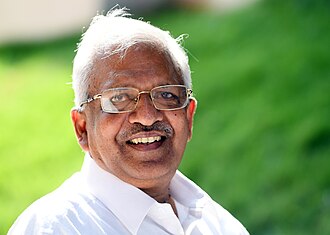
P Jayarajan. (Wikimedia)

The debate surrounding Islamic State (IS) recruitment, political Islam, and Muslim politics has once again come to the forefront in Kerala, largely due to the upcoming release of CPI(M) leader P Jayarajan’s book — Keralam, Muslim Rashtreeyam-Rashtreeya Islam.
The book is expected to delve deeply into these sensitive issues, with early glimpses already sparking political controversy.
In a recent interview with a Kannur-based local news channel, Prime 21, Jayarajan, a state committee member of the CPI(M), touched upon several critical topics, including the influence of political Islam on Kerala’s youth.
He stated that while only a handful of youths have been drawn towards extremist organisations like the Islamic State (IS) and Lashkar-e-Taiba (LeT), the problem of political Islam remains significant.
Jayarajan highlighted that political Islam became influential after the Babri Masjid demolition, drawing some disillusioned youths away from secular values. “We don’t have to exaggerate it,” he said, “but at least a few youths have been influenced by political Islam.”
He underscored that organisations such as Jamaat-e-Islami and the Popular Front of India (PFI) in Kerala have emerged from the dangerous ideology of political Islam.
However, he acknowledged the role of Sunni groups in countering this trend. He cited examples of young men from Kerala being recruited by terror outfits and referenced the 2008 Kupwara encounter in Kashmir, where four Kerala men, drawn to militancy, were killed.
CPI(M)’s Kannur strongman emphasised that their disillusionment stemmed from their inability to fit into Kerala’s secular framework, believing instead that life could only be lived in a theocratic state.
Jayarajan’s remarks also touched on the controversial film, The Kerala Story, ‘produced’ by the BJP and the Sangh Parivar, which he claimed sought to “other” the Muslim community by highlighting conversion and terrorism.
He conceded, however, that the film’s portrayal was partly rooted in reality, as some youths had indeed veered toward political Islam.
This commentary has reignited concerns over Kerala’s association with IS recruitment, a narrative often amplified by right-wing factions. The state leadership of the BJP was quick to seize the narrative.
Former Union Minister V Muraleedharan did not mince words, stating that the evidence of IS recruitment from Kerala has been accumulating for some time, with the CPI(M) allegedly turning a blind eye to these alarming developments.
Muraleedharan went further, accusing the ruling party of maintaining “links with terrorist elements” and hinted that Jayarajan’s criticism is an indictment of his own party’s leadership.
The BJP leader underscored that Jayarajan, by acknowledging the presence of terrorism in Kerala, is effectively accusing those in power of fostering an environment where extremist ideologies can thrive.
According to Muraleedharan, “Kerala has become a soft target for terrorist outfits,” a charge that casts a shadow over the state’s security apparatus and governance.
Also, in light of Jayarajan’s remarks on IS recruitment, Kerala Governor Arif Mohammad Khan has called for a deeper investigation into the claims, stating that the concerns raised by a senior ruling party leader should not be taken lightly.
Following a backlash, Jayarajan issued a clarification on social media, stating that his comments were not meant to imply that IS recruitment was ongoing in Kerala, but rather to reflect on past incidents where a small number of youths were swayed by extremist ideology.
Jayarajan’s book, expected to hit the stands in October, is also anticipated to explore not only the ideological underpinnings of political Islam but also the relationship between community-based political parties such as the Indian Union Muslim League (IUML) and organisations like Jamaat-e-Islami.
This is expected to stir further debate, particularly as CPI(M) has previously accused the IUML of aligning with Jamaat-e-Islami in post-election alliances, notably after the 2019 and 2024 Lok Sabha elections.
The upcoming book has already generated sharp reactions from various political factions.
Congress leader K Muraleedharan accused the CPI(M) of pandering to BJP sympathies by stoking fears of minority communalism. He suggested that this was part of a broader strategy by the Marxist party to woo Hindu voters, citing recent comments by Kerala Assembly Speaker AN Shamseer, who referred to the RSS as an “important organisation in India.”
The book’s focus on the IUML-Jamaat relationship is likely to provoke intense debate, as the IUML has historically distanced itself from the political ideology of Jamaat-e-Islami.
At the same time, the CPI(M) leadership has remained conspicuously silent on the statements made by senior leader Jayarajan regarding Islamic State (IS) recruitment and the rise of political Islam in Kerala.
(Edited by Majnu Babu).



