

Published Sep 13, 2026 | 10:11 AM ⚊ Updated Sep 13, 2026 | 10:14 AM

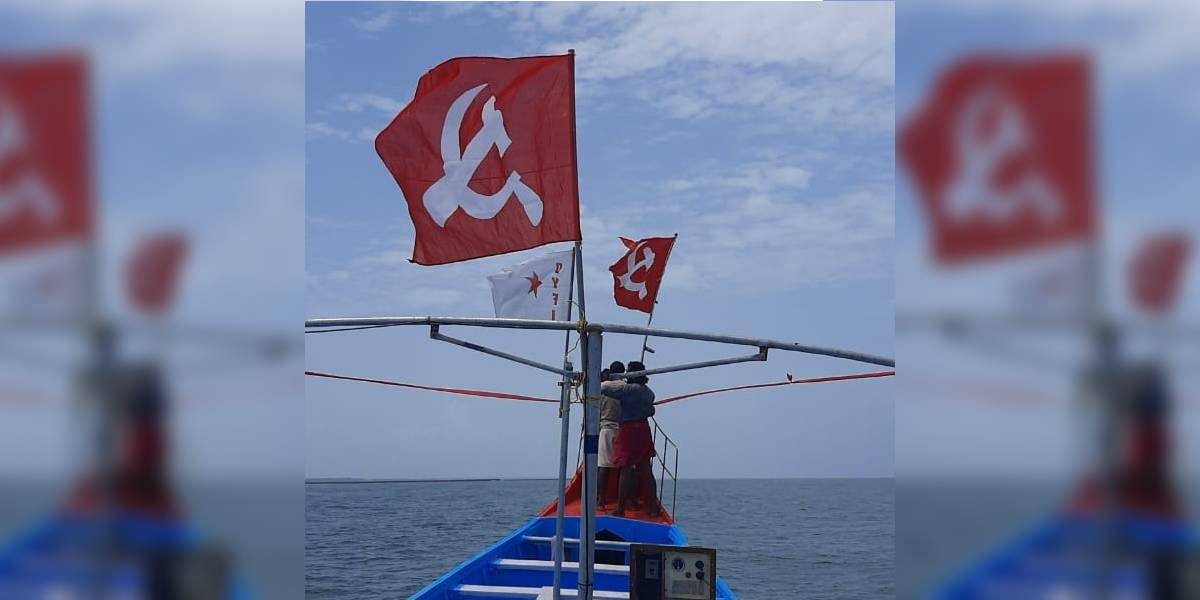
CPI(M) flags.

Around 300 Communist Party of India (Marxist) (CPI(M)) leaders from across Keralam are expected to gather in Kozhikode on Sunday, September 13, for the party’s extended state committee meeting.
The meeting will bring together state committee members, district secretariat members and senior leaders of the party’s various class and mass organisations.
Members of the CPI(M) Central Committee and Polit Bureau will oversee the proceedings.
While the party leadership has said the meeting aims to chart a future course of action, the Left Democratic Front (LDF)’s setback in the recent Assembly elections is expected to be a major issue for discussion.
The party is also likely to discuss the Enforcement Directorate (ED)’s recent moves against former chief minister Pinarayi Vijayan and MLA Mohamed Riyas.
Also Read: CMRL-Exalogic case: CPI says CPI(M) expects INDIA bloc’s help to defend Pinarayi Vijayan
Meanwhile, the CPI(M) leadership has taken steps to limit criticism of the top leadership, including Pinarayi Vijayan and State Secretary M.V. Govindan. state committee members have been excluded from the discussions at the extended meeting.
The decision is significant as a section of state committee members could raise questions about the present leadership and demand changes within the party following the electoral setback.
The leadership has cited established party procedure to justify the decision. The report prepared by the state secretariat for the meeting had already been discussed and approved by the state committee.
As per CPI(M) practice, a committee normally does not reopen discussion on a report that it has already approved.
The leadership is relying on this practice to keep state committee members out of the discussion on the report at the extended meeting.
However, the decision has triggered discontent among a section of party leaders. Some have questioned the need to restrict the discussion at a time when the party is facing serious political and organisational challenges.
A section of leaders has also argued that the state secretariat report could have been placed directly before the extended state committee for discussion. They believe a wider discussion would have allowed leaders to openly assess the reasons behind the party’s electoral defeat and examine the problems within the organisation.
(Edited by Fayisa CA)



