

Published Dec 03, 2025 | 12:57 PM ⚊ Updated Dec 03, 2025 | 12:57 PM

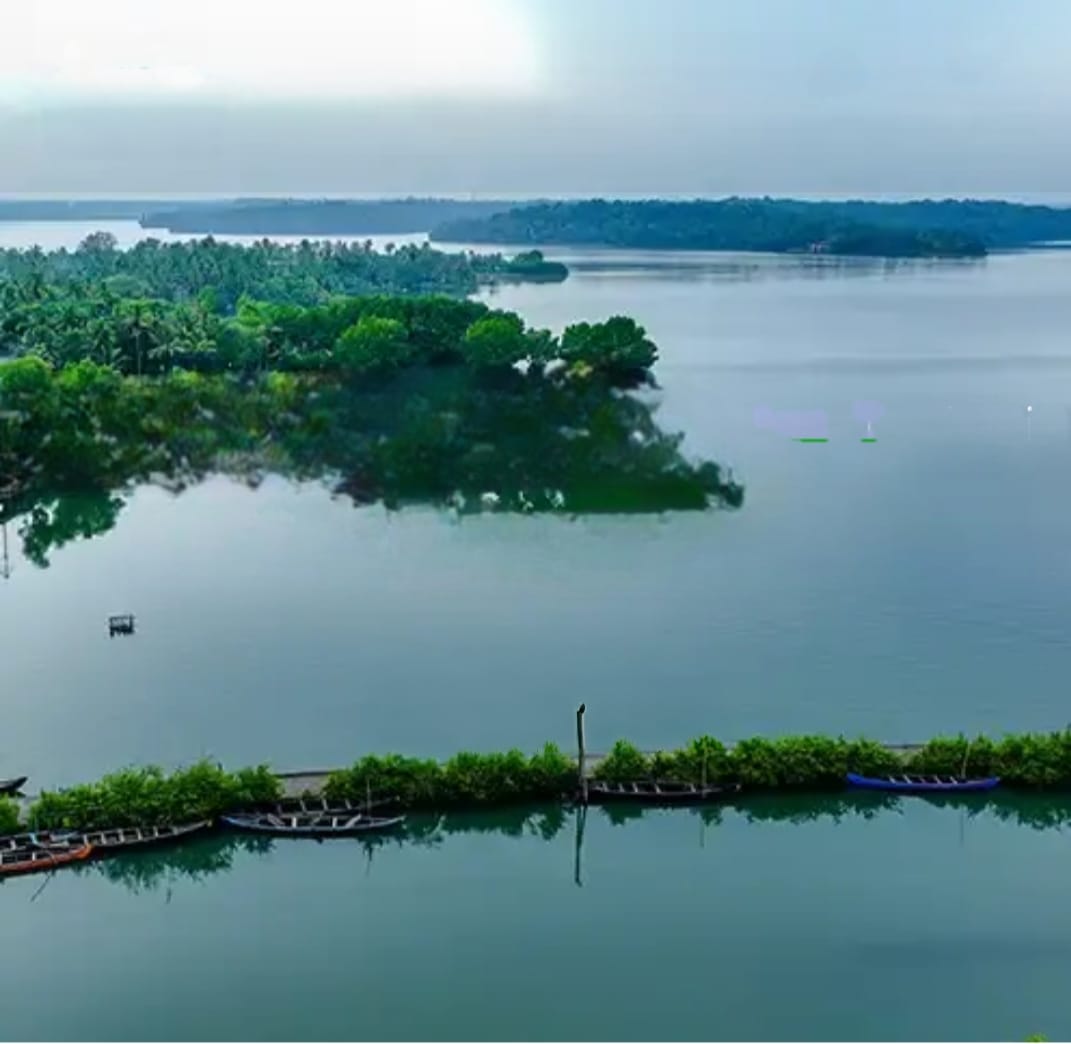
Ashtamudi Lake, Kollam. courtesy - Kerala Tourism
Synopsis: Acting on a recommendation from the ICAR–Central Marine Fisheries Research Institute, the state government is set to continue a three-month fishery closure to shield the species during the critical reproductive window.
A wave of curiosity is sweeping through Kollam in Kerala as the authorities move to enforce a fishing ban at Ashtamudi Lake, the Ramsar-listed wetland, famed as the district’s second-largest and deepest aquatic ecosystem.
At the heart of the decision lies a tiny, highly prized mollusc: the short-neck clam (Paphia malabarica), whose spawning season began in December.
Acting on a recommendation from the ICAR–Central Marine Fisheries Research Institute (CMFRI), the state government is set to continue a three-month fishery closure to shield the species during this critical reproductive window.
Far from being just another coastal commodity, clams sustain subsistence fisheries across India’s shoreline, especially in the southern states.
While most clam varieties fetch modest prices, the yellow-foot clam is the exception — a delicacy exported to niche markets like Japan, with nearly 90 percent of this international demand met by Ashtamudi’s waters.
For thousands of fishers here, the species is not merely a livelihood but a lifeline: its meat offers an affordable, protein-rich food source, while its shells fuel lime-based industries.
With young clams flooding the beds from January to March, the ban is seen as crucial to preserving one of the country’s most abundant and widely exploited bivalve resources.
A year after launching a bold stock enhancement initiative in Ashtamudi Lake, the CMFRI has reported the first encouraging signs of revival in the prized short-neck clam (Paphia malabarica) population.
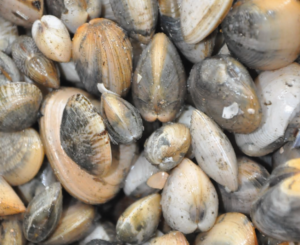
Clams. (Pic courtesy – CMFRI).
But even as spatfall and rising stock levels spark hope, CMFRI has urged the state to continue the annual three-month fishery closure from December to February, warning that premature harvesting could cripple the fragile turnaround.
The clam stock, once globally renowned enough to earn Ashtamudi a FAO (Food and Agriculture Organization) certification, had suffered massive depletion in the wake of the 2018 floods and subsequent ecological disturbances.
To rebuild it, CMFRI released three million hatchery-produced clam seeds from its Vizhinjam Regional Centre last year, under the leadership of Dr MK Anil, Principal Scientist.
According to it, monitoring showed an impressive 80% survival rate, with ranched clams reaching a market-ready size of 34 mm within seven months—a breakthrough validating the viability of hatchery-based stock enhancement.
Recent mapping surveys led by Dr Geetha Sasikumar, Principal Scientist, have confirmed widespread spatfall across the lake, signalling successful natural recruitment.
The smallest juveniles recorded last month measured just 2.38 mm, and the presence of multiple size groups indicates a healthy, regenerating clam bed.
Yet, beneath this optimism lies a cautionary alarm.
CMFRI stresses that the ongoing spawning phase, which began in October, makes the next three months critical for juvenile survival.
Any fishing during this window, it warned, would jeopardise the very foundation of the resource’s recovery.
Adding to the threat are unscientific sediment extraction and broken-shell collection—activities that destroy clam seeds before they mature.
Particularly vulnerable is the bar mouth region near Neendakara Bridge, which CMFRI has identified as a ‘no-take zone’, requiring strict protection.
With hundreds of livelihoods tied to this ecosystem-driven fishery, CMFRI’s message is blunt:
“Signs of recovery do not mean the resource is resilient yet. Protection during the spawning and juvenile phase is non-negotiable if Ashtamudi’s clam legacy is to survive.”
Ashtamudi Lake, one of Kerala’s most vibrant estuarine ecosystems, owes a remarkable part of its identity and economy to an unassuming mollusc — the short-neck clam.
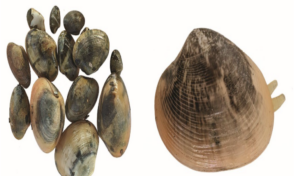
Short-neck clam in Ashtamudi
What makes this clam special is not just its abundance, but the transformative journey it set in motion for the region’s fishing community, science-based conservation, and global seafood trade.
The CMFRI began studying the biology and exploitation of this key clam resource in the late 1970s. Their sustained research paved the way for scientific interventions in the 1980s, enabling a management model that would later make Ashtamudi synonymous with sustainable clam fisheries.
Across India, clams are the most widely distributed and commercially exploited bivalves. In estuarine and backwater ecosystems, they offer livelihood security to thousands of fishers.
Rich in protein and significantly cheaper than many other seafood options, clam meat forms a nutritious food source.
Meanwhile, the shells serve a separate industrial purpose as a raw material for lime production. Among the clam varieties, the venerid group — especially Marcia, Meretrix, and Paphia — is in high demand. Of these, Paphia malabarica, popularly known as the short-neck or yellow-foot clam, reigns supreme along the southwest coast due to its taste, nutritional value, and market potential.
This growing value led researchers nearly three decades ago to initiate focused studies on the ecology and biology of clams.
As knowledge deepened, so did fishing methods in Ashtamudi.
Fishermen harvest buried clams manually, removing sand with their feet or using a metal tool while standing waist-deep in water.
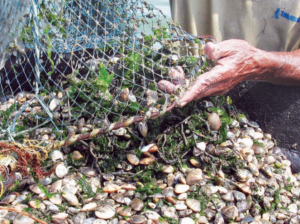
Clam catch from hand dredge (Pic courtesy – WWF)
The clams are collected in net bags tied around the waist, enabling an individual to gather 40–50 kilograms daily within just a few hours. Four distinct methods of clam collection exist, but the most productive — and widely practiced in Ashtamudi — is the use of hand-operated dredges from dugout canoes.
Until 1981, Ashtamudi’s clam catch catered largely to local consumption.
Everything changed with the opening of export markets that year. The fishery witnessed a dramatic boom between 1982 and 1992, scaling from modest quantities to an impressive 6,800 tonnes, peaking at 10,000 tonnes in 1991.
But success came at a cost.
Indiscriminate harvesting and the capture of undersized clams soon led to resource depletion. By 1993, catches plummeted to around 5,000 tonnes, sparking alarm among the fishing community, especially as this decline coincided with peak spawning months — December through February — when young clams naturally replenish the beds.
Recognising the looming crisis, CMFRI joined hands with the District Administration and local fishers to launch awareness programmes in the early 1990s.
These initiatives highlighted the dangers of overfishing during spawning seasons and harvesting immature clams.
Acting on scientific advice, authorities imposed an annual fishing ban from December to February, protecting the species precisely when it needed it most.
(Edited by Majnu Babu).


