

Published Aug 11, 2026 | 1:49 PM ⚊ Updated Aug 11, 2026 | 1:49 PM

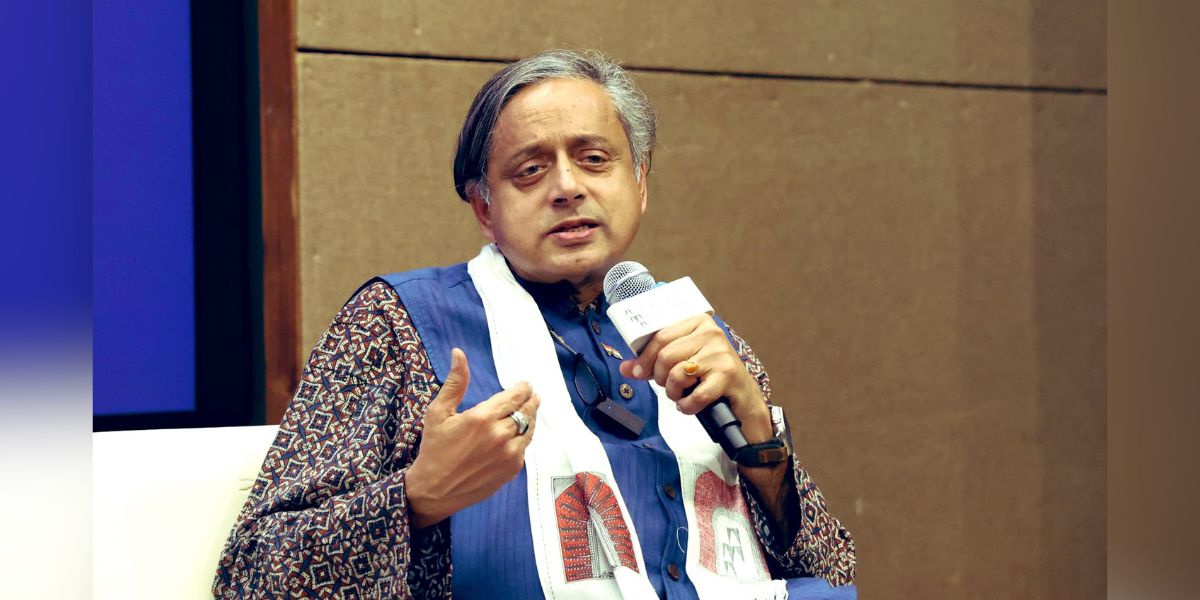
Shashi Tharoor.

Synopsis: Emphasising the time it would require to sing both the National song, anthem, and state song in the case of Tamil Nadu, ahead and at the end of each official function, Tharoor said, “Jana Gana Mana requires audiences to stand respectfully and focus their attention for a reasonable 52 seconds. The National Song in full takes three minutes and 10 seconds. Tamil Nadu has just decided that both will be preceded by the State Song in Tamil for another two minutes. Do we really expect audiences to stand still and respectfully for six minutes before and after every function, a total of 12 extra minutes? Can respect and patience be legislated?”
Thiruvananthapuram MP Shashi Tharoor on Tuesday, 11 August, criticised the Vande Mataram amendment bill, which was passed without discussion in Parliament, receiving the President’s assent. He further questioned if respect and patience be legislated.
The Bill, which is now an Act, sought to grant national song Vande Mataram the same statutory protection as that of the national anthem. It also makes it an offence to intentionally prevent or cause a disturbance during the singing of Vande Mataram.
A PIB press release read, “In recognition of the enduring significance of Vande Mataram, the Prevention of Insults to National Honour (Amendment) Act, 2026, received Presidential assent and was published in the Gazette of India on 6 August 2026. The Act extends the protections under Section 3 to the National Song, Vande Mataram, thereby placing it on the same legal footing as the National Anthem for the purposes of that provision. It makes it an offence to intentionally prevent its singing or to disturb an assembly engaged in singing it.”
Criticising the assent, Tharoor wrote: “The President has assented to the Vande Mataram Amendment, passed without discussion in Parliament, which requires the singing of the National Song in full at the start and ending of any official function, in addition to the National Anthem. As one who greatly respects both, and can sing the first two stanzas of the former (but not the other four, which were never required till now) as well as the entire anthem, i would like to point to just one practical consideration our zealots appear to have overlooked: human nature.”
Emphasising on the time it would require to sing both the National song, anthem, and state song in case of Tamil Nadu, ahead and at the end of each official function, Tharoor said, “Jana Gana Mana requires audiences to stand respectfully and focus their attention for a reasonable 52 seconds. The National Song in full takes three minutes and 10 seconds. Tamil Nadu has just decided that both will be preceded by the State Song in Tamil for another two minutes. Do we really expect audiences to stand still and respectfully for six minutes before and after every function, a total of 12 extra minutes? Can respect and patience be legislated?”
“I fear that the intent of the Bill, to promote greater respect for the National Song , will not be achieved, but its opposite may well be,” he added.
The President has assented to the #VandeMataram Amendment, passed without discussion in Parliament, which requires the singing of the National Song in full at the start and ending of any official function, in addition to the National Anthem.
As one who greatly respects both,…— Shashi Tharoor (@ShashiTharoor) August 11, 2026
Vande Mataram is a poem written by Bankim Chandra Chatterjee in the early 1870s, which was later included in his novel Anandamath.
It was used during the freedom struggle but later also adopted by the right-wing groups as a communal cry to unite Hindus against Muslims during riots and conflicts. This prompted leaders like Mahatma Gandhi and Rabindranath Tagore to suggest the removal of its controversial parts and keep the first two stanzas to be used as the national song. The leaders also noted that some parts of the poem portray the nation as Goddess Durga, which goes against the religious beliefs of Muslims and Christians. At the advice of Gandhi and Tagore, the Congress under Jawaharlal Nehru decided to use just two stanzas of the song, a decision which was upheld by the Constituent Assembly in January, 1950, when Rajendra Prasad declared it the national song.
However, the RSS and the BJP have long been pushing for the use of Vande Mataram’s full version, with Prime Minister Narendra Modi repeatedly accusing the Congress of demeaning the song and limiting it to two paragraphs to “appease” its Muslim vote bank.
Earlier this year, the Union Home Ministry issued directives requiring the recital of the entire song at schools and at government functions, and mentioning that it should be given priority over the national anthem. When the directive was challenged before the Supreme Court, the court dismissed the petition, saying there was no penalty associated with failure to follow the instructions, as it was merely an advisory. However, the new Bill mentions disruption of the singing of the national song as an offence inviting penalty and punishment.
(Edited by Sumavarsha)



