

Published May 24, 2026 | 8:00 AM ⚊ Updated Jun 07, 2026 | 12:02 PM

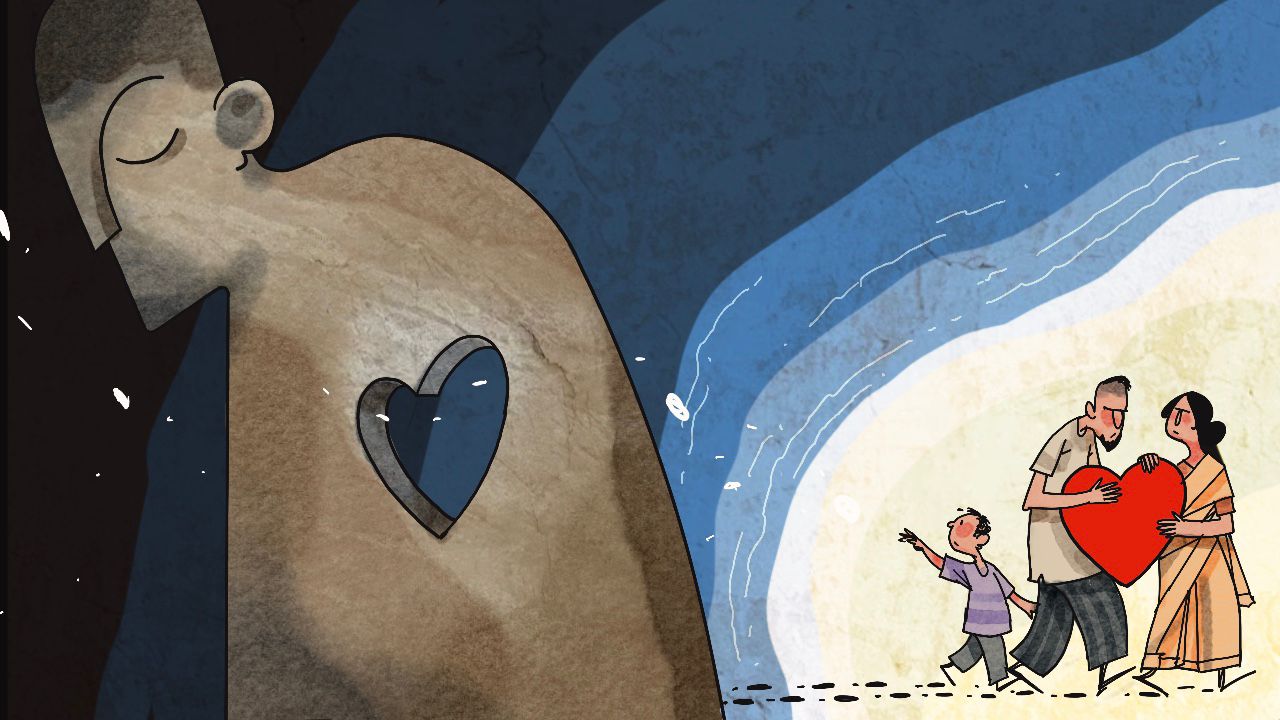
At the centre of Fathima's work lies a broader question: what happens to grief when infrastructures fail?

Synopsis: Muslims account for 96.58% of the Lakshadweep Islands’ population. The archipelago’s healthcare system is inadequate; so are transport facilities. Residents often have to depend on the mainland for medical care. The body of a Lakshadweep resident dying on the mainland is not always carried home, since their religion discourages keeping the body for a long time. The dead remain in the mainland, while their loved ones return home carrying memories.
The red laterite ‘Meesan Kallu‘ (grave marker) stands quietly in the verdant landscape of North Kerala, carrying both memory and geography within it. Next to almost every grave grows a henna, a plant believed to embody purity and continuity.
In Kerala’s tropical climate, it survives with little care. In the landscape dotted with Meesan Kallus, they become a living companion to the dead.
Graves draws a clear boundary between the living and the departed, between home and cemetery, memory and absence. The ‘Meesan Kallu‘ often symbolises that separation, marking a life that has ceased to exist.
Yet, there are places where this line of separation becomes blurred, where death does not feel distant from life, where graveyards breathe alongside homes, playgrounds, and ordinary lives. In such spaces, the dead are not removed from the living; they remain woven into the landscape itself.
Lakshadweep is one such place.
Also Read: Lakshadweep’s fragile paradise at risk
Malayali researcher K Benna Fathima has been awarded the Dissertation Fieldwork Grant by the Wenner-Gren Foundation for her project, Island Deathscape: Death, Loss and the Ethics of Life in the Lakshadweep Archipelago.
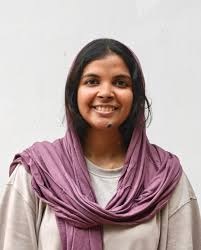
Benna Fathima
The grant, worth US $25,000, will support 18 months of ethnographic fieldwork across Lakshadweep and related mainland spaces shaped by migration, illness, death and mourning.
Her work examines how island communities negotiate death when geography, religion, healthcare and oceanic mobility constantly intervene in the process of grieving.
Shuttling between islands and the mainland, the research explores how bodies, memories and mourning practices travel across the Indian Ocean world.
According to her supervisor, Can Evren, the study offers an important anthropological inquiry into how island societies understand life and death alongside questions of climate, borders, illness, healing, biodiversity and belonging.
Benna’s paper, Between Graves and Grief: Care, Governance and the Ethics of Dying Across the Indian Ocean focuses on a painful rupture increasingly experienced by Lakshadweep islanders: deaths that occur away from home.
”As the healthcare infrastructure in the islands remains limited, many patients are referred to mainland cities, especially Kochi, for advanced treatment. But when death happens there, returning the body to the islands often becomes difficult,” Fathima told South First.
“In Islamic belief, prolonged keeping of the body is generally discouraged, and swift burial is preferred. Transporting bodies back to Lakshadweep is often economically and logistically unfeasible, especially given the limited airport infrastructure in the islands,” she said.
Over time, this has created new burial geographies in Kochi itself, where graves of Lakshadweep islanders have steadily increased. “Separate burial spaces have emerged for the community,” she added.
Fathima’s research follows this separation between graves and grief, where bodies remain on the mainland while mourning stays anchored in the islands. Through oral histories, burial records, medical archives and ethnographic observation, she studies how healthcare systems, mobility and state infrastructure reshape memory, belonging and care after death.
Also Read: Lakshadweep’s mukthiyars stare at uncertainty
Many Malayalis connected to Lakshadweep often think its death customs are similar to those of Kerala/Malabar Muslims, but the way the living and the dead share space in Lakshadweep is very different.
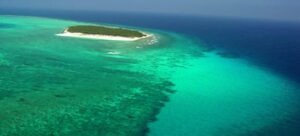
Bitra Island (CEO, UT of Lakshadweep)
In many parts of Kerala, especially in the Malabar region, burial grounds are usually attached to mosques, which are visibly separated from everyday life.
Funeral rituals involve structured ceremonies- recitations from the Holy Quran, mourning gatherings, moulid ceremonies, seventh-day and 40th-day prayers, annual commemorations, charity in the deceased’s name and periodic grave visits.
Mourning extends into collective rituals of remembrance carried through homes, mosques and families.
Lakshadweep presents a very different landscape.
Fathima said, the islands do not maintain the same visible separation between the living and the dead. The geography itself alters the relationship.
Each island has an unusually high number of mosques — often around 16 to 18 — within a small stretch of land, and graves frequently appear alongside roads, homes, trees and public spaces. A walk through the islands often means moving continuously past burial sites.
In aerial views, she said the islands appear almost like living graveyards where memory and daily life coexist without rigid boundaries.
Unlike in many parts of Kerala, access to graveyards is less restricted, including for women. The dead remain physically woven into ordinary routines, beside tea shops, pathways and neighbourhoods.
In this sense, death is not distant from life but embedded within it.
Her research also places Lakshadweep within a wider Indian Ocean cultural world.
The islands’ Muslim identity, she noted, evolved not only through religion but through maritime trade, oceanic movement, climate and centuries of interaction across the Indian Ocean belt, including regions such as Sri Lanka, Maldives and Indonesia.
These influences create cultural and ethical worlds distinct from northern South Indian Muslim traditions, shaped more heavily by Sufi lineages and Persian influences.
Also Read: Indigenous residents face displacement
At the centre of Fathima’s work lies a broader question: what happens to grief when infrastructures fail?
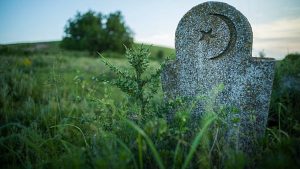
In Lakshadweep, the dead remain woven into everyday life.
Her study treats healthcare not simply as a medical system, but as something deeply tied to mobility, economics, governance and death itself.
Lakshadweep, despite being a Union Territory and tourist destination, continues to face uneven development and fragile healthcare systems.
Emergency evacuations often depend on costly air ambulances, and serious medical treatment frequently requires movement to the mainland. Rather than approaching death as an isolated event, Fathima’s research treats it as part of a larger relationship between sea, land, care and survival.
Island Deathscape ultimately becomes not only a study of mourning, but also a study of how island societies continue to live with absence, carrying the dead across oceans while keeping grief rooted at home.
Fathima’s work is expected to become a major contribution to the anthropology of Lakshadweep, documenting lives and deathscapes that have long remained under-recorded.
Yet, the islands never stop surprising us.
Just when one begins to understand Lakshadweep, Minicoy Island opens another entirely different world, in language, burial customs and experiences of grief. Unlike the other islands, Minicoy has a public burial ground, carrying a different history of death and community.
Perhaps not every story can be explored within a single research journey. Some islands keep their histories waiting, quietly demanding another study, another return.
(Edited by Majnu Babu).



