

Published Feb 08, 2026 | 8:00 AM ⚊ Updated Feb 08, 2026 | 8:00 AM

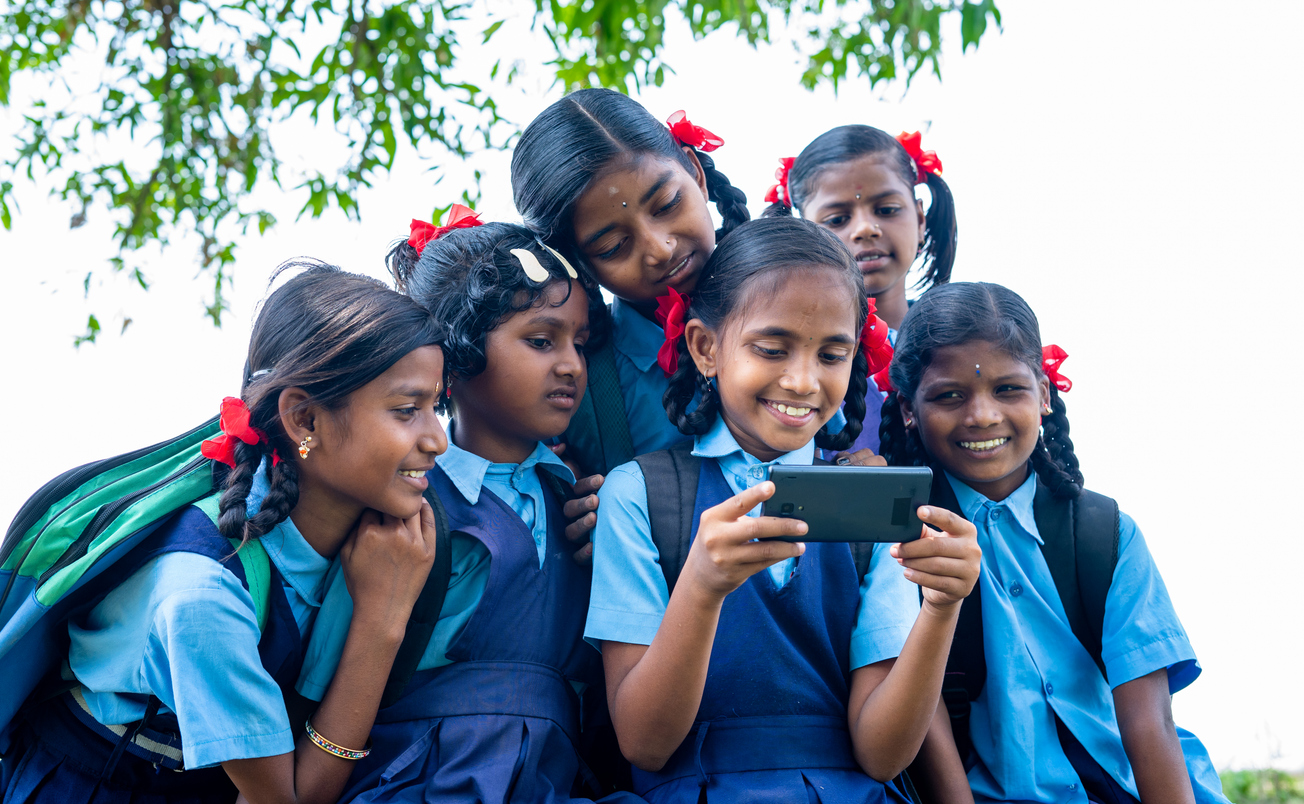
Representational image. Credit: iStock
Synopsis: Kerala leaders have raised alarm over rising screen and social media addiction among children, urging debate on regulation versus awareness. Education Minister V Sivankutty and Speaker AN Shamseer stressed the risks to health and development, with calls for legal measures and studies. Experts warn against abrupt restrictions, advocating balanced digital literacy, parental guidance, and school-based life-skill training.
With childhood increasingly shrinking to the size of a smartphone screen, Kerala is preparing to step into a sensitive but urgent debate: how much is too much when it comes to children and social media.
Signals from the top echelons of the state’s leadership suggest that the government is actively exploring ways to address rising screen addiction among children and adolescents — through law, awareness, or a mix of both.
While the Minister has called for a wide public debate on whether regulation or awareness is the way forward, the Speaker has gone a step further, urging the Kerala State Commission for Protection of Child Rights to explore legal measures to rein in mobile phone use and curbing gaming addiction among children below 16.
Together, the statements indicate that Kerala could soon join a growing list of states and countries actively seeking to balance digital access with the physical, mental, and social well-being of the next generation.
Concerns over the unchecked use of digital devices and problematic social media use among children and adolescents have triggered a renewed public debate in Kerala, with both the state General Education Minister and the Speaker of the Legislative Assembly underlining the urgency of intervention.
On 4 February, Education Minister V Sivankutty pointed out that while technology has become inseparable from modern life, its excessive and unregulated use is beginning to take a visible toll on children.
He noted that childhood, once defined by outdoor play, friendships and direct social interaction, is increasingly being replaced by prolonged engagement with mobile phone screens.
This shift, he warned, has serious implications for the physical health, mental well-being and social development of the younger generation.
The minister stressed that the government is not advocating a blanket ban on the internet or digital tools.
Instead, the focus is on promoting responsible and meaningful use of technology.
He drew attention to the fact that several developed nations and Indian states have already moved towards framing laws or guidelines to regulate children’s exposure to social media.
Given Kerala’s high levels of internet literacy and mobile penetration, he said the issue assumes even greater relevance here.
Sivankutty called for an open public discussion to determine whether legal regulation, awareness campaigns, or a combination of both would best safeguard children’s interests.
The General Education Department, he added, plans to undertake a detailed study to help shape future policy decisions.
A day later, echoing these concerns, Assembly Speaker AN Shamseer urged the Kerala State Commission for Protection of Child Rights to take a proactive role in addressing the issue through legal means.
Speaking at a state-level conclave on child protection laws, he highlighted the growing problem of excessive screen time among children below 16 years of age.
The Speaker specifically flagged gaming addiction as a rising challenge of the digital era and called for comprehensive recommendations to curb its impact.
Together, the statements signal a shared concern across government and legislative leadership about the long-term consequences of digital addiction and the need for timely, well-considered action to protect children’s future.
The growing concern around digital addiction among children and young adults is no longer speculative; it is firmly grounded in evidence emerging at national, state and institutional levels.
The Economic Survey 2025–26 has flagged digital addiction among youth as a serious public health issue, aligning India with a global discourse already acknowledged by the World Health Organisation.
With online gaming disorder now formally recognised in ICD-11, the problem has moved from the realm of lifestyle choice to that of mental health, marked by loss of control, neglect of daily responsibilities and persistence despite clear harm.
The Economic Survey warned that what makes the Indian situation particularly urgent is the absence of comprehensive national data, which limits the ability of policymakers to design targeted interventions or integrate digital wellness into existing mental health programmes.
It further stated that the forthcoming Second National Mental Health Survey is expected to fill this gap, but its findings will demand swift and informed action.
Evidence from smaller studies already points to the scale of the issue.
Research conducted by doctors from the Government Medical College, Thiruvananthapuram, revealed that nearly half of children aged 5–12 years showed signs of mobile phone addiction, an alarming figure with serious implications for social behaviour, emotional development and learning outcomes.
Importantly, the study noted that many of the associated risk factors are modifiable, underlining the scope for timely intervention.
Parallel findings from the State Department of Economics and Statistics further reinforce these concerns, particularly among older adolescents and young adults.
The report highlighted how individuals in the 18–25 age group engage with multiple social media platforms, often without even being conscious of the extent of their usage. Disturbed sleep patterns, reported by a majority of respondents, point to deeper behavioural and health consequences.
Together, these findings explain the urgency behind calls for family-level awareness, parental guidance, school-based education and possible age-appropriate regulations.
Without coordinated action, digital addiction risks becoming a silent but widespread public health burden, affecting productivity, mental well-being and the social fabric of the next generation.
At the same time, the question lingers, will legislation or awareness campaigns actually make a difference in a country where internet use is exploding at an unprecedented scale?
Anson PD Alexander, founder of Kanal, an NGO working closely with children, believes that simply replicating measures adopted by developed countries may not work for India.
Speaking to South First, Anson pointed out that while nations such as Australia have introduced some of the world’s strictest controls — including a nationwide ban on social media accounts for children under 16 — and countries like France, Spain, Finland, Japan and several US states have imposed classroom bans, school-wide restrictions or digital curfews, India presents a vastly different reality.
“India has the world’s second-largest online population, and it continues to grow rapidly. Talking about regulation and awareness in isolation, without acknowledging this scale, is unrealistic,” he said.
According to the latest Internet in India report by the Internet and Mobile Association of India (IAMAI), the country now has around 958 million active internet users, making it one of the world’s largest and fastest-evolving digital markets. Significantly, rural India accounts for 57 percent of these users, or nearly 548 million people. The report also highlights that internet and AI usage is highest among younger demographics — 57 percent of users aged 15–24 and 52 percent of those aged 25–44 reported using AI tools in 2025.
Reflecting on Kerala’s experience, Anson described the state government’s decision during the COVID-19 pandemic to promote smartphone-based education as a critical misstep.
“Our assessment show that this decision opened the floodgates. Children gained unprecedented access to smartphones and uninterrupted internet in the name of education,” he said.
“There is no solid evidence to prove that digital education significantly benefited children. Today, even college students receive their notes through WhatsApp. We have to acknowledge our own role in creating this situation,” he added.
He warned that unrestricted exposure, followed by sudden attempts at regulation, could backfire.
“Neuroscientists compare social media interaction to a syringe of dopamine injected straight into the brain. Awareness campaigns alone won’t work. If we abruptly restrict internet use among children and adolescents, withdrawal symptoms are real — and without proper handling, this could even lead to tragic outcomes like suicide,” he pointed out.
According to Anson, the issue needs to be addressed at multiple levels.
“Instead of knee-jerk restrictions, we must empower adolescents to make informed choices, balance their online and offline lives, and equip schools with evidence-based programmes on responsible social media use, online safety, critical thinking and healthy gaming habits,” he remarked.
Echoing this sentiment, Dr Arun B Nair, Professor of Psychiatry at Government Medical College, Thiruvananthapuram, stressed the urgent need to restore human connection at the core of education.
“Social interaction and human bonding should be part of life-skill training within school curricula,” he said. “Children must be taught assertiveness — how and when to say no — because peer pressure often plays a key role in digital addiction.”
Dr Nair also pointed to South First, the role of parents. “There is no point in restricting children’s screen time if parents themselves are constantly glued to screens. Parental behaviour has to change too. We already have modules on life skills and digital literacy, but implementation lacks seriousness.”
Ultimately, he argued, every child should receive structured life-skill training, with digital literacy woven into it.
“It’s crucial that we help young people navigate the digital world safely — enabling them to reap its benefits while protecting their mental health, social well-being and emotional resilience,” he stated.
(Edited by Amit Vasudev)


