

Published Sep 15, 2026 | 7:00 AM ⚊ Updated Sep 15, 2026 | 7:00 AM

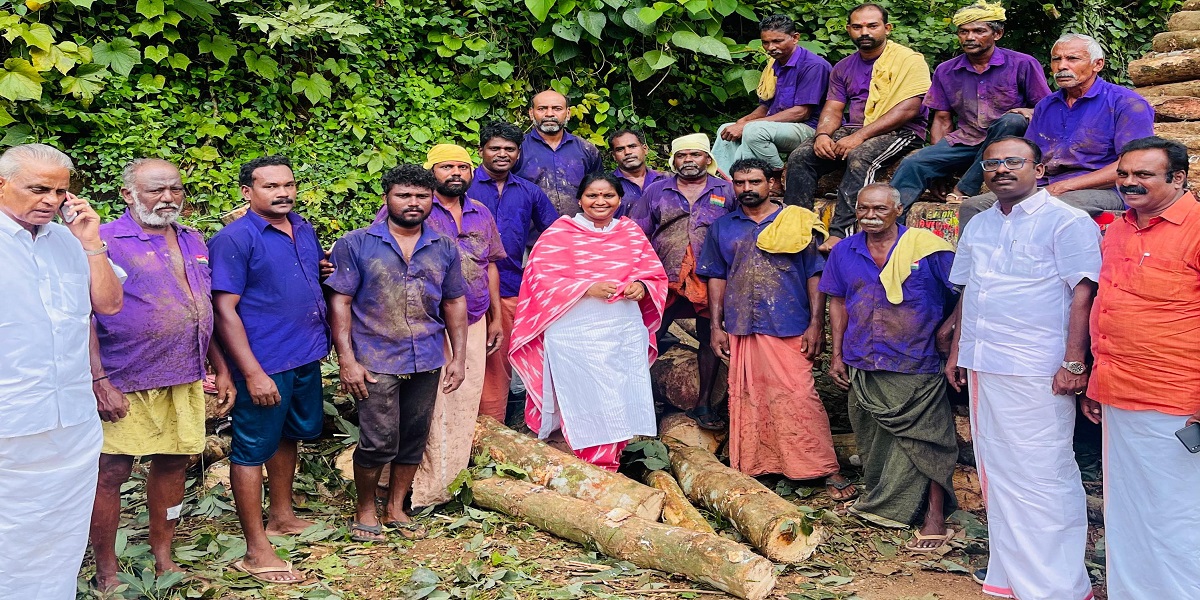
Local leaders have maintained that they never opposed Haridas as an MLA and had supported her during the election.

Synopsis: Ramya Haridas is a leader whom the Congress has kept giving chances. The question now is whether Haridas can translate that political goodwill into organisational stability.
For the Congress party in Keralam, Ramya Haridas MLA is both an opportunity and an organisational headache. The latest controversy in Chirayinkeezhu — involving an alleged clash between the MLA and local Congress workers, the suspension of her aide Palayam Pradeep and party worker S Sajaad and the subsequent KPCC inquiry — has once again put the spotlight on the uneasy relationship between Haridas and the organisation on the ground.
The question before the Congress is no longer merely who was at fault in the Chirayinkeezhu incident.
It is whether the party can continue to accommodate recurring organisational friction around a leader it has repeatedly backed, without allowing the larger organisation to suffer.

Ramya Haridas
Haridas’s political rise is itself a story of opportunity. She was identified and brought into mainstream Congress politics through Rahul Gandhi’s talent-search programme around 2010-11, which sought to identify grassroots leaders for the party.
She subsequently rose through local politics, served as a block panchayat president and eventually made the leap to Parliament.
In 2019, Haridas won the Alathur Lok Sabha constituency, becoming the sole woman MP from Keralam at the time.
Her defeat in the 2024 Lok Sabha election, however, did not end the Congress’ faith in her political prospects.
Instead, she was given another major opportunity- this time as the party’s candidate in Chirayinkeezhu. The decision was an indication that senior leaders continued to see political potential in her despite the electoral setback.
A senior leader from Chirayinkeezhu told South First that this is precisely why the latest controversy is causing concern within sections of the state leadership.
”Ramya has been given opportunity after opportunity by the party. The leadership still believes she has potential. But there is a question about why there are repeated issues with the local leadership,” the source said.
The pattern is difficult for the party to ignore.
Haridas has been able to secure support from sections of the senior leadership, but her relationship with local organisational structures has repeatedly become complicated.
That contradiction is now playing out in Chirayinkeezhu.
Also Read: One photo, one bot, zero expertise: How AI morphing is spreading across Keralam campuses
Local Congress leaders have for months questioned the role of Palayam Pradeep, who they allege was exercising influence in constituency affairs despite not being a resident. Some leaders went as far as describing him as an MLA benami, a charge Haridas has rejected.
The proposed appointment of Pradeep as Haridas’s personal staff, even after his suspension from the party, further deepened the distrust. The KPCC leadership publicly expressed its displeasure, forcing the MLA to soften her position on the appointment.
A close aide of Haridas told South First that the MLA believes she has been unfairly targeted by sections of the local organisation.
”Ramya has always wanted to work in the constituency. She has faced resistance from some people from the beginning. The present controversy should not be seen in isolation,” the aide said.
The immediate controversy began after Sajaad posted a message in a Congress WhatsApp group criticising Pradeep’s presence at a Block Panchayat Committee meeting and questioning his alleged influence in the constituency.
The disagreement escalated when Haridas, accompanied by Pradeep and others, went to Sajaad’s house. The subsequent confrontation led to competing allegations from both sides and the clash that triggered the KPCC inquiry.
Haridas alleged that she had faced derogatory remarks because of her decision to stay away from rival panels in a cooperative bank election. Sajaad, meanwhile, rejected that explanation and alleged that the bank election issue was unrelated to the confrontation.
The dispute also exposed deeper differences within the Chirayinkeezhu Congress unit.
Local leaders have maintained that they never opposed Haridas as an MLA and had supported her during the election. Their objection, they say, was primarily against what they saw as Pradeep’s excessive involvement in constituency affairs.
According to party functionaries, earlier also local leaders had approached the KPCC leadership raising concerns regarding Haridas.
This is significant because Chirayinkeezhu is not merely another constituency for the Congress.
The UDF’s victory there marked a political shift in an area traditionally associated with the Left. Instead of using that victory to strengthen its organisational base, the Congress is now dealing with an internal dispute that has spilled into public view.
The party’s problem is compounded by the fact that Haridas is not a political novice. She has been through Parliament, an election defeat and now an Assembly victory.
The expectation from such a leader is that she should be capable of managing local political relationships rather than allowing disagreements to repeatedly escalate into organisational crises.
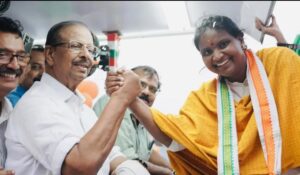
UDF Chelakkara Assembly Constituency candidate Ramya Haridas with KPCC president K Sudhakaran (File)
The KPCC is now expected to study the report submitted by a three-member inquiry committee headed by senior leader M M Hassan, along with general secretaries Neyyattinkara Sanal and Ramani P Nair.
Haridas appeared before the panel on September 9, after missing its earlier sitting on September 6.
The most likely outcome of the inquiry, according to Congress sources, would be a silent warning to the local leadership rather than any severe disciplinary action against Haridas.
This is because the party cannot afford a public showdown with a sitting MLA, especially when it banks on the new generation of MLAs to build the government’s public image around efficient governance.
The UDF government is still in its early days and is already facing heavy criticism over the continuing power outages in the state. At a time like this, Haridas’s involvement in such a prolonged organisational controversy is politically awkward for the party.
However, ignoring the concerns of local workers could deepen resentment and weaken the organisation in a constituency the party has just managed to win. Hence, a silent warning could be the safest option.
It would allow the KPCC to signal that indiscipline will not be tolerated without turning Haridas into a political victim or creating another public confrontation.
But the larger issue will remain unresolved.
Congress has repeatedly invested in Haridas because it sees potential in her. Rahul Gandhi’s early recognition gave her an entry into mainstream politics. The question now is whether Haridas can translate that political goodwill into organisational stability.
In politics, sometimes a branch has to be pruned not because the tree has failed, but because the tree cannot afford to let one branch endanger the whole structure.
(Edited by Fayisa CA)



