


Published Mar 15, 2026 | 8:00 AM ⚊ Updated Mar 15, 2026 | 8:00 AM

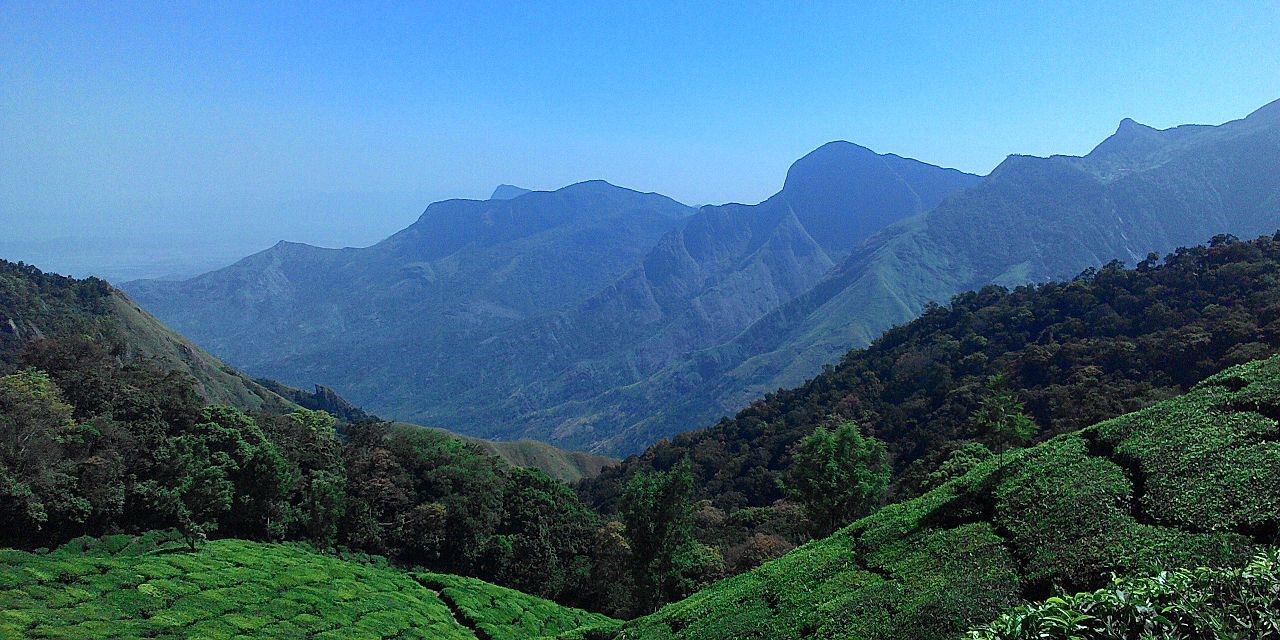
Western Ghats in Kerala. (Creative Commons)
Synopsis: A coalition of environmental researchers, activists and community representatives in Kerala has released an environmental charter ahead of the state Assembly elections, urging political parties to place ecological protection at the centre of their election promises. The charter calls for an integrated environmental governance framework, climate risk legislation, stronger protection for the Western Ghats and sustainable agriculture to address the state’s growing climate and ecological challenges.
A collective of environmental researchers, activists and community representatives in Kerala has released an environmental charter ahead of the state Assembly elections, setting out reforms covering agriculture, infrastructure, mining, cities, waste management, tourism and energy.
Titled From Forest to Sea – Kerala People’s Environment Charter, it proposes institutional mechanisms for climate governance, ecological zoning, financing, transparency and public accountability and urged political fronts to incorporate its recommendations into their election promises.
Kerala Paristhithi Aikya Vedhi released the document in Thiruvananthapuram on 11 March and seeks to push environmental concerns to the centre of Kerala’s policy debate ahead of the polls.
The group said decisions taken in this election cycle will shape how the state balances development with ecological security in the years ahead, as Kerala faces recurring floods and landslides, biodiversity loss, coastal erosion and rising climate vulnerability.
The framework rests on three principles: managing Kerala’s landscapes as connected ecological systems; aligning development with climate resilience and ecological limits; and ensuring environmental governance remains transparent and accountable across political cycles.
The proposal calls for an integrated ecological planning framework that treats Kerala’s landscapes as a single, interconnected system.
Environmental management in the state remains fragmented, it says, with forests, rivers, agriculture and coastal areas governed by separate departments and policy frameworks.
Such separation ignores how ecosystems interact. Disturbances in one region can cascade across others. Deforestation in the Western Ghats, for instance, can alter river flows, affect agricultural productivity and weaken coastal stability.
The framework was drafted during the Sahyadri Environmental Summit held in Wayanad from 24 to 26 January. Organisers said the process involved consultations with environmental scholars, farmers’ representatives, grassroots leaders and activists.
They said adopting these recommendations in party manifestos could reduce climate risks, protect livelihoods and steer the state towards a safer ecological future.
The group added the initiative will anchor a statewide campaign urging political parties to adopt the proposals in their election manifestos.
The plan proposes legislative, conservation and agricultural reforms to address climate vulnerability, environmental degradation and rising human–wildlife conflict in Kerala.
At the centre is a proposed Kerala Ecological Vulnerability and Climate Risk Rehabilitation and Resettlement Act, modelled on the principles of the Right to Fair Compensation and Transparency in Land Acquisition, Rehabilitation and Resettlement (LARR) Act.
The law would guarantee time-bound compensation, rehabilitation and resettlement for communities displaced by disasters, climate risks or ecological hazards. It would cover relocation caused by floods, landslides, coastal erosion, climate-driven displacement and human–wildlife conflict zones.
The recommendations also identify the Western Ghats as Kerala’s ecological backbone and propose a Western Ghats Ecological Governance Council to guide development decisions affecting the fragile mountain ecosystem.
They call for stricter land-use regulation in hill regions but warn against large infrastructure projects in ecologically sensitive zones. The plan also proposes measures to reclaim illegally occupied forest land and restore degraded forests.
To strengthen biodiversity conservation, the framework suggests expanding protected areas and promoting indigenous tree species and agroforestry practices.
The manifesto also warns the steady decline of paddy cultivation has weakened both food security and the state’s natural flood resilience.
It proposes a statewide mission to revive paddy farming and halt further conversion of agricultural wetlands. Paddy fields absorb excess monsoon rainwater and act as natural flood buffers. Stronger incentives, improved procurement and better institutional support for farmers are proposed to sustain cultivation.
The proposals call for agroecology to guide Kerala’s agricultural policy, research and extension so farming systems remain ecologically safe, economically viable and resilient to climate variability.
They also recommend a phased, time-bound shift away from hazardous chemical pesticides, supported by ecological pest management, farmer training and safer alternatives.
To address rising human–wildlife conflict, the document proposes a coexistence-based approach that protects both human safety and wildlife. It recommends a universal insurance system for farmers in conflict-prone areas covering crop, livestock and property losses, along with full, time-bound compensation within days for verified damage, injury or death caused by wildlife.
The framework also recommends river basin–based planning to manage Kerala’s water systems. It proposes creating a Kerala River Basin and Water Systems Mission to coordinate action across departments, local governments, scientific institutions and community organisations.
The proposals also flag long-standing pollution in industrial clusters along the Periyar river, particularly in the Eloor–Edayar region. The document notes studies over several decades have documented industrial effluents, contaminated sediments, groundwater pollution and related public health risks.
It calls for a shift from conventional pollution control to clean production systems and zero-discharge industrial processes.


