

Published May 19, 2026 | 1:55 PM ⚊ Updated May 19, 2026 | 1:55 PM

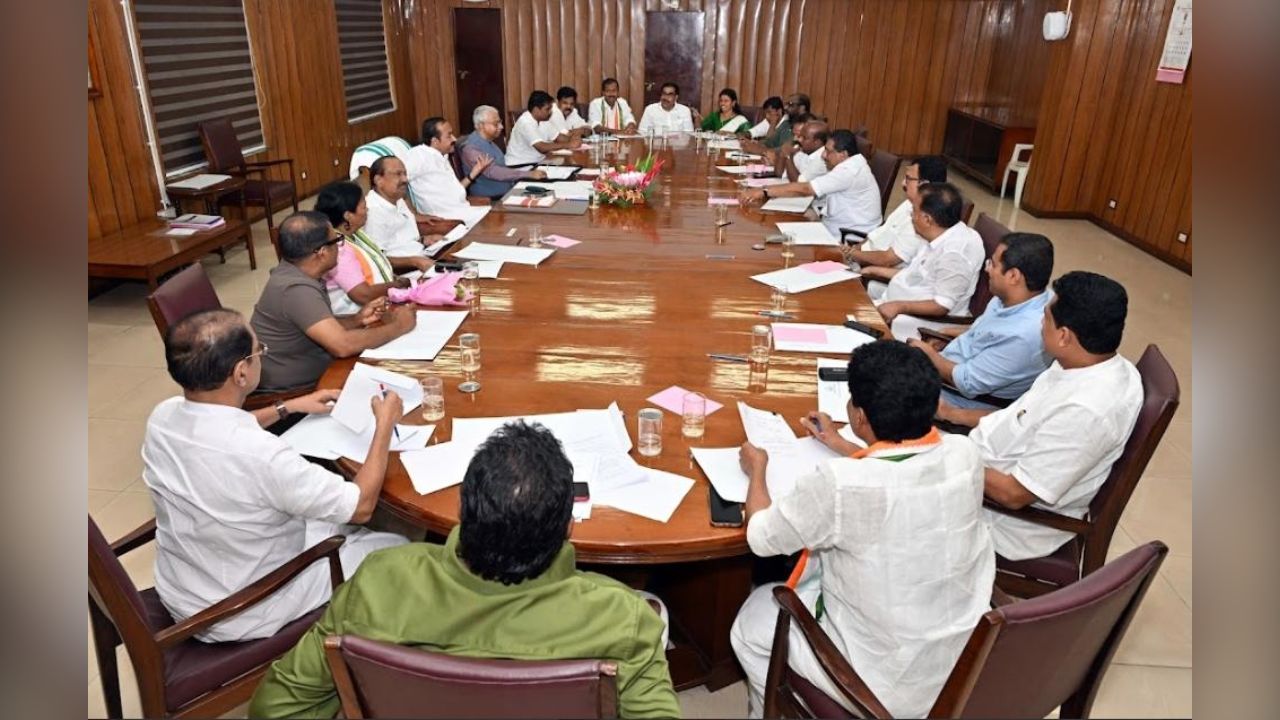
The first Cabinet meeting of the VD Satheesan-led UDF government on 18 May 2026.

The swearing-in ceremony of the new UDF government in Kerala had all the ingredients of a triumphant political reset — flashing cameras, celebratory slogans, leaders draped in shawls, and a carefully choreographed display of unity around Chief Minister VD Satheesan.
By Monday (18 May) evening, however, the real story had moved elsewhere: Into closed rooms, hurried consultations, sulking factions, and a growing pile of unsigned portfolio files.
The Cabinet may have taken the oath, but the government itself seemed stuck in the parking area waiting for final clearance. Even a day after the ministers assumed office, Kerala still do not know who would officially control several key departments.
Some departments were found posting congratulatory messages from their social media accounts welcoming their “new ministers”.
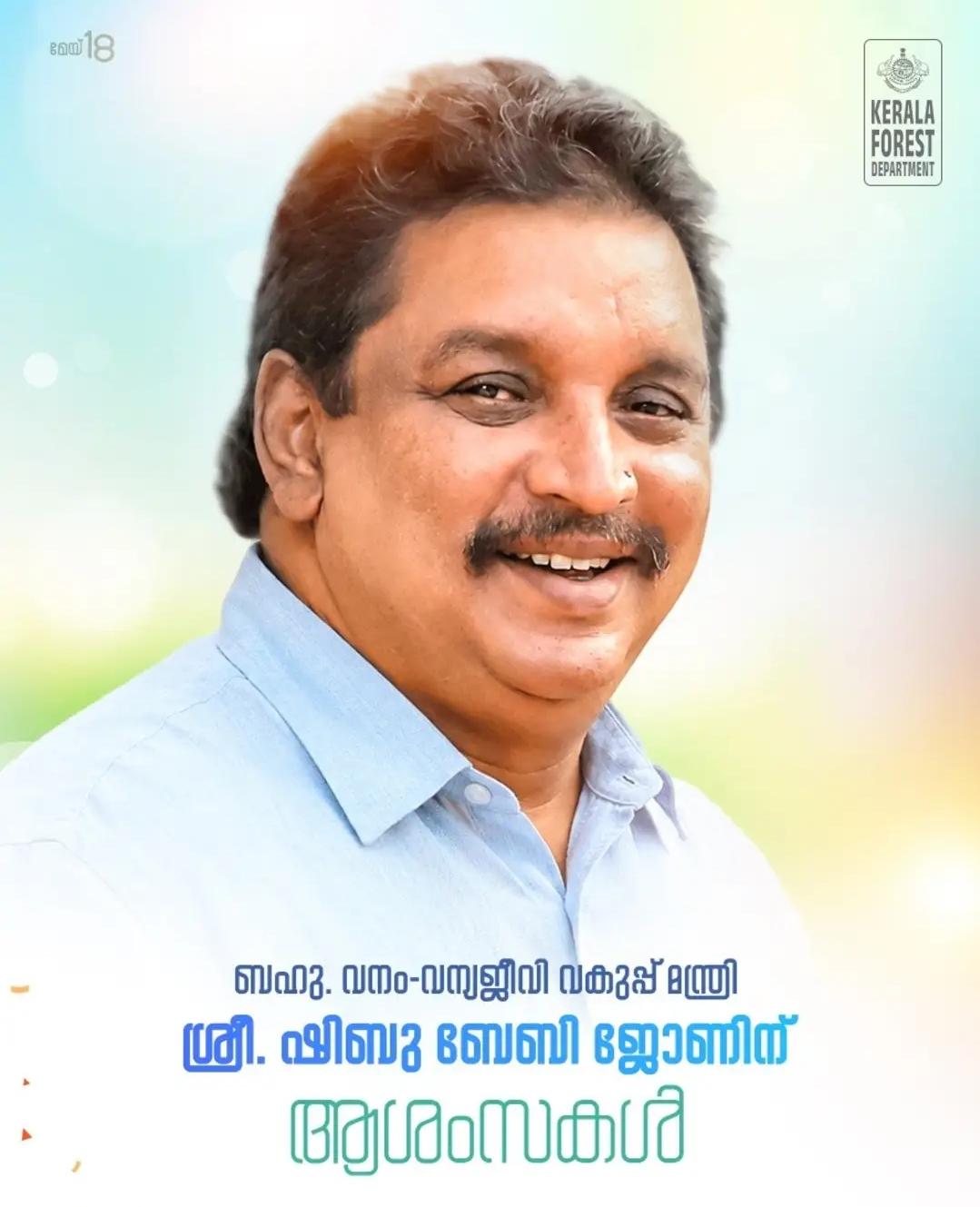
Kerala Forest Department welcoming Shibu Baby John as their minister, though an official notification is yet to come.
A few eager ministers reportedly began informal takeover exercises.
Meanwhile, bureaucrats were left refreshing WhatsApp groups for clarity on who exactly their political boss was.
At the heart of the confusion lies a deceptively small word with oversized political weight: Fisheries.
What would ordinarily have been a routine portfolio allocation has now turned into the first major headache for the Satheesan government.
The Indian Union Muslim League (IUML) wanted Fisheries as compensation for surrendering Higher Education to the Congress.
The Congress, however, found itself cornered by pressure from sections within the party and from the Latin Catholic Church, which sees Fisheries not merely as an administrative department but as an emotional and political symbol tied to Kerala’s coastal communities.
The irony is difficult to miss.
The UDF returned to power promising smoother coordination than the often-centralised functioning of the previous Left administration.
Yet within hours of assuming office, the alliance found itself trapped in an old Kerala coalition ritual: Everyone wants harmony, provided their department comes with enough files, funds, and most importantly, limelight.
Also Read: Kerala CM VD Satheesan’s government unveils first two guarantees in maiden Cabinet meeting
The original formula appeared simple on paper. The Congress would reclaim higher education, reportedly earmarked for Roji M John, while the IUML would retain general education and additionally secure fisheries.
That arrangement ran into turbulence almost immediately.
Leaders from the Latin Catholic community argued that a department directly linked to the livelihoods of coastal populations should not become part of coalition arithmetic.
The demand was blunt: Fisheries must go either to someone from the coastal belt or to a minister familiar with the concerns of fishing communities.
That reopened another political file altogether — the absence of Latin Catholic representation in the Cabinet.
Although the Congress leadership privately pointed to Shibu Baby John as a face from the community, sections within the Church were unconvinced. There was disappointment that leaders such as M Vincent and TJ Vinod did not make it to the government despite strong expectations.
The unease became impossible to ignore after reports emerged that Church leaders had even considered skipping the swearing-in ceremony.
By evening, Satheesan himself made a politically necessary visit to Archbishop Thomas J Netto. The Chief Minister’s Office (CMO) later stressed the government’s commitment to coastal welfare, education and livelihood protection — the kind of assurance politicians usually issue when they realise a constituency feels taken for granted.
Chief Minister V D Satheesan at Latin Archdiocese of Trivandrum on Monday
The trouble is that every compromise now creates a fresh vacancy elsewhere.
If Fisheries goes to Shibu Baby John, then Forest — already informally associated with him — must be reassigned.
If Fisheries stays with the IUML, the Congress camp risks further resentment from coastal leaders.
If Higher Education remains with the IUML, Congress leaders who fought for the swap will feel shortchanged.
Kerala coalition politics rarely wastes an opportunity to become geometry.
Meanwhile, another layer of lobbying has quietly unfolded behind the curtains.
The Kerala Congress faction has begun asking why the chief minister is holding heavyweight departments like Finance, Law and Ports all at once.
Their suggestion is elegantly self-serving: Hand one of them to an ally and solve the growing dissatisfaction elsewhere.
The portfolio list itself reads like a draft copy repeatedly edited with a pencil eraser.
Of the Council of Ministers, Ramesh Chennithala ensured his domain, home and vigilance. While others wait for their chances.
K Muraleedharan reportedly declined electricity and may instead receive health. That, in turn, could push electricity toward AP Anilkumar. PK Kunhalikutty is tipped for industries and IT, while negotiations continue over agriculture, public works, registration, and local self-government.
Inside the Secretariat, bureaucrats are already joking that the only fully functioning department at the moment is speculation.
Also Read: Meet the veterans and fresh faces in CM VD Satheesan’s Cabinet
Portfolio disputes are only one half of the turbulence. The composition of the Cabinet itself has triggered murmurs across the coalition.
Kozhikode, Kasaragod, Idukki and Pathanamthitta — districts where the UDF performed impressively — found themselves without a single ministerial representative. That omission has left local leaders furious.
MP Rajmohan Unnithan publicly complained that Kasaragod was once again treated like a forgotten outpost despite the UDF’s strong electoral showing there. In Idukki, where the alliance swept all five seats, workers who spent weeks celebrating victory are now asking what exactly the district won apart from congratulatory posters.
Pathanamthitta shares the same grievance.
Kozhikode, despite delivering a near sweep for the UDF, must wait for the second half of the government’s term to get ministerial representation through a rotational arrangement inside the IUML. Party workers in the district have interpreted that less as political balancing and more as a polite punishment.
At the same time, districts like Ernakulam, Kollam and Malappuram emerged with multiple ministers and disproportionate influence. In IUML circles, the selection of PK Basheer over other aspirants such as Parakkal Abdullah has already generated whispers about internal pressure tactics and invisible power centres.
For Satheesan, the challenge is larger than settling departmental turf wars. The UDF came to power carrying expectations of coordination, inclusiveness and political steadiness after a bruising election cycle. Instead, its opening week has resembled a family wedding where the group photo ended, but the relatives are still arguing over seating arrangements.
Governments usually take a few months before contradictions begin surfacing. This one managed it before the oath-taking tea turned cold.
(Edited by Muhammed Fazil.)



