


Published Jan 01, 2026 | 8:40 AM ⚊ Updated Jan 01, 2026 | 8:40 AM

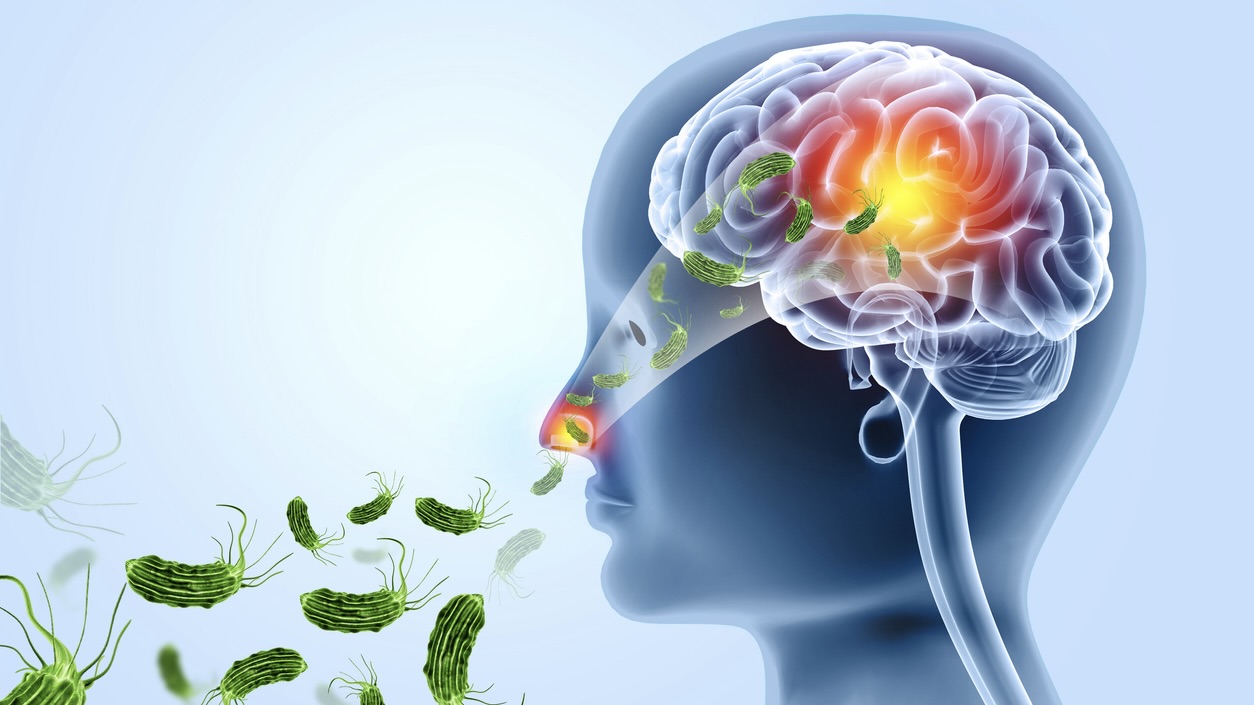
Visual concept of deadly brain-eating amoeba infection.
Synopsis: In 2025, Kerala witnessed an alarming rise in amoebic meningoencephalitis. The perspective, following an ICMR study, explained that Kerala’s geography and climate create favourable conditions for free-living amoebae. The article also drew attention to the role of biofilms and cyanobacteria found in stagnant water bodies.
Why is amoebic meningoencephalitis tightening its grip on Kerala?
That question has grown louder in 2025, with 199 confirmed cases and 47 deaths reported till 28 December — figures unprecedented in the state’s public health history. December alone witnessed 27 cases and five deaths.
As doctors admit to being puzzled by the sudden spurt and evolving nature of the disease, attention is now turning to a key scientific exercise: A joint study by the state health department and the National Institute of Epidemiology, Chennai (NIE) under the Indian Council of Medical Research (ICMR).
Though its findings are yet to be published, an ICMR perspective released ahead of the study’s completion is already offering unsettling new insights.
A perspective published in the Indian Journal of Medical Research, the official journal of the ICMR, calls the recent outbreak of amoebic meningoencephalitis in Kerala a serious wake-up call.
Written by Sumeeta Khurana of the Department of Medical Parasitology, Post Graduate Institute of Medical Education and Research, Chandigarh, the article pointed out an unusual trend: Unlike global cases, where this deadly brain infection mostly affects people with weak immunity, many patients in Kerala were otherwise immunocompetent — having the normal capacity to develop an immune response to an antigen.
However, several had conditions such as diabetes, hypertension and chronic liver disease, which may have increased their risk.
Another striking finding is that in many cases, doctors found other germs — such as pneumonia-causing bacteria, pneumococcus, tuberculosis bacteria and staphylococcus — along with amoebae in the brain fluid.
This has led experts to suspect that amoebae may behave like a “Trojan horse”, sheltering these harmful microbes inside them and carrying them into the brain.
The article also drew attention to the role of biofilms and cyanobacteria found in stagnant water bodies.
These dense microbial layers offer protection to amoebae from disinfectants and harsh conditions, helping them survive and spread. Together, these findings show how complex ecological interactions, combined with human exposure, can lead to rare but deadly infections.
The perspective explained that Kerala’s geography and climate create favourable conditions for free-living amoebae. The state has several lakes, ponds, backwaters and low-lying water bodies, with warm temperatures that help these organisms multiply.
Amoebae such as Naegleria fowleri thrive in warm water between 30°C and 46°C.
Factors such as intermittent chlorination, open water storage and informal reservoirs increase human contact with contaminated water, especially in rural and peri-urban areas.
Climate change is making the situation riskier — hotter summers, droughts and water evaporation create shallow stagnant pools, while floods and heavy rainfall help amoebae spread to new places.
At the same time, the article noted that Kerala’s strong health system has played a key role in saving lives.
Global mortality from primary amoebic meningoencephalitis is over 90 percent, but Kerala has reported better survival due to early suspicion, quick diagnosis and aggressive treatment using drugs like amphotericin B and miltefosine.
The state rapidly improved PCR testing, sent samples to national laboratories, and issued public alerts.
According to the author, the rise in reported cases may reflect not just more infections, but also better detection and faster public health action.
Primary Amoebic Meningoencephalitis (PAM), an acute and often fatal brain infection caused by the free-living amoeboflagellate Naegleria fowleri, has emerged as a growing public health concern in Kerala, shedding its image as a rare and exotic disease.
Commonly known as the “brain-eating amoeba,” N fowleri is ubiquitous in warm freshwater environments such as ponds, canals, lakes, rivers, swimming pools, and even domestic water tanks.
Infection occurs when contaminated water enters the nose, allowing the amoeba to migrate to the brain. Paradoxically, PAM is most commonly seen in immunocompetent children and young adults following exposure to freshwater.
With a staggering mortality rate of nearly 98 percent, the disease is marked by rapid onset, symptoms that closely mimic bacterial or viral meningitis, delayed diagnosis, and the absence of a universally effective treatment protocol.
Kerala reported its first confirmed PAM case in Alappuzha in March 2016, but the situation has escalated dramatically in recent years. After two confirmed cases and two deaths in 2023, the state recorded 39 cases and nine deaths in 2024.
Alarmingly, in 2025 alone, up to 28 December, 199 confirmed cases and 47 deaths were reported, making the 2024–2025 episode the largest PAM outbreak ever documented in Kerala.
Experts noted that the sharp rise reflects both improved surveillance and a genuine expansion of amoebic reservoirs, fuelled by warm climate conditions and widespread coliform contamination from sewage in wells, reservoirs, and rivers.
Studies show that poorly maintained water bodies and domestic tanks near septic pits provide ideal conditions for N. fowleri.
Recognising the threat, the Union Health Ministry reinforced National Acute Encephalitis Syndrome surveillance through 18 Virus Research & Diagnostic Laboratories, alongside enhanced environmental monitoring, public awareness campaigns, and collaboration with Kerala.
The state’s experience underscores that PAM is no longer a remote threat, but a disease that demands urgent attention through a One-Health approach, linking climate, environment, sanitation, and health systems.
(Edited by Muhammed Fazil.)


