

Published Jan 29, 2026 | 5:34 PM ⚊ Updated Jan 29, 2026 | 5:34 PM

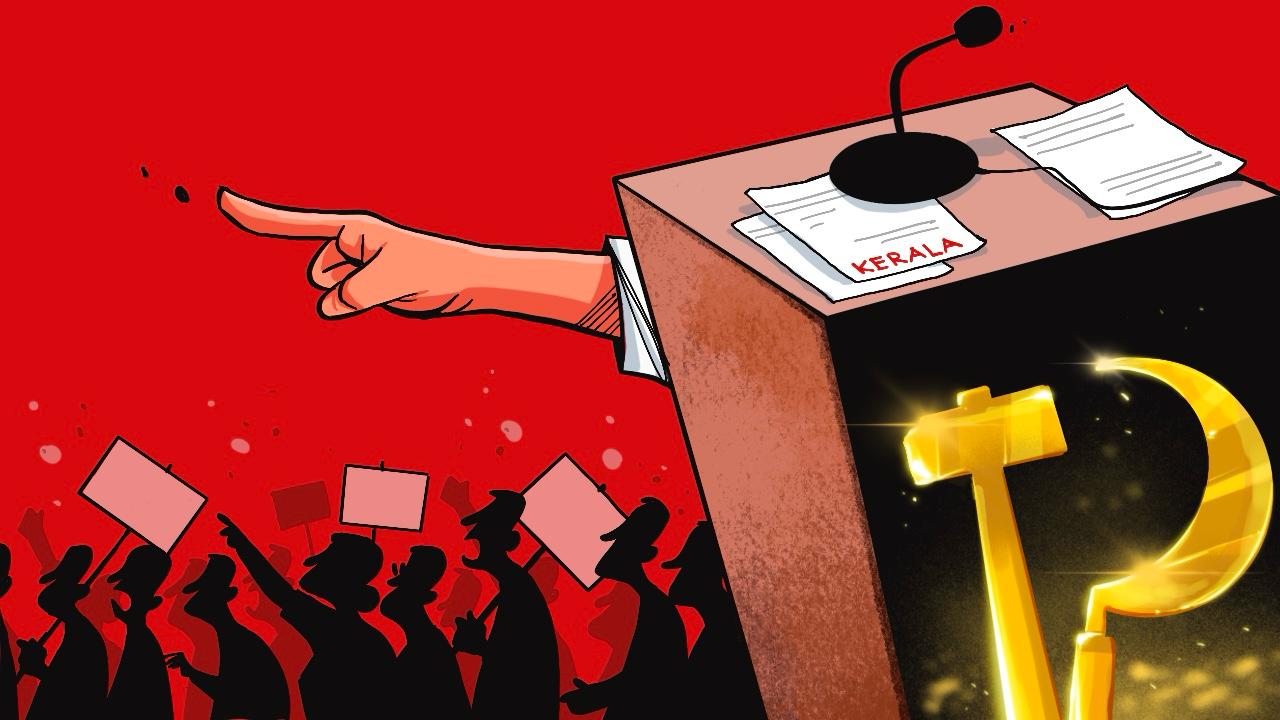
With the Assembly election looming, the second Pinarayi Vijayan government has chosen to rest its political case firmly on welfare continuity.
Synopsis: Finance Minister KN Balagopal’s speech leaned heavily on numbers meant to reassure a broad social base — from pensioners and frontline workers to taxpayers — while insisting that development spending has not only been protected but pushed to record levels despite fiscal stress.
The Kerala Budget 2026-27, presented on Thursday, 29 January, was more than a financial statement: it was a sharply contested political test ahead of the upcoming Assembly elections.
The Budget that the Finance Minister KN Balagopal presented amid severe fiscal constraints sought to project a “new normal” Kerala — one reportedly reshaped by a decade of Left governance, marked by expanded welfare, flagship infrastructure projects and an assertive claim of resilience under pressure.
The ruling LDF framed it as a relief-oriented roadmap prioritising social security and employment support, while simultaneously accusing the Centre of deliberately squeezing the state’s finances.
The Opposition, however, dismissed the exercise as pre-election theatrics.
Barely a few minutes after the presentation, Leader of the Opposition VD Satheesan charged the government with recycling unfulfilled promises and turning the Budget into a last-ditch political pitch. He argued that the glossy announcements bore little relevance to Kerala’s real needs.
Budget 2026-27 thus opened up a larger argument—beyond balance sheets and announcements—over whether the Left’s claim of transformation still holds, or whether the Opposition’s charge of exhausted governance will find resonance in poll-bound Kerala.
With the Assembly election looming, the second Pinarayi Vijayan government has chosen to rest its political case firmly on welfare continuity, using the Budget as both a balance sheet and a campaign statement.
Balagopal’s speech leaned heavily on numbers meant to reassure a broad social base — from pensioners and frontline workers to taxpayers — while insisting that development spending has not only been protected but pushed to record levels despite fiscal stress.
At the heart of the pitch was welfare spending at an unprecedented scale.
An allocation of ₹14,500 crore has been earmarked for welfare pensions in 2026–27, with the government underlining that 62 lakh beneficiaries would receive ₹2,000 a month on time.
Since 2016, the two Pinarayi consecutive governments together have disbursed nearly ₹90,000 crore as welfare pension, a figure Balagopal described as unmatched anywhere else in the country.
By the end of the current tenure, total pension spending alone was expected to touch ₹54,000 crore, reinforcing the Left’s claim of having built a stable and reliable social security net that directly reached nearly 30% of Kerala’s population every month.
The Budget also sought to consolidate support among women and grassroots workers, who form the backbone of welfare delivery.
Monthly wage hikes of ₹1,000 for Anganwadi workers, ASHAs, pre-primary teachers and Saksharatha Preraks, along with increases for helpers and noon-meal workers, were showcased as proof that the government has prioritised those at the lowest rungs.
While acknowledging delays in Dearness Allowance (DA) and Dearness Relief (DR) arrears to government employees and pensioners, the finance minister assured that corrective steps would be taken, even as a separate ₹5 crore allocation to honour taxpayers was positioned as an olive branch to the salaried middle-class.
Equally significant was the government’s insistence that welfare has not come at the cost of development.
Balagopal claimed development expenditure has risen to the highest level in Kerala’s history, with no constituency or department witnessing a decline.
Rehabilitation, particularly in disaster-hit areas like Mundakkai–Chooralmala in Wayanad, was held up as evidence of administrative follow-up, with the first batch of houses promised by the third week of February and a model township nearing completion.
Taken together, the Budget presented a clear political argument: that continuity, not disruption, has enabled the Left to deliver welfare, manage crises and still invest in long-term growth.
As the CPI(M)-led LDF has quietly been readying itself to test Kerala’s reluctance to grant a third consecutive term, Balagopal’s numbers were less about the ledger and more about persuading voters that the Left-presented “new normal” was worth extending.
In a bid to widen its welfare footprint ahead of the Assembly election, the Budget rolled out a fresh set of proposals aimed at vulnerable groups, informal workers and the young.
Monthly pensions for cancer, leprosy, tuberculosis and AIDS patients have been doubled from ₹1,000 to ₹2,000, reinforcing the government’s attempt to frame welfare as both economic support and social protection.
A notable thrust was on insurance coverage for those outside the formal safety net.
The government proposed group accident and life insurance for unorganised sector workers with state support, alongside separate group insurance schemes for Haritha Karma Sena members, autorickshaw and taxi workers, and lottery workers under welfare fund boards.
Class 1 to 12 students will also be brought under a state-backed accident and life insurance scheme, with ₹15 crore earmarked annually.
In health care, the Medisep model would be expanded beyond government employees and pensioners to PSU staff, cooperative sector employees and pensioners, and even welfare board-linked transport workers at affordable premiums.
A new scheme promised cashless treatment for the first five days after road accidents, while another targeted families outside the Karunya Arogya Suraksha Scheme, with ₹50 crore set aside.
The Budget also ventured into social and cultural terrain — free graduate education in arts and science colleges, subsidies for artisans, support for eco-friendly pottery, and small grants for local youth clubs — signalling an election-year attempt to knit welfare, aspiration and community together into a single political narrative.
The Budget attempted to reassure and consolidate one of the Left’s most reliable constituencies—government employees and pensioners—by foregrounding long-pending service and retirement benefits.
Reiterating its long-held five-year pay revision policy, the government announced the 12th Pay Revision Commission, with a tight three-month deadline for submitting its report and a promise of timely implementation.
In a move aimed at immediate relief, all pending DA and DR instalments would be cleared. The Budget promised to pay one instalment along with February salaries and the rest fully in March. However, while arrears will be disbursed in a staggered manner, beginning with a provision made in the current Budget year.
The restoration of the house building advance scheme further sweetened the package.
Most significantly, the government has formally declared the shift from the contributory pension scheme to an assured pension system, guaranteeing up to 50 per cent of the last drawn basic pay as pension along with DR, and offering employees the option to migrate from the NPS (National Pension Scheme).
With detailed guidelines to be issued and implementation slated from 1 April, the measures together read not just as fiscal decisions, but as a politically calibrated signal of security and continuity to a crucial voting bloc.
Balagopal’s speech doubled up as a pointed political indictment of what the Left government called sustained fiscal discrimination by the Centre—and a defence of how Kerala has managed to stay afloat.
Mocked early in the tenure with dire predictions of an empty exchequer, a shuttered treasury and unpaid salaries, Kerala, Balagopal argued, proved its critics wrong.
The state neither collapsed under debt nor hollowed out welfare and development spending.
Comparisons with the Centre and other states, he noted, now made it clear that Kerala’s debt position was far from unmanageable.
How the state survived, Balagopal quipped, was once treated as a “top secret”: anticipating financial constraints from the Centre, the government prioritised expenditure, strengthened its own revenue base and built what he described as a fiscal “defensive fortress.”
Yet, the structural imbalance was stark.
While states on average received over 50% of their total revenue as the Central share, Kerala got barely 25%, raising the remaining 75% on its own.
Over successive Finance Commissions, Kerala’s share has sharply declined—from 3.88% under the 10th Commission to 1.92% under the 15th—along with a steep fall in grants to local bodies.
The Budget listed tangible blows: ₹5,944 crore cut from borrowing limits, ₹17,000 crore curtailed from eligible receipts this year alone, and an estimated annual Goods and Services Tax (GST) loss of ₹8,000 crore, following unilateral rate revisions that offered little relief to ordinary citizens.
Taken together, Balagopal warned, it amounted to more than “vote chori”— it was “note chori,” a steady erosion of state fiscal autonomy that risked turning states into silent subordinates of the Centre.
Responding to persistent claims that Kerala was sliding into a debt trap, Balagopal mounted a detailed, numbers-driven rebuttal. He argued that the state’s fiscal position was far more resilient than critics suggested.
The question, he contended, was not how Kerala survived years of “severe central neglect”, but how much further the state could have progressed without it.
Balagopal pointed out that Kerala’s borrowing has been firmly capped by the Fiscal Responsibility Act. Also, the Centre has further tightened through “petty excuses”, making borrowing structurally impossible.
Placing the debt trajectory in perspective, he noted that Kerala’s accumulated debt has historically doubled roughly every five years.
By that yardstick, the current debt level of ₹4,88,910 crore in 2025-26 was well below the hypothetical ₹5.93 lakh crore it would have reached, had the earlier trend continued.
More significantly, the state’s debt-to-GSDP ratio has declined from 38.47% in 2021 to 33.44% now—a drop of about five percentage points in four years, undermining the claim of fiscal stress spiralling out of control.
Balagopal attributed this stability to a sharp rise in the state’s own revenues.
Over the last five years, Kerala mobilised an additional ₹1.27 lakh crore through its own tax revenue alone, pushing the average annual collection from ₹47,453 crore under the previous government to ₹73,002 crore now, with ₹83,731 crore projected for 2025-26.
Non-tax revenue, too, saw a substantial jump, adding nearly ₹24,900 crore. Together, the additional ₹1.52 lakh crore in own resources, he argued, became the state’s “magic wand”. It enabled the state to sustain rising expenditures—₹1.73 lakh crore in 2024-25 and a projected ₹1.92 lakh crore in 2025-26—without falling into a debt trap narrative.
(Edited by Majnu Babu).


