

Published Jan 25, 2026 | 11:59 AM ⚊ Updated Jan 25, 2026 | 11:59 AM

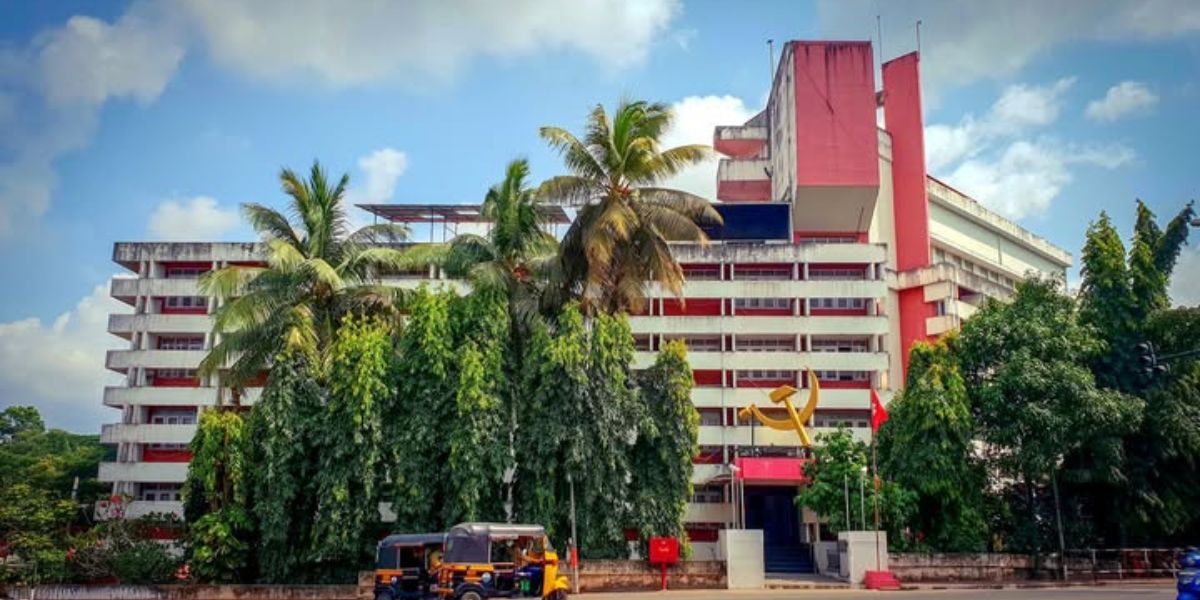
AKG Centre for Research and Studies, Thiruvananthapuram - the old state committee office of CPI(M).
Synopsis: A recent PIL in the high court alleged missing records, excess occupation of Kerala University and government land, and sustained use of public property for partisan political activity with regard to the 1977 land allotment for AKG Memorial Centre in Thiruvananthapuram.
Nearly half a century after a Congress government quietly signed off on a small parcel of public land for a memorial to Communist leader AK Gopalan (AKG), which later became one of Kerala’s most recognisable political buildings, it has returned to judicial scrutiny — once again raising uncomfortable questions about land, legality and political privilege.
Less than a year after the CPI(M) vacated the iconic AKG Centre and shifted into its new glass-and-concrete state headquarters, the party’s former nerve centre in Thiruvananthapuram resurfaced not as a relic of Left history, but as the subject of a serious public interest litigation before the Kerala High Court.
The case reopens a controversy that first surfaced in the late 1970s and flared inside the Assembly in the 1980s: Whether the AKG Memorial Centre stands on far more land than was ever legally allotted under a 1977 government order — and whether land meant for a memorial research centre gradually morphed into a full-fledged political headquarters.
Filed by a former University of Kerala syndicate member, the public interest litigation (PIL) alleged missing records, excess occupation of university and government land, and sustained use of public property for partisan political activity — reviving an old dispute that successive governments avoided settling decisively.
What was once defended as a technical issue of land assignment has now returned as a test case on encroachment, institutional silence and the blurred line between memorialisation and political power.
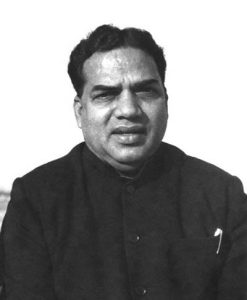
A K Gopalan
The controversy centres on a government order issued in 1977, when AK Antony headed a Congress-led government in Kerala.
The order is said to have permitted the assignment of 15 cents of land belonging to Kerala University for the establishment of the AKG Memorial Research Centre.
However, according to the petitioner, today, the CPI(M)-run centre occupies more than 55 cents, including university land and government puramboke land, far exceeding the purported allotment.
On 22 January, the Kerala High Court sought the state government’s response to the PIL and granted it three weeks to file an affidavit.
The matter is being heard by a Division Bench comprising Chief Justice Soumen Sen and Justice Syam Kumar.
The PIL has been filed by RS Sasikumar, a retired Joint Registrar and former Syndicate member of the University of Kerala, who says the issue is neither new nor incidental, but one that authorities have consistently failed to address.
Sasikumar alleges that no official records exist to substantiate the 1977 assignment — a claim he said is backed by responses obtained under the Right to Information Act.
According to the petition, the alleged government order is untraceable in the Department of Archaeology, Revenue Department, District Collectorate, Kerala University, the Thiruvananthapuram Corporation, and other statutory offices.
The plea points out that the Revenue Department has stated that the land continues to be puramboke (government-owned unassessed land), with no thandaper (prior land document) issued and no land tax paid in the name of the AKG Centre.
The petitioner further alleges that buildings were constructed on the land without legal authorisation, and that an additional 40 cents of public land was unlawfully occupied beyond the alleged 15 cents.
Despite repeated representations to authorities over the years, Sasikumar claims no action has been taken to verify the land extent, recover excess land, or remove the alleged encroachment.
A central argument in the case is that the AKG Memorial Centre does not qualify as a recognised research institution under the University of Kerala statutes.
The petition contends that even if land was assigned for research purposes, it was used overwhelmingly as a political office and power hub of the CPI(M) — contrary to the stated objective of the allotment and in violation of statutory norms governing public property.
The use of university land for sustained political activity, the plea argues, makes the assignment illegal, unconstitutional, and void ab initio.
The PIL seeks the cancellation of the alleged illegal occupation of 40 cents of Kerala University land, eviction of unauthorised occupants, and restoration of public land.
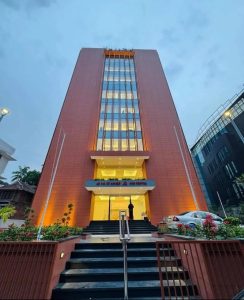
AKG Centre, the new state committee office of CPI(M)
The renewed legal scrutiny comes just months after the CPI(M) inaugurated its new nine-storey state headquarters in Thiruvananthapuram on 23 April 2025, with Chief Minister Pinarayi Vijayan officiating the event.
The original AKG Centre, inaugurated in 1979, has since been repurposed as a research and study centre, housing the party’s library and archival facilities — a rebranding that now sits uneasily amid allegations that the land itself was never lawfully secured or properly used.
The Kerala Legislative Assembly in early April 1988 witnessed one of its most prolonged and politically charged confrontations when the Congress-led Opposition relentlessly cornered the EK Nayanar government over the land allotted to the AKG Memorial Committee in Thiruvananthapuram.
What began as a set of pointed questions regarding a 1977 land assignment quickly snowballed into a wider debate on legality, propriety and the blurred line between a public memorial and partisan political activity.
At the heart of the controversy lay 34.108 cents of prime government land in Vanchiyoor village, allotted free of cost by orders issued on 20 and 25 August 1977, when AK Antony was the chief minister.
The land, the House was told, was meant strictly for constructing a memorial to AKG, complete with a research centre, library and conference hall.
The Opposition’s core charge was simple but politically explosive: That the conditions attached to the grant were being violated and that the AKG Centre had, in effect, become an operational hub of the CPI(M).
E Chandrasekaran Nair, the then-food and civil supplies minister, who answered the main question on 6 April, insisted that there were only two binding conditions — construction of a suitable memorial to AKG and the inclusion of the three mandated facilities.
On whether these conditions had ever been officially reviewed, his reply was blunt: No such examination had been conducted, no violations had been found, and therefore no action arose.
That answer only emboldened the Congress benches.
Members like K Moideenkutty Haji, Isaac Kurikkal, Ramesh Chennithala, Oommen Chandy, and later KM Mani pressed the government on multiple fronts: Allegations of excess land and encroachment, the functioning of a CPI(M) office within the premises, and the government’s apparent reluctance to order even a basic survey.
Repeated references were made to a complaint submitted by Cherian Philip, which spoke of encroachment on adjacent University land and misuse of the premises.
The government’s defence rested heavily on technicalities.
Chandrasekaran Nair maintained that no formal complaint had been received regarding the government-assigned land itself, that the dispute raised related mainly to University land, and that under the Survey Act, an investigation could only follow a specific request from the affected institution.
“If there is no complaint, there is no need to investigate,” became the refrain — one that drew sharp reactions from the Opposition.
Tempers flared further when questions turned to whether the original application for land had envisaged the functioning of a Marxist Party office at the Centre.
The minister acknowledged that the application spoke of office functioning alongside memorial activities, but argued that anything “compatible with perpetuating the memory of AKG” was permissible.
This elastic interpretation triggered scathing interventions from Congress members, who accused the government of retrospectively legitimising partisan use of public land.
Adding another layer to the controversy were revelations about the AKG Memorial Committee and the AKG Memorial Trust.
On 7 April 1988, questions directed to the then-Scheduled Castes and Scheduled Tribes Development minister PK Raghavan brought out that the Memorial Committee, formed on 15 April 1977, had never been registered as a charitable society.
Whether it had been formally dissolved after the Trust was formed in October 1977, the minister admitted, was “not known”.
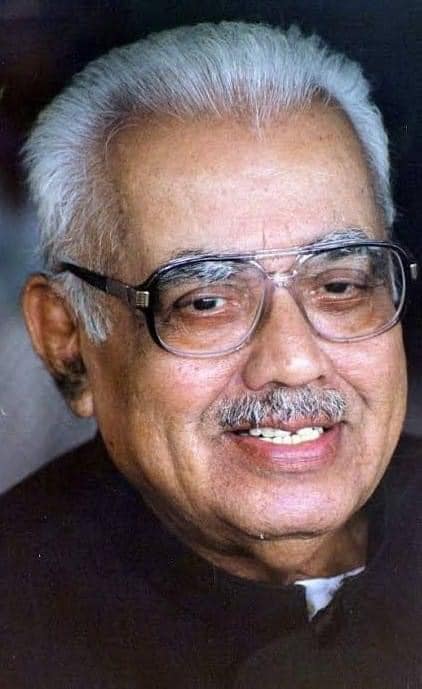
EK Nayanar.
Congress leaders seized on this admission to allege a murky overlap between an unregistered committee and a registered trust — raising pointed questions about how tax exemptions were sought, how funds from cooperative and local bodies were collected, and whether benefits were being claimed in the name of an entity that effectively no longer existed.
Ramesh Chennithala went so far as to describe this arrangement as a “fraud”, an allegation the Treasury benches angrily rejected.
Throughout the exchanges, the Nayanar government stood firm, repeatedly asserting that for over eleven years the Union government had functioned without objection, that “conduct of parties” supported the government’s interpretation of the 1977 order, and that no clear violation had ever been demonstrated.
Ministers also resisted demands to table all related government orders, arguing that there was no established practice of placing such documents before the House unless directed by the Speaker or a court.
Yet, politically, the damage was palpable.
By stitching together issues of land, legality, party privilege and administrative complacency, the Congress-led Opposition succeeded in turning a technical land assignment into a symbol of alleged double standards under the Left government.
Nearly fifty years on, the AKG Centre land issue refuses to fade into history.
What was once brushed aside as a settled administrative decision has returned as a judicial reckoning, forcing the state to account for long-forgotten files, unexamined assumptions and a silence that has endured across regimes.
(Edited by Muhammed Fazil.)


