

Published Aug 23, 2024 | 2:52 PM ⚊ Updated Aug 23, 2024 | 2:52 PM

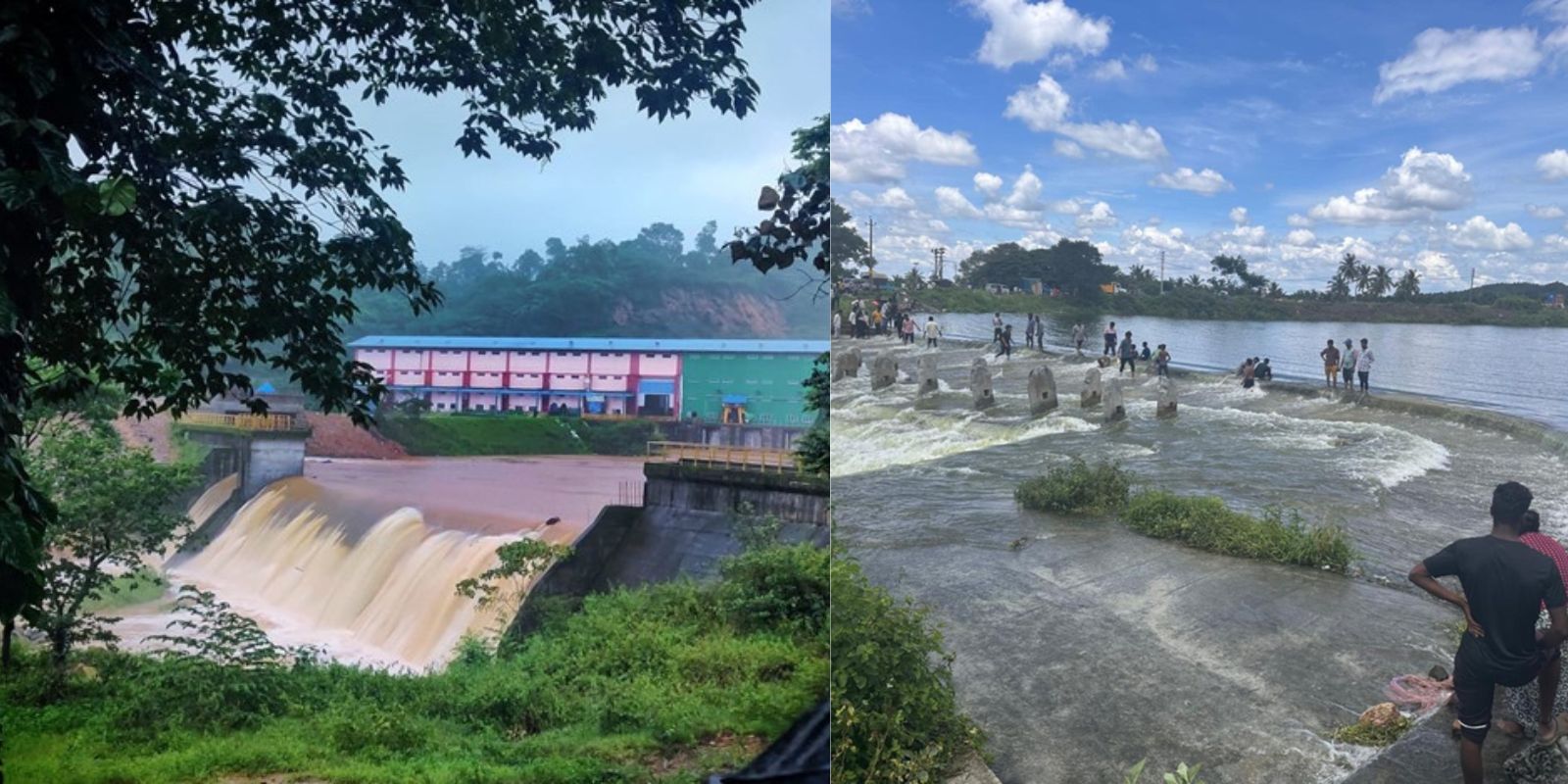
Weir-1 of Yettinahole project and Halibedu tank overflowing. (Supplied)

The Yettinahole integrated drinking water project is one of the most ambitious projects of the Karnataka government, which aims to lift 24.01 TMC of water during the monsoon season from the Yettinahole, Kadumane Hole, Keri Hole, and Hongada Halla in the Western Ghats, located in Sakaleshapura Taluk of Hassan District to address severe drinking water shortages in drought-prone areas.
The primary focus areas of the project are Chikkaballapur and Kolar Districts. Other targeted regions include Hassan, Chikkamagaluru, Tumkur, Ramanagar, and Bangalore Rural Districts. The project plans to use 14.056 TMC of water to fill 527 tanks to 50 percent capacity across these five districts.
While the project is expected to be completed by March 2027, the pre-commissioning tests which began in November 2023, are expected to be completed by 5 September, 2024, for all the Weirs except the third Weir.
The current focus is on lifting water from Weir-1, 4, and 5 to Delivery Chamber-3 and subsequently to Gravity Canal via Delivery Chamber-4.
The pre-commissioning tests have successfully managed to direct water from Weir-4 and 5 to Delivery Chamber-3, and from Weir-1 to Delivery Chamber-4. On 20 August 2024, water was successfully released into the Gravity Canal, which has since flowed into Veda Valley, causing Halebidu and Belawadi lakes to overflow.
The project, valued at ₹23,251.66 crore, began in 2014 and completed the lift and power supply works for Stage 1.
The total length of the Gravity Canal is 252.61 km. To date, 42.00 km of this work has been completed. Due to delays caused by forest and land acquisition issues, later sections of the canal are still under construction.
Apart from helping the drought-prone areas, 9.953 TMC of water will be utilized to recharge the groundwater table.
This initiative is expected to benefit approximately 75.59 lakh people. The projected population for 2023-24 includes residents of 6,657 villages and 38 towns in 29 taluks across the seven districts.
In 2018, a telemetry system with German technology was installed to measure water flow accurately near eight Weirs in the catchment area.
During the current monsoon season, from 1 June to 20 August, 13.34 TMC of water has been recorded, with 9.23 TMC identified as divertible.
(Edited by Sumavarsha Kandula, with inputs from Nolan Patrick Pinto)



