

Published Dec 10, 2025 | 9:35 AM ⚊ Updated Dec 10, 2025 | 9:35 AM

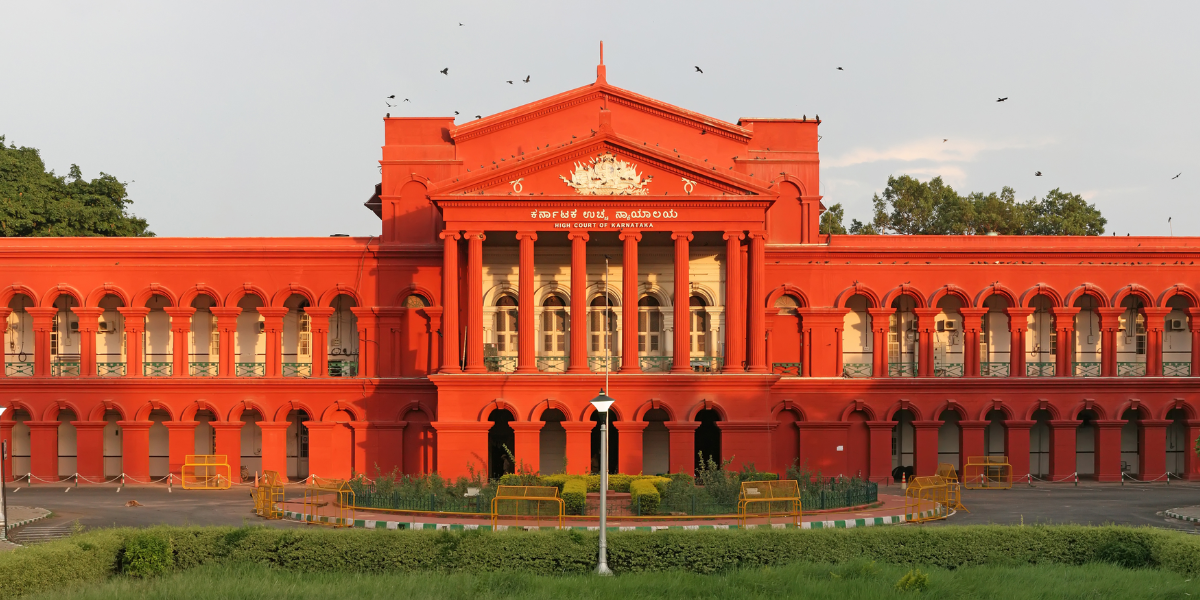
The Karnataka HC will hear the government's arguments on Wednesday.
Synopsis: Karnataka’s landmark policy granting 12 days of paid menstrual leave a year to women across government and private sectors is facing a legal challenge in the High Court, with petitioners arguing that the government order lacks statutory backing and breaches procedural norms. As the court prepares to hear the government’s defence, legal experts note that the State is empowered to frame policy in the public interest, but the scrutiny may push it towards introducing legislation.
Karnataka’s much-lauded menstrual leave policy is now facing a legal challenge in the High Court, with petitioners alleging that the government order lacks legislative backing and violates procedural norms.
The Congress-led government, on 12 November, issued a government order notifying the new policy, mandating employers to provide 12 days of paid menstrual leave per year (one leave per month). It has been touted as the only policy in the country that grants such leave for women working in both government and private sectors.
The order issued by the Labour Department applies to all permanent, contract and outsourced women employees between the age group of 18 and 52, working in all industries and establishments registered under the Factories Act, 1948, the Karnataka Shops and Commercial Establishments Act, 1961, the Garden Workers Act, 1951, the Beedi and Cigar Workers (Employment and Conditions) Act, 1966, and the Motor Transport Workers Act, 1961.
However, soon after the order was issued, two private entities, the Bangalore Hotels Association (with 1,540 establishments and owners as its active members) and the management of Avirata AFL Connectivity Systems Limited, contested it.
They questioned the State’s legal standing in issuing an executive order directing establishments to grant menstrual leave without new legislation or an amendment to the existing Acts under which employees’ rights are governed.
The pleas contended that there is a comprehensive statutory framework through the existing statutes that mandate employers to provide sufficient leave to employees.
However, there is no specific provision in these statutes mandating employers to provide menstrual leave to female employees. Hence, the government is not empowered to direct industrial establishments to provide menstrual leave by way of an executive order, they stated.
The petitioners’ argument relies on the existing statutory framework, particularly the Model Standing Orders under the Karnataka Industrial Employment (Standing Orders) Rules.
Clause nine of these rules mandates employers to provide leave with pay as provided under the Factories Act, 1948, and other holidays in accordance with law, contract, custom and usage.
Additionally, clause 10 of the Model Standing Orders provides for casual leave, and a workman may be granted casual leave of absence with or without pay not exceeding 10 days in a calendar year.
The petitioner argued that these existing statutes do not have any specific provision that grants menstrual leave.
The plea further claims that the respondent “unnecessarily interfered” in the affairs of the employers, instead of leaving it to the employers to decide appropriately on granting menstrual leave as part of their HR policies, according to a report by LiveLaw.
They also claimed that the government had not issued any preliminary notification seeking objections from stakeholders proposing the menstrual leave. Hence, the impugned notification has been issued in “violation of principles of natural justice”, the petitioner argued. The plea claims that it was imperative for the government to issue such preliminary notification seeking objections from employers, who are one of the important stakeholders.
However, the government did issue a preliminary notification and invited objections from the public. The policy came after the Karnataka government’s decision in 2024 to set up an 18-member committee headed by Sapna Mohan, Associate Dean at the School of Law, Christ University, to study and recommend the feasibility of implementing such a policy across all sectors in the state.
The committee recommended one day of menstrual leave a month and also called for the State legislature to pass The Right of Women to Menstrual Leave and Free Access to Menstrual Health Products Bill. The finalised policy was put up on the Labour Department’s website on 18 October, seeking suggestions and objections from the public.
According to the government’s policy document, the department received 75 comments in response to the policy from trade unions, employers, workers, women’s organisations and government employees’ unions, among others. Out of these, 56 comments were in favour of the proposed policy while the remaining 19 were against it.
Meanwhile, the petitioners also argued that granting menstrual leave is likely to cause additional financial burden depending on the number of female employees and that it causes “serious civil consequences”.
“It may represent a form of benevolent sexism, suggesting that women require special treatment due to their biology undermining their equality in the workplace. Therefore, even though the impugned notification seems positive, it will lead to gender bias resulting in workplace discrimination,” the plea argued.
While the petitioners argued that the government order cannot be applied to private establishments as it does not have legislative backing, legal experts pointed out that the State can take policy decisions that are in the interest of the public.
“It is a policy matter pursuing to the constitutional ideals. There are certain constitutional mandates, and pursuant to that, the state is empowered to take some policy decisions,” said Avani Choksi, an advocate. She added that the court should generally refrain from intervening in policy decisions made in the public interest.
In July 2024, the Supreme Court asked the Union government to frame a model policy on menstrual leave for working women after consulting states and other stakeholders in the matter.
The then Chief Justice of India DY Chandrachud, presiding over a three-judge bench, said, “The whole issue of menstrual leave policy is in that sense purely a policy issue for employers to consider, especially at the government level, because what you try to do to protect women may actually work to their disadvantage.”
The court, however, refrained from ordering such a policy to be implemented, stating that it was for the government to decide on it. They clearly stated that it was a policy issue and not one for courts to look into.
Soon after the Supreme Court’s order, the Odisha government announced a one-day paid menstrual leave for women employees working in government jobs.
While the Karnataka High Court, in an interim order on Tuesday, 9 December stayed the government notification that mandated industrial establishments in the State to provide one day of paid menstrual leave per month to all women employees, it recalled the order a couple of hours later upon the request of Advocate General Shashi Kiran Shetty, who was representing the State.
The court will hear the government’s arguments on Wednesday. While the State prepares to defend its policy, lawyers believe the court’s scrutiny could push the government to enact legislation if required.
(Edited by Dese Gowda)


