

Published Aug 23, 2026 | 9:37 AM ⚊ Updated Aug 23, 2026 | 9:37 AM

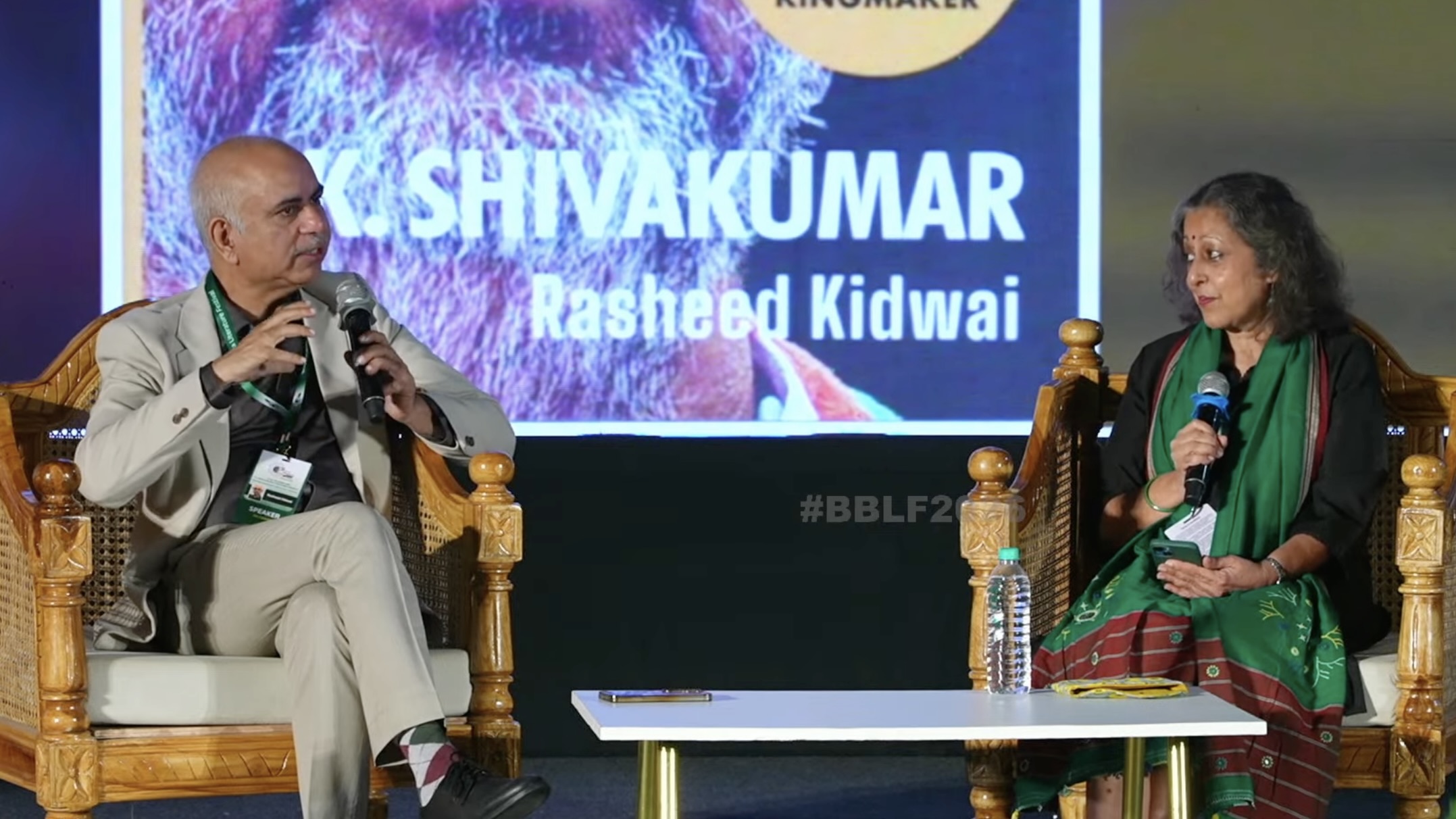
Rasheed Kidwai in conversation with Maya Sharma at the second day of the 2026 Book Brahma Literature Festival.

Synopsis: There was a time when Rajiv Gandhi called him Gowda, not even DK or Shivakumar. But Rasheed Kidwai says the Karnataka CM has since built political relationships and a degree of familiarity across states that few Congress leaders can boast of.
“If they had five or six DK Shivakumars across India, I think the Congress would do much better than what it is doing. Because you need the applied side of politics. Rahul Gandhi can never get into that kind of crafty and applied side of politics the way Mr Shivakumar can,” senior journalist, author and political analyst Rasheed Kidwai said.
He was in conversation with senior journalist Maya Sharma on the second day of the Book Brahma Literature Festival in Bengaluru on Saturday, 22 August. The observation drew scattered laughter and amused nods.
In his latest book, Kidwai chronicles Shivakumar’s political career in a biography released months after he succeeded Siddaramaiah as Chief Minister of Karnataka.
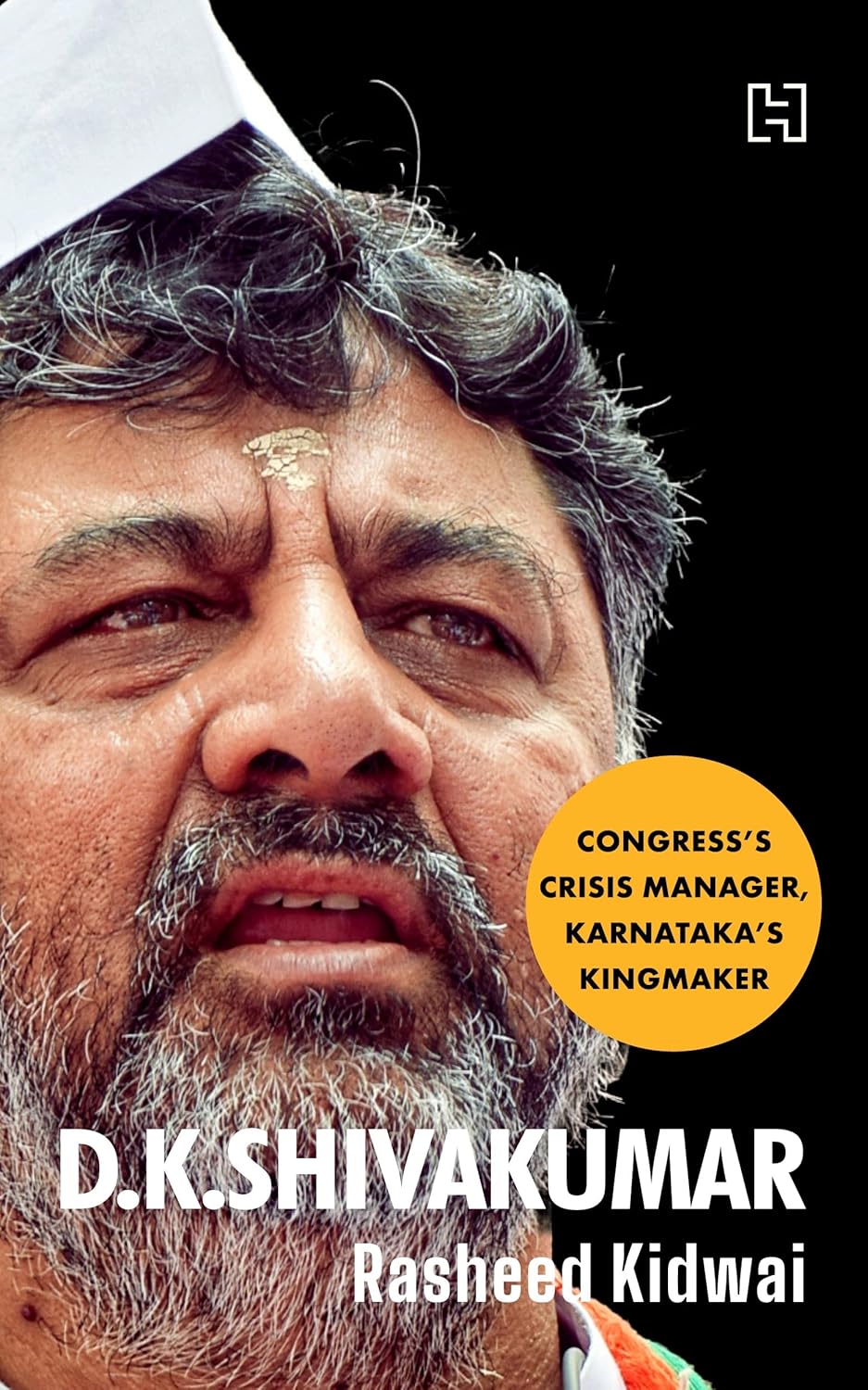
D.K. Shivakumar: Congress’s Crisis Manager, Karnataka’s Kingmaker
“He’s a very prominent politician from Karnataka, and his entire political base has been there. But if you look closely at his political journey, it has a very interesting footprint across the country,” Kidwai said.
The episode of Shivakumar endearing himself to the Congress high command through his efforts to secure Ahmed Patel’s return to the Upper House in the 2017 Rajya Sabha election is often repeated. But Kidwai said Shivakumar has since built political relationships and a degree of familiarity across states that few Congress leaders can boast of.
“If you go anywhere in the country—Assam, Varanasi, Gujarat or any other part of the country—you will find some people who are familiar with or personally loyal to Mr DK Shivakumar,” he said.
“Sachin Pilot is there. There are a few others, of course. Shashi Tharoor needs no introduction, and of course, the Gandhis are there. But beyond the Gandhis, there are very few people in the Congress who have a pan-Indian identity. He’s a state politician, but a national figure in that sense,” Kidwai said of Shivakumar.
Kidwai conceded that Shivakumar may be “controversy’s child”, but maintained that he possessed the same passion as Shah Rukh Khan before the actor became one of Hindi cinema’s biggest stars.
“He has done a lot of things, and there is a degree of spontaneity. Shah Rukh Khan, when he was a student and struggling to become an actor, did not come from a powerful family background. It was his passion that took him places, and later he became a big star,” Kidwai said.
He recalled seeing Khan at Bandra Market after Fauji had made him recognisable, but before superstardom.
“People would walk up and shake his hand. We used to joke with him: ‘Shah Rukh, how many people did you meet today?’ He once told us, ‘One day, you will wait in a queue and long for the chance to shake hands with Shah Rukh Khan.’ And that’s how it happened,” Kidwai said.
“That kind of passion matters. From my academic research, my personal interactions with Mr DK Shivakumar and conversations with others, I found that he was always very passionate about politics and very focused. I think that really helps,” he added.
Kidwai then recounted Shivakumar’s role in the 1990 crisis in the Karnataka Congress, when the party decided to remove an ailing Veerendra Patil as Chief Minister.
“It was a painful and somewhat sordid episode in Indian politics, where a sitting Chief Minister was sacked. There was a crisis. Rajiv Gandhi was in the Opposition, and VP Singh was the Prime Minister. Veerendra Patil refused to hold a CLP (Congress Legislature Party) meeting for a new leader to be elected,” Kidwai said.
“There was a constitutional deadlock. Rajiv Gandhi came to Karnataka, and as a relatively young politician, he was in a messy situation. That was when he got a taste of Karnataka politics.”
Shivakumar was then a first-time MLA and Youth Congress leader.
“He used to take Rajiv Gandhi around, and Rajiv Gandhi would call him Gowda, not even DK or Shivakumar. He helped broker the matter. He suggested, ‘Why don’t you talk to Bangarappa?’ He took Bangarappa to Veerendra Patil’s house and helped bring them together.”
Shivakumar subsequently earned a ministerial berth in Bangarappa’s ministry in his first term as an MLA.
“This was at a very young age. That tells you something about the political mind,” Kidwai emphasised.
Kidwai said his book was not an “authorised biography”, but it had been written with a “filter”.
“Authorised biographies are often sanitised versions of what the leader or politician wants to say. An independent account is different. Books are not written for the politician; they are written for the general audience. They are written for me and you, so that we get to know,” Kidwai said.
India, he said, had an acute shortage of independent accounts of political figures.
“Every independent account is subjective. Somebody can criticise me for being a little more sympathetic, and I’m open to that criticism. But we need to know more about our political figures in a critical way,” he added.
Kidwai said access to politicians could often be perfunctory and that the political class was generally strict about sharing matters it considered private. He did not want to single out Shivakumar on that count.
“I’m not a historian; I’m a storyteller. I try to tell stories of people’s lives. People like Phoolan Devi, Chandraswamy—all kinds of characters are there if you glance through my books,” Kidwai said.
The writer, he said, must answer to his own conscience about whether he or she has been fair. As trained journalists, he told Sharma, writers also had to ensure that nothing published was libellous, defamatory, unkind or misogynistic.
“There is a judge and judgment within you—your own conscience. You are always accountable: are you being fair? And, as trained journalists, we need to be very careful. Nothing libellous, defamatory, unkind, misogynistic or otherwise objectionable should come in. So we use a lot of filters,” Kidwai said.
“This is not about Mr Shivakumar. It is about the decency and civility we owe to each other. It is very easy to write something casually,” he said.
Kidwai also noted that mere allegations of criminal misconduct were not proof of guilt.
“The number of people who are convicted is horribly low. Till the 1960s, about 60 per cent of people arrested in various cases were proved guilty. Today, the rate of conviction is 16 per cent. The rate of conviction in atrocities against Dalits and Tribals is just 2 per cent or 3 per cent. It is horrible,” he said.
“I know we have a very corrupt society, and I can talk at length about it. But the fact is that we have a judicial system that says you are innocent until proven guilty.”
Kidwai also pointed to cases registered by the Enforcement Directorate after 2014 and noted that the conviction rate was below 2 per cent.
“Suppose 150 politicians have been booked in ED cases after 2014. The rate of conviction is not even 2 per cent. These are figures the government gives in replies in Parliament. In that situation, it becomes very difficult for us,” he noted.
Also Read:
From Rajiv Gandhi’s campaigner to Karnataka Chief Minister: DK Shivakumar’s Congress journey
(Edited by R Rajesh Kumar.)



