


Published Dec 30, 2025 | 6:43 PM ⚊ Updated Dec 30, 2025 | 6:43 PM

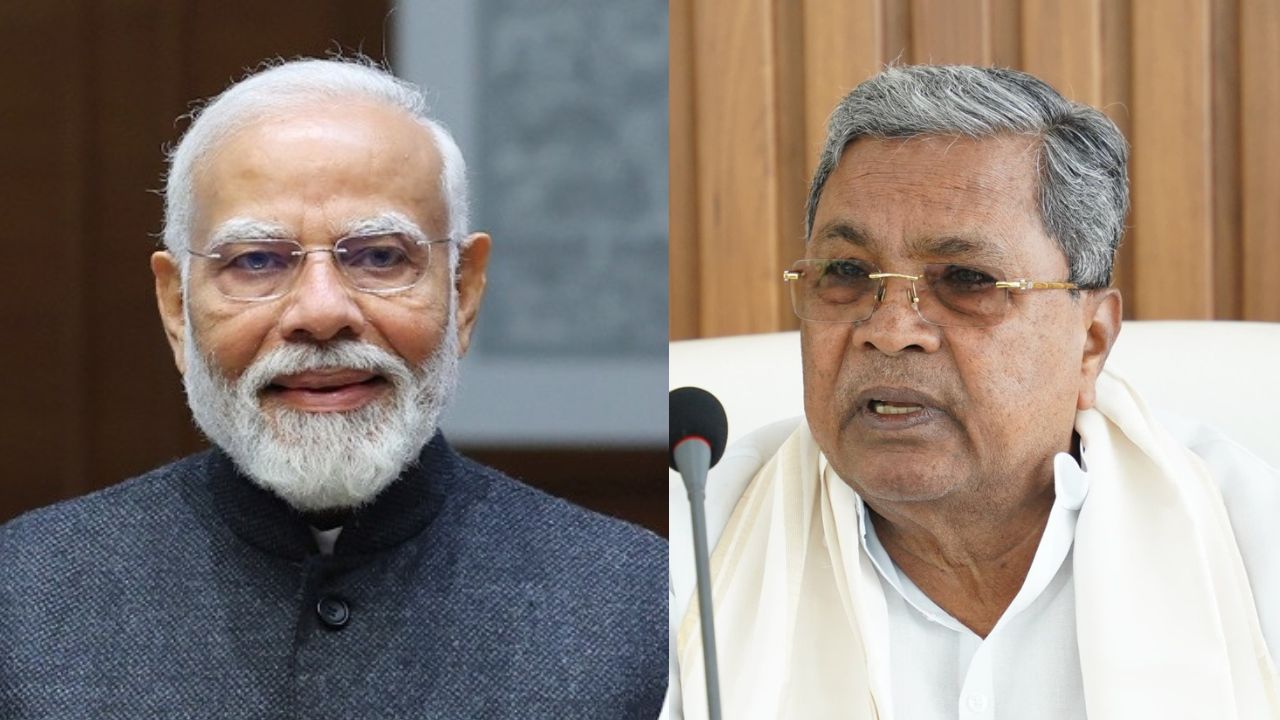
Karnataka Chief Minister Siddaramaiah urged Prime Minister Narendra Modi to personally intervene and suspend the "arbitrary and hurried enforcement" of the VB-G RAM G Act.
Synopsis: Siddaramaiah criticised the provision that empowered the Centre to determine state-wise annual normative allocations, based on “‘objective parameters’ as may be prescribed. These parameters are not embedded in the legislation, can be altered at any time and if finalised without consultation with state governments, will not reflect the diverse and varying needs across states and even within rural regions of the same state”.
Karnataka Chief Minister Siddaramaiah urged Prime Minister Narendra Modi to personally intervene and suspend the “arbitrary and hurried enforcement” of the VB-G RAM G Act that “violates Articles 258 and 280 of the Constitution.
The Viksit Bharat Guarantee for Rozgar and Ajeevika Mission (Gramin) (VB-G RAM G) Act replaced the Mahatma Gandhi National Rural Employment Guarantee Act (MGNREGA).
In a letter addressed to Modi on Tuesday, 30 December, Siddaramaiah decried the new law, which he said risked defeating the “very intent of the original employment guarantee, a demand-driven, rights-based entitlement”.
Despite raising the guarantee to 125 days from 100 in the MGNREGA, the chief minister stated that the promise was not matched by adequate planning or assured central funding. “The new Act caps the Union Government’s financial responsibility to a ‘nominative allocation’ for a ‘notified’ area of each state, with the Centre contributing only 60% (in most states) of that allocation.”
Hence, the legal guarantee of 125 days was not absolute and has been constrained by a centrally notified and determined normative funding ceiling. He added that this might leave gram panchayats without funds to meet genuine demands.
Siddaramaiah also criticised the provision that empowered the Centre to determine state-wise annual normative allocations, based on “‘objective parameters’ as may be prescribed. These parameters are not embedded in the legislation, can be altered at any time and if finalised without consultation with state governments, will not reflect the diverse and varying needs across states and even within rural regions of the same state”.
He further stated that the new law converted a demand-driven regime to a supply-driven, top-down system, contrary to the participatory approach where labour budgets were prepared at the gram panchayats’ level. This would run against the spirit of the MGNREGA.
The three-page letter also raised concerns about the change in funding pattern, which shifted to a 60:40 Centre-state arrangement from the existing 90:10. Siddaramaiah also criticised the provision that placed the burden of additional expenditure beyond the nominative allocation on the states.
Referring to the mandate on states to inform in advance the peak agriculture season when works under VB-G RAM G would not be undertaken, Siddaramaiah said the new framework shifted the intent from “right to work” to “work only if permitted”; to “work only where allowed”; and from work through the year” to “no work on peak season.
The letter also expressed apprehension that the new law would encourage contractor-led projects. It also raised fear over expanded technology interventions, excluding “the poorest and digitally disadvantaged rural citizens, particularly Dalits and Adivasi communities,” and replacing worksite transparency with new barriers and exclusions.


