

Published Apr 28, 2026 | 8:20 AM ⚊ Updated Apr 28, 2026 | 8:20 AM

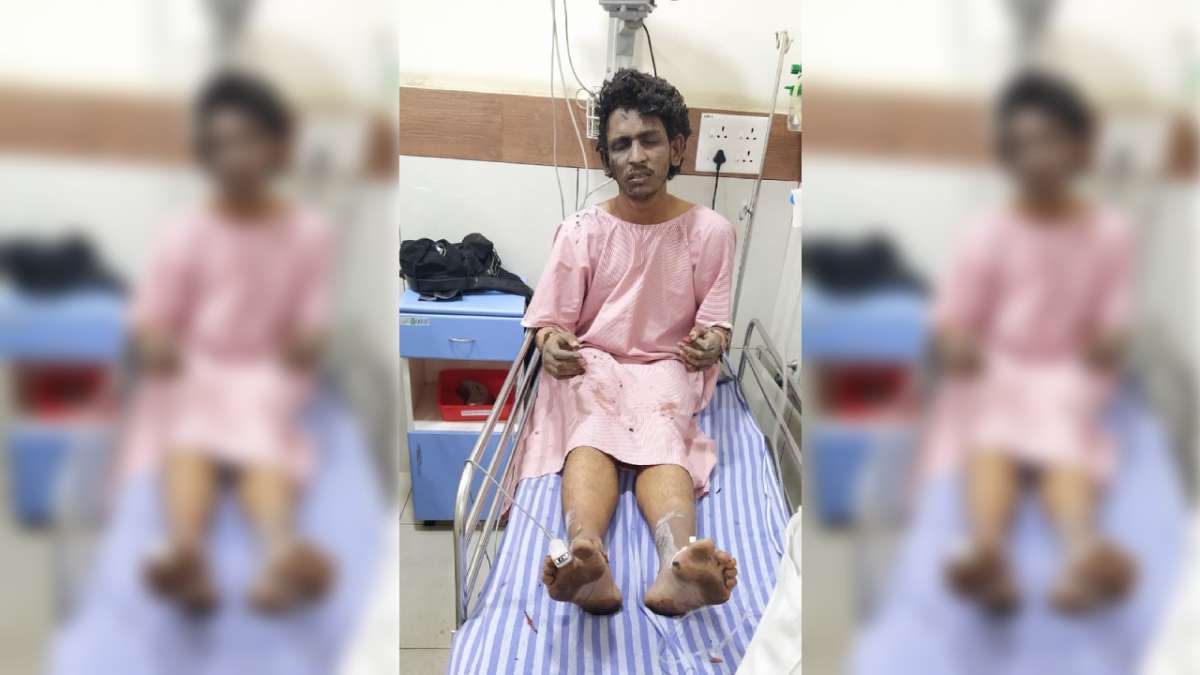
Prime accused Mohammad Shariq's stepmother and sister identified him at the hospital on Monday, 21 November 2022. (Supplied).

Synopsis: A special NIA court in Bengaluru sentenced the prime accused in the 2022 Mangaluru cooker blast case to 10 years of rigorous imprisonment and slapped a fine of ₹94,000. He faced seven charges under the Unlawful Activities (Prevention) Act, 1967 and was fined ₹5,000 each under Sections 16(b), 17, 18, 20, 38, 39 and 40.
A special National Investigation Agency (NIA) court in Bengaluru on Monday, 28 April, sentenced the prime accused in the 2022 Mangaluru cooker blast case to 10 years of rigorous imprisonment and slapped a fine of ₹94,000.
The accused, Mohammed Shariq, initially claimed innocence, but later pleaded guilty under Section 229 of the Code of Criminal Procedure (CrPC) in December 2025.
He faced seven charges under the Unlawful Activities (Prevention) Act, 1967 and was fined ₹5,000 each under Sections 16(b), 17, 18, 20, 38, 39 and 40.
According to the prosecution, Shariq was carrying the pressure cooker IED in an autorickshaw, and allegedly planned to plant it at Mangaluru’s Kadri Manjunatha Temple. The low-intensity bomb, however, went off accidentally near a bus stop at Garody on 19 November 2022.
Shariq and the autorickshaw driver were injured in the blast.
Also Read: Mangaluru blast accused Shariq got IS training, says Union Minister Shobha Karandlaje
Reports from the Shivamogga District Police had indicated that Shariq was a habitual offender charged under the UAPA.
He was also named as one of the two conspirators in the 2020 Mangaluru graffiti case, in which pro-terror graffiti appeared at two places in the coastal Karnataka city.
Shariq is believed to be the main conspirator behind the stabbing of a youth identified as Prem Singh in Shivamogga city.
He is also accused of radicalising many youngsters of the Muslim community and is alleged to have discussed fundamental ideas and concepts of jihad.
He allegedly used to send files, videos, audio, and hyperlinks related to extremism, radicalisation, and works of the Islamic State group and other banned terror organisations, according to police reports.
He and his associates were also accused of being members of channels run on the app Telegram by the Islamic State group’s official media centre Al-Hayat, according to police reports.
Shariq professed the ideologues of the group and was conspiring, with his associates, to carry out terror activities as per its agenda, the police reports said.
(With inputs from Anisha Reddy.)



