


Published Feb 23, 2026 | 8:00 AM ⚊ Updated Feb 23, 2026 | 8:00 AM

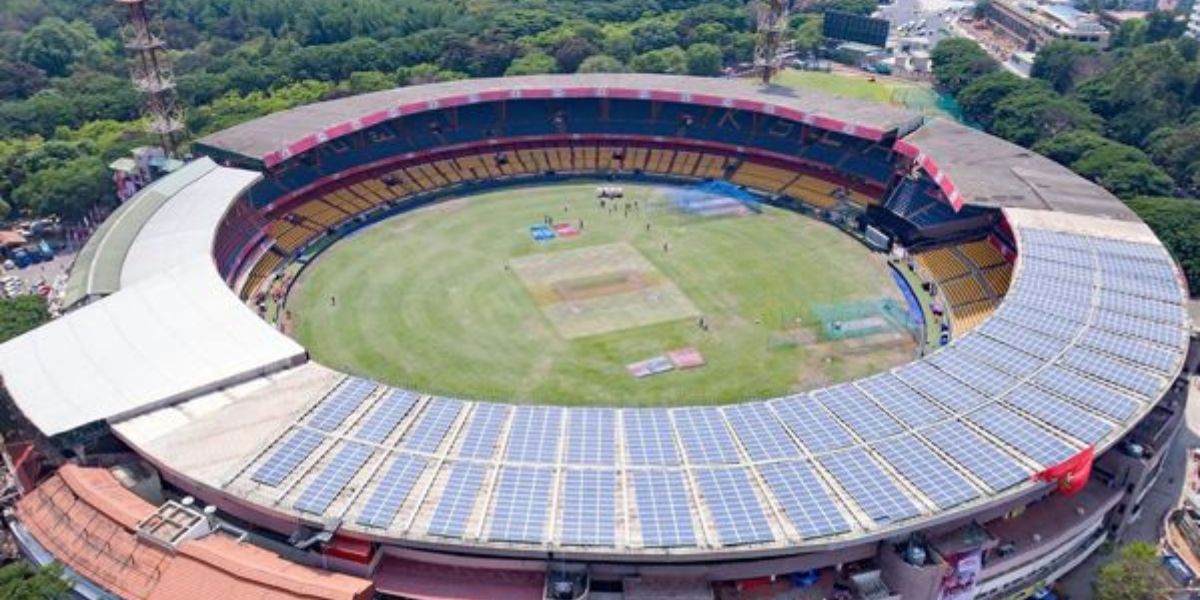
M Chinnaswamy stadium in Bengaluru. (Facebook)
Synopsis: Months after a stampede killed 11 people outside Bengaluru’s M Chinnaswamy Stadium, the Karnataka government has allowed Royal Challengers Bengaluru to return to the venue for the 2026 Indian Premier League season. The decision followed recommendations from an expert committee, although an earlier commission had found the stadium unsafe for mass gatherings and fixed responsibility on organisers and police officers.
Months after a stampede claimed 11 lives outside Bengaluru’s famed M Chinnaswamy stadium, the Karnataka government has cleared the way for the Royal Challengers Bengaluru (RCB) to return to their home ground for the upcoming 2026 Indian Premier League (IPL).
For cricket fans, the move has come as a long-awaited return to normalcy. But amidst all the excitement and jubilation, questions about accountability and safety still remain.
The approval came after a Government Expert Committee constituted to assess safety arrangements at the stadium submitted its recommendations.
An earlier review of the stadium’s safety by the Justice John Michael D’Cunha Commission, appointed by the Karnataka Government following the stampede, had declared the design and structure of the stadium “unsuitable” and “unsafe” for mass gathering.
The report also held the organisers of the event responsible for the stampede along with police officers, including former Bengaluru City Police Commissioner B Dayananda. Following the Commission’s report, the government decided to book criminal cases against officials of RCB, event management company DNA Entertainment Networks, and Karnataka State Cricket Association (KSCA).
Yet, seven months after legal action was announced, the larger questions remain unresolved: Has accountability meaningfully progressed? And can spectators be assured that safety lapses of the past will not be repeated?
In July 2025, the Karnataka High Court passed an interim order restraining the state police from filing its final report or chargesheet in the criminal cases filed against the RCB, DNA and others in connection with the Chinnaswamy Stadium stampede.
At the hearing, the counsel for Royal Challengers Sports Private Limited (RCSPL), which manages the RCB IPL team, and DNA Entertainment Networks Ltd, submitted that they are cooperating in the investigation and that the possibility of damage caused to them would be irreparable if a charge sheet was filed in the meantime.
However, that was over seven months ago. The court is still yet to give its clearance for the filing of the chargesheet.
Meanwhile, two days after the stampede, the Bengaluru police made four arrests – Nikhil Sosale, marketing head of RCB, and Sunil Mathew, Sumanth and Kiran Kumar of DNA Entertainment Private Limited after three FIRs were registered in connection with the tragedy.
Sosale had been accused of sharing social media posts about the winning team’s victory parade and free passes even before the police had granted permission while the other three were responsible for security inside Chinnaswamy Stadium.
However, days after, the Karnataka High court declared their arrests as “illegal” and granted the accused interim bail. The court went on to observe that the arrests appeared to be contrary to law in absence of material or an investigation to establish their specific role in the offences.
“Under these circumstances also, in the absence of any material to incriminate the petitioners for the aforesaid offences alleged against the entities, RCB and DNA, coupled with the fact that the petitioners are not named in the subject FIRs, I am of the view that the respondents were not justified in causing the arrest of the petitioners without any investigation whatsoever prior to their arrest,” Justice SR Krishna Kumar observed.
The Karnataka government also suspended three IPS officers, including the then Bengaluru police commissioner B Dayananda, additional commissioner Vikash Kumar Vikash, Deputy Commissioner Shekar Tekkanavar, along with two jurisdictional policemen.
The Siddaramaiah-led government was sharply criticised for these suspensions, which was seen as an act of passing over the buck instead of taking accountability. However, all of their suspensions were later revoked.
For RCB fans, 4 June was meant to be a day of celebration. Instead, for the family members of the 11 victims, it was a day marked by grief that still lingers.
There is palpable anger amongst some families who have questioned the nod for matches at the stadium, saying that the tragedy has been quietly forgotten rather than fully addressed.
Divyamshi BS, 14, was the youngest victim. Her mother, Ashwini, recalled how she was there at the stadium when the stampede unfolded.
“I saw what happened. I did not just lose my daughter but I lost my soul. How can they allow matches without honouring the souls that have been lost?” she told South First, while referring to how RCB’s announcement of a dedicated memorial space in Bengaluru to honour the 11 fans had not materialised yet.
She questioned the government’s narrative of justice, pointing out that the final verdict in the case has not yet been given. “People have just moved on from one tragedy to the next. But I know how many tears I have shed. Has the Karnataka government learnt any lesson?” she asked.
Ashwini then explained how her daughter’s loss shapes the family’s daily life. She recalled a recent visit to a mall where a large billboard of a cricketer stood outside. “My seven-year-old son told me not to look up and to just walk looking down,” she said.
Like Divyamshi, Shravan, a 20-year-old second-year dental student at a Bengaluru college, was also among the young lives lost in the stampede.
His brother, Sridhar, was and is still an ardent fan of RCB. Soon after the tragedy struck, Sridhar had told South First that they weren’t blaming the players or the RCB team. “The fault is with poor planning. Improper arrangements. No crowd control. No police. This was a government failure,” he had said.
Now, seven months later, Shravan maintains the same position. For him, justice would mean concrete assurances that safety measures inside and outside the stadium have been strengthened ahead of the upcoming IPL season.
“Government should ensure that crowd is managed and that such a situation should not ever happen again,” he told South First.
RCB had announced Rs 25 lakh compensation to the families of the deceased. They also launched an initiative called ‘RCB Cares’, which the franchise described as a long-term initiative to support the families of the victims of the stampede. Sridhar confirmed that his family had received compensation.
“I was also promised a government job but we still haven’t received any update on that,” Sridhar said.
In the wake of the stampede, the Karnataka government in June 2025 proposed a new legislation, called the Karnataka Crowd Control Bill, 2025, that aims to regulate large gatherings—political rally, jatre, conference, etc—and prevent such incidents in the future.
It proposed stringent penalties, including up to three years of imprisonment and a ₹5 lakh fine for violations by event planners.
The Bill mandated that the organisers of the event apply for permission to the jurisdictional police station, before a certain prescribed time along with the details of the approximate number of participants.
The concerned police station, based on the conditions prescribed, may allow the organiser to hold the event or may change the date, time or venue, by giving the reasons.
However, the Bill was referred to a house committee after the opposition dubbed the Bill as “draconian” and argued that it attempted to curtail the right to protests and gathering of people at festivals and events in temples and fairs.
In July 2025, the state government had also released a new Standard Operating Procedure (SOP) for managing crowds at large-scale public events.
During a recent hearing in the Karnataka High Court in the suo motu PIL initiated over the stampede, the court sought the government’s response to a suggestion by the amicus curiae that key safeguards outlined in the draft SOP be incorporated into the proposed legislation.
Senior Advocate S Susheela, appearing as amicus curiae, told the court that the measures proposed in the draft SOP submitted before the court (after incorporating certain suggestions given by her and other parties), are better than the provisions made in the proposed Bill.
She further pointed out that crowd management could be difficult during the upcoming matches in the absence of an SOP for crowd management.
The Bench directed the state government to respond to the submissions made by the amicus curiae and adjourned further hearing on the petition to 23 February.
(Edited by Dese Gowda)


