

Published Nov 10, 2022 | 9:08 PM ⚊ Updated Nov 10, 2022 | 9:08 PM

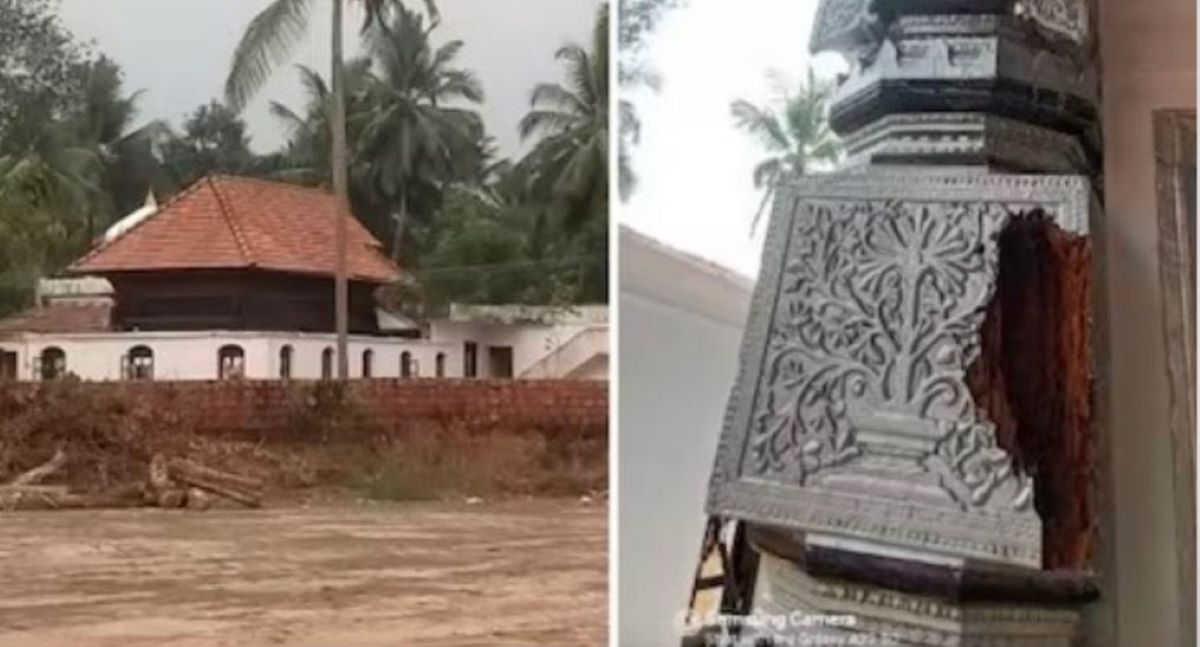
Malali mosque in Mangaluru

Should the Malali mosque near the communally-sensitive Mangaluru be surveyed to ascertain if it was earlier a temple? A local court in Mangaluru will hear arguments from 8 December to answer the question.
In what came as a shot in the arm for the VHP, the Third Additional Magistrate Court in Mangaluru on Wednesday, 9 November, admitted a petition filed by the right-wing organisation seeking a survey of the Juma Masjid.
The VHP has been claiming that a temple-like tiled structure was found inside the mosque during its renovation a year ago. Armed with photos and videos of the carved pillars and doors inside the mosque, the VHP claimed that the structure was earlier a temple.
The petitioner likened their suit to the Gyanvapi mosque dispute. Incidentally, the Supreme Court on Thursday, 10 November, agreed to hear the petition related to protecting a ‘Shivling’ discovered at the Gyanvapi mosque complex in Varanasi.
Advocate M Chidanda Kedilaya, who represented the VHP in the Mangaluru court, explained to South First what went on in the courtroom, and how the court had arrived at the decision to admit the plea.
On Wednesday, the court rejected interim applications submitted by the Malali Mosque Management Committee, which had requested the quashing of the VHP’s petition.
The petition was similar to the Gyanvapi mosque dispute. The Mangaluru court halted the dismantling or destruction of the tiled structure on the mosque premises.
The masjid committee had earlier filed a plea, stating that the mosque’s property belonged to the Waqf Board, and contested that the civil court had no jurisdiction over its property.
However, the Mangaluru court admitted the VHP’s petition and posted the case for an 8 December hearing.
The court’s decision turned out to be a major setback for the committee, which is now contemplating approaching a higher court.
Plaintiffs Dhananjay and others filed a suit before the court seeking relief of permanent injunction, restraining the Juma Masjid of Malalipete from dismantling or destroying the temple-like structure that was found beneath the mosque.
The defendants applied to the court stating that it did not have jurisdiction to rule on the issue.
The plaintiffs, however, countered the argument. “We contended that it was not a Waqf property but government land, and the Waqf board did not have any authority to cause any notification declaring or notifying this property as a Waqf property,” Kedilaya, who represented petitioner Dhananjay and others, told South First.
Challenging the interim applications, the plaintiffs preferred to appeal to a court-appointed assistant commissioner. The assistant commissioner rejected the argument that the court could not intervene in the case.
The court also heard arguments on whether the question of jurisdiction should be examined first or the defendants’ application.
“The application filed by the plaintiffs, seeking the appointment of an assistant commissioner to be assisted by the officials of the Archeological Department, was considered first. Advocate Dhananjay and others had earlier approached the High Court of Karnataka seeking a directive to appoint an assistant commissioner”, Advocate M Chidanda Kedilaya said.
A copy of a Varanasi court’s judgment in the Gyanvapi case, too, was submitted before the court here”, he further said.
“On Wednesday, honourable judge Nikita Akki passed an order rejecting both the applications filed by the defendants. Rejecting the argument that it cannot interfere in the matter, the court observed that the Waqf Act or Places of Worship Act did not prohibit it from hearing the case,” he added.



