


Published Jan 14, 2026 | 10:32 AM ⚊ Updated Jan 14, 2026 | 10:32 AM

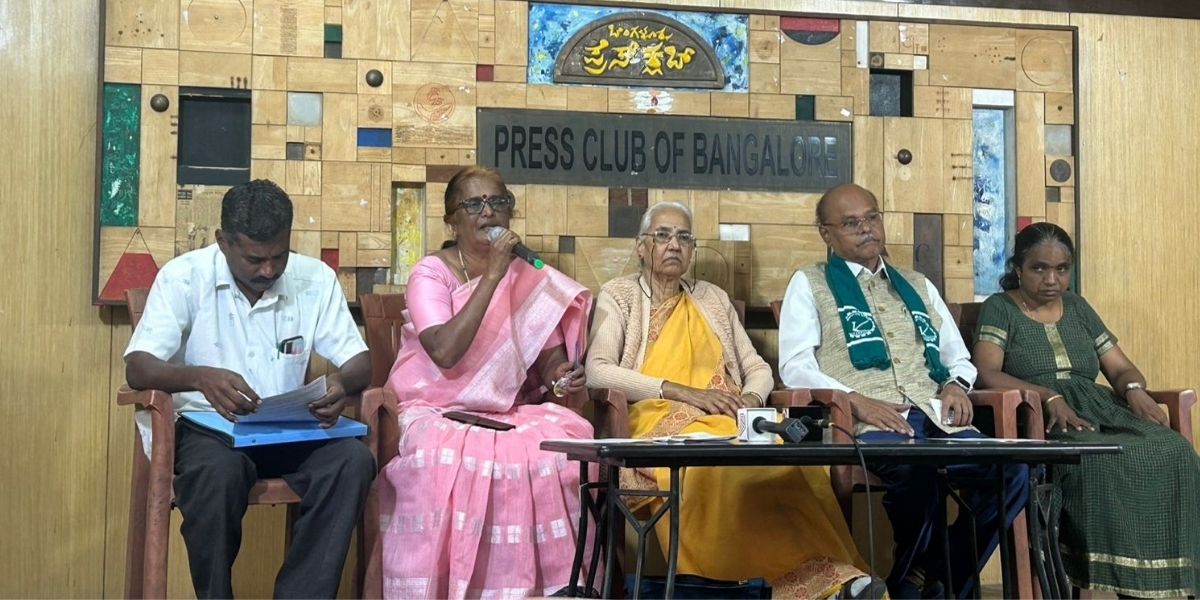
Activists gathered at Bengaluru’s press club to raise concerns over Kogilu demolition drive. (Supplied)
Synopsis:Even three weeks after the Karnataka government demolished 167 houses in Kogilu near Bengaluru, the residents are awaiting rehabilitation. Many of them are still camping on the demolished land, out in the harsh winter cold, while some are taking shelter in a nearby school. Activists have demanded that the government ensure rehabilitation for all those who lost their homes, instead of segregating them based on domicile, language, or religion.
The demolitions in Kogilu on the outskirts of Bengaluru in Karnataka and the rehabilitation demands that followed have been framed not around rights or justice, but around “jaati, dharma, bhaasha” (caste, religion and language), declared Gowramma from Janawadi Mahila Sanghatane on Tuesday, 13 January.
Gowramma, along with activists from other organisations that have been coordinating relief efforts at Kogilu, gathered at Bengaluru’s press club on Tuesday to raise concerns over how families displaced due to the demolition drive on 20 December are still awaiting rehabilitation.
Many of them are still camping at the demolished land, out in the harsh winter cold, while some are taking shelter in the nearby Urdu medium school, where they don’t have access to washrooms.
The issue had become a political flashpoint between Kerala and Karnataka, forcing the state’s leaders to announce rehabilitation measures for the displaced. However, activists at the press conference reiterated that families have continued to live on the streets for the past 23 days.
“The Greater Bengaluru Authority (GBA) demolition has violated the right to live with dignity of the families of Kogilu Layout. The demand by Opposition parties that rehabilitation should be provided only to Kannada people is a violation of Article 19(1)(e), which guarantees every citizen the fundamental right to move freely anywhere in India and to reside and settle anywhere in the country,” said Nandini BK, from Dhudiyuva Janara Vedike.
On 28 December, eight days after the demolition, Karnataka Housing, Waqf and Minority Welfare Minister BZ Zameer Ahmed Khan visited the site and promised “good news” within 24 hours. A day later, Chief Minister Siddaramaiah stated in a post on X that “illegal encroachments will not be accepted, but rehabilitation will be provided to the eligible from a humanitarian perspective.”
However, activists at the press conference said that beyond these assurances, there has been no tangible progress on the ground.
While Opposition leaders claimed that the government announced rehabilitation for “illegal Bangladeshi immigrants”, activists countered this narrative, pointing out that BJP leaders had visited the same families during the previous municipal elections to seek votes.
“At that time, no questions of identity or nationality were raised. It is the same people who are being questioned now,” Gowramma said.
Explaining that Bengaluru has long been known as a city for migrant labour, Gowramma said, “People from different states, including Assam, West Bengal, and Tamil Nadu, settle in Bengaluru for work, especially those who find work as labourers. Even in MNCs, we see people from different states. So why has it become a problem now?”
According to a survey conducted by Sangama NGO and volunteers, a total of 167 houses were demolished during the drive, affecting 188 families — 156 Muslims, 31 Hindus, and one Christian family. Most of them also belonged to the nomadic Fakir community, who earn a living by begging.
“Media reports say that the government plans to provide plots built by the government in Baiyappanahalli only to those who are residents of Karnataka and have lived in Bengaluru for at least five years. However, those who lost their homes are historically oppressed communities,” Nandini pointed out.
She added that families had invested the little money they earned through daily-wage work and begging, along with taking loans at high interest rates to build their homes, only to lose them overnight.
Activists also questioned how the land, which was bought, registered, and verified by government authorities, could suddenly be termed illegal overnight. “Why was registration allowed if it was government land or a stormwater drain?” Gowramma asked.
She also added that if it were government land, authorities should have fenced the area to ensure appropriate demarcation and no purchases or registration.
Farmers’ leader Veerasangaiah from Karnataka Rajya Raitha Sangha alleged that authorities were only targeting the poor, while the rich who encroach on government land remain untouched.
“There are so many illegal apartments and large buildings, but no action is taken against them while homes of the poor are demolished,” he said, while referring to a report of the Joint Legislature Committee on Encroachments in Bangalore Urban District (2007), headed by AT Ramaswamy, who was then JD(S) MLA. The report exposed how government land was grabbed by the rich and powerful, often in collusion with politicians.
A BJP fact-finding committee, headed by Yelahanka MLA SR Vishwanath, reportedly found that many families living in Fakeer Colony and Waseem Layout were from Bangladesh. However, the committee did not provide any documents to verify this claim. Activists also rejected these claims that illegal migrants lived in the area.
“Activists surveyed every house. There are no Bangladeshis here,” Nandini asserted.
Former minister and activist BT Lalitha Naik expressed concerns over bulldozer actions by the Congress government, which had long voiced its opposition to such actions. Pointing out that Kogilu was not an isolated case, Naik recalled similar demolitions across the city over the past few months.
In November, a month before the Kogilu demolitions, around 150 largely Dalit families near the Kadugondanahalli railway gate in the city’s north-east were left homeless after their houses were razed to make way for the Bengaluru Suburban Rail Project.
Soon after the demolitions in Kogilu, on 8 January, the Bengaluru Development Authority (BDA) demolished over 13 houses in Ashwath Nagar near Thanisandra, on the grounds that the houses were built on government land.
Activists demanded that the government ensure livable housing for all poor communities living in the city under a separate housing programme.
“As urbanisation increases and migration to cities rises, a special housing programme must be created to ensure dignified housing for migrant workers who build the city,” the group said, presenting a list of demands.
They also urged that all families who lost their homes due to the GBA demolition must be regularised under Section 94(C) of the Karnataka Land Revenue Act 1964, and be given land rights (hakku patras) and houses.
“The communities who lost their homes must not be viewed through the lenses of language, region, caste or religion, but as displaced poor people,” the group said.
(Edited by Muhammed Fazil.)


