

Published Nov 20, 2024 | 3:53 PM ⚊ Updated Nov 20, 2024 | 3:53 PM

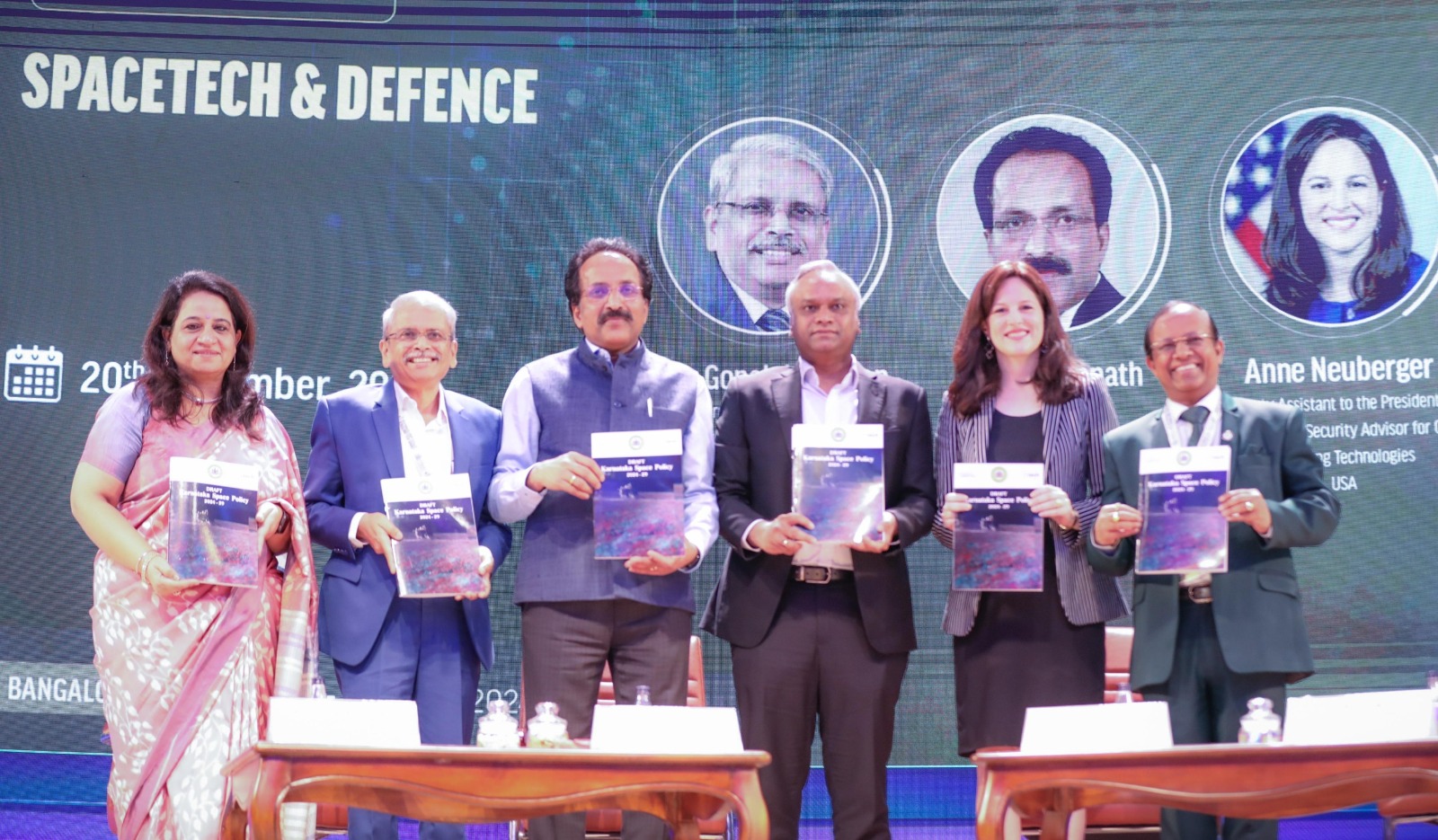
Karnataka unveils draft space technology policy

The Karnataka state government has launched its ambitious draft Karnataka Space Technology Policy, 2024-29, during the 27th edition of the Bengaluru Tech Summit.
The policy, unveiled by ISRO Chairman Dr. S Somanath, seeks to position the state as a global leader in the rapidly evolving space sector, targeting $3 billion in investments and aiming to capture 50 percent of India’s space market share, along with 5 percent of the global market share.
The draft policy outlines an extensive strategy that covers both upstream and downstream segments of the space industry, including commercial space operations, defence applications, electronics, and space research in specialised fields such as astronomy and astrophysics.
The launch of the space policy comes as part of broader efforts by Chief Minister Siddaramaiah to enhance Karnataka’s standing as a global technology and innovation hub.
During the Bengaluru Tech Summit, Siddaramaiah outlined an ambitious roadmap for the state’s tech and manufacturing sectors.
A major highlight was the announcement of the establishment of Global Innovation Parks in Bengaluru, Mysuru, and Belagavi. These parks are intended to serve as dedicated hubs for attracting top Global Capability Centres (GCCs), reinforcing Karnataka’s role as a key destination for technology-driven enterprises.
Siddaramaiah also unveiled the Global Capability Centres (GCC) Policy, which aims to create 350,000 jobs and contribute an estimated USD 50 billion to the state’s economy over the next five years. The policy targets the expansion of 500 GCC units across Karnataka, fostering growth in both technology and manufacturing industries.
(Edited by Ananya Rao with inputs from Mahesh M Goudar)



