

Published Dec 05, 2025 | 8:00 AM ⚊ Updated Dec 05, 2025 | 8:00 AM

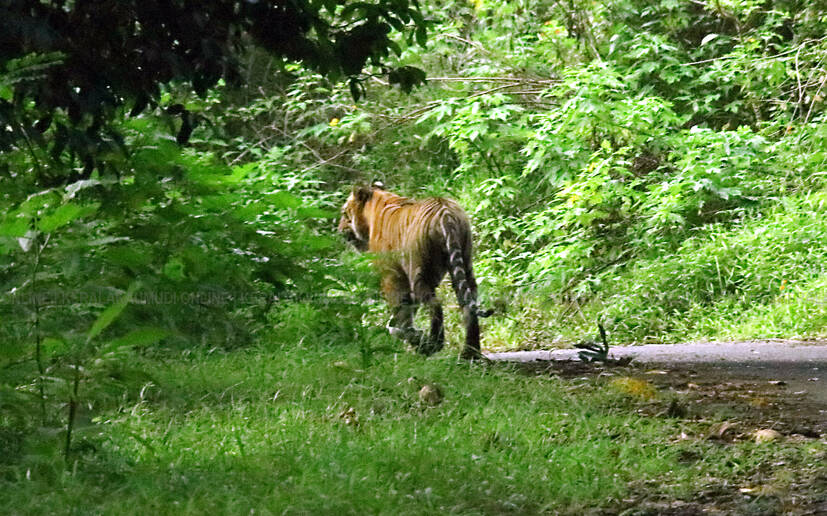
Forest Minister Eshwar B Khandre said data shows shrinking forest areas even as wildlife numbers continue to rise.
Synopsis: The Karnataka Forest Department has begun using AI-enabled cameras, thermal drones and new command centres to issue real-time alerts and track wildlife movement as human-wildlife conflicts rise across the State.
The Karnataka Forest Department is deploying AI-enabled cameras and thermal drones to provide real-time alerts as part of a new initiative to tackle the rise in human-wildlife conflicts across the State.
Forest Minister Eshwar B Khandre, speaking to the media in Kollegal, said data shows shrinking forest areas even as wildlife numbers continue to rise. He said the situation demands technological solutions along with learning to coexist with wildlife.
He added that a male tiger needs at least 14 sq km, and a female needs 8 to 10 sq km. Bandipur has 190 tigers but only 950 sq km of forest. Wildlife numbers exceed the available habitat, so coexistence is the only solution.
He said enhanced patrolling and greater public awareness in forest-fringe villages are essential to reduce conflict.
The Forest Department has already set up Command and Control Centres in Nagarahole, MM Hills, Kali and Madikeri.
New centres will soon be opened in Chikkamagaluru, Bannerghatta National Park, Mysuru Division, Bandipur Tiger Reserve, BRT Tiger Reserve and Hassan. A state-level command centre in Bengaluru is expected to be inaugurated after the Assembly session.
These centres will use AI-powered cameras and thermal drones to map wildlife movement. Villages will receive immediate alerts when animals are detected near human settlements, helping prevent injuries and loss of life.
Additional Principal Chief Conservator of Forests Manoj Rajan said the system records when and where each forest staff member is patrolling. It will also send alerts to villagers through WhatsApp and other media when wildlife is nearby.
Khandre has instructed officials to closely monitor on-foot patrolling by frontline staff. He has asked them to use the newly developed e-Patrolling (e-Gasthu) software and provide feedback to improve the system.
The minister said patrolling is vital for reducing human-wildlife conflict. Along with the existing M-STRiPES system in tiger reserves, the new e-Patrolling software should be implemented, the minister said.
Recently, the Telangana Forest Department also launched a tiger protection cell that will use technology to keep tigers and humans safe.
According to reports, it will monitor tigers and the movement of people using solar-powered CCTV cameras linked to the protection cell. The new facility will be connected to the regional centres in the Amrabad and Kawal tiger reserves to begin with.


