


Published Jan 14, 2026 | 7:18 PM ⚊ Updated Jan 14, 2026 | 7:18 PM

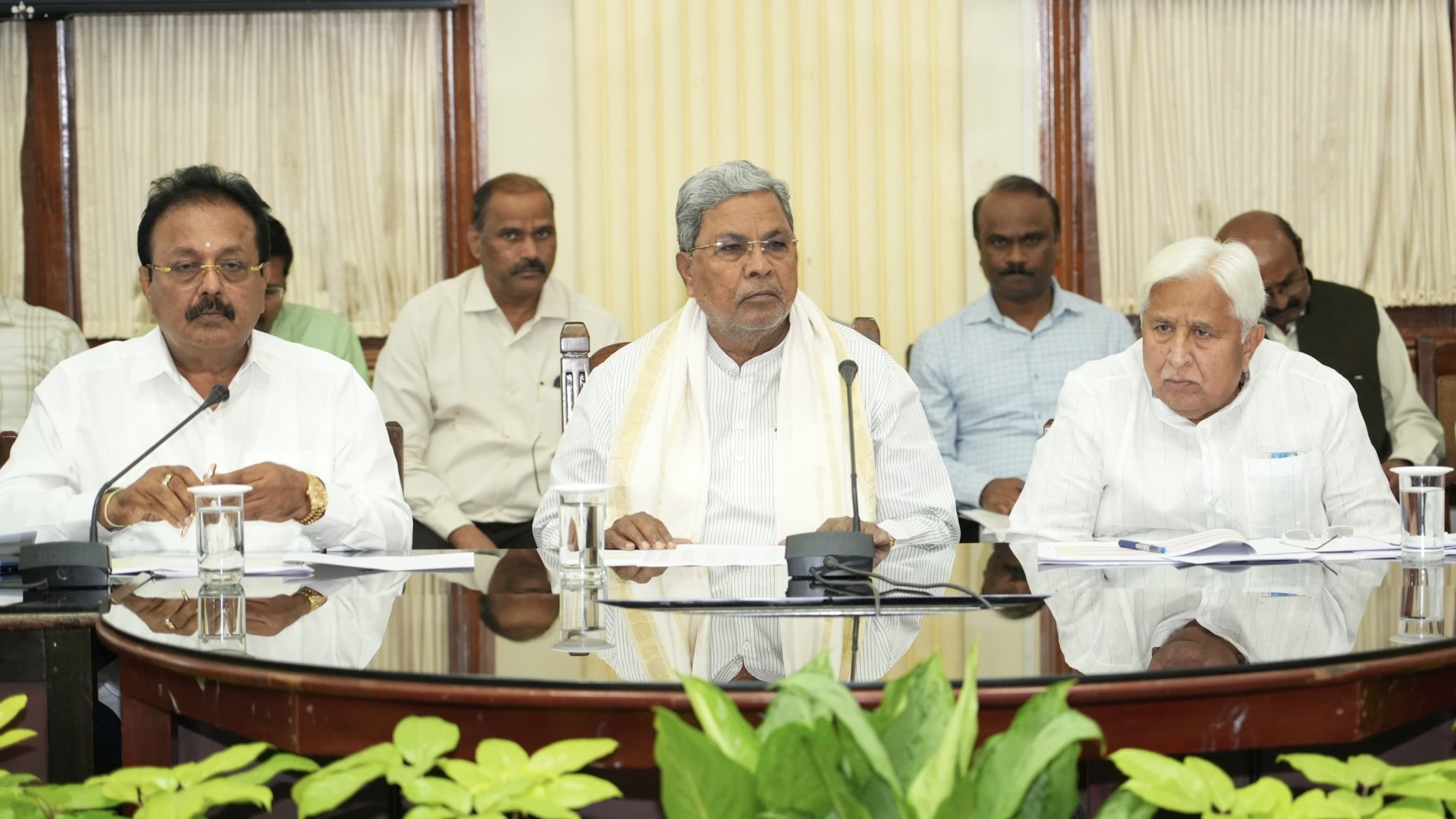
In an earlier cabinet resolution, the state government criticised several provisions of the VB-G RAM G Act.
Synopsis: The Karnataka government has decided to convene a joint session of the State Legislature from 22 January to 31 January to discuss the Centre’s repeal of MGNREGA, days after the Cabinet decided to legally challenge the move. Law and Parliamentary Affairs Minister HK Patil said the special session was aimed at highlighting the social and economic impact of the repeal.
The Karnataka Cabinet has decided to convene a joint session of the State Legislature from 22 January to 31 January to discuss the Union government’s repeal of the Mahatma Gandhi National Rural Employment Guarantee Act (MGNREGA) and its replacement with the VB-G RAM G Act.
The decision comes days after the State government said it would legally challenge the repeal.
Announcing the special session on Wednesday, 14 January, Law and Parliamentary Affairs Minister HK Patil said its aim was to create awareness about the social and economic impact of the repeal of MGNREGA.
He said the government could not avoid convening a session if the rights of the people of the State were being “snatched”.
“The concept of decentralization of power has taken a blow by taking away the right to work of the people, taking away the decision-making power of the Panchayats, and keeping power with the Centre,” Patil said.
The BJP and the Janata Dal (Secular) had earlier accused the ruling Congress of “misleading” people on the new VB-G RAM G Act but have welcomed the government’s decision to hold a special session to discuss the matter.
The Cabinet also decided to invite the Governor to address the joint session on 22 January.
In an earlier cabinet resolution passed on 8 January, the Karnataka government criticised several provisions of the VB-G RAM G Act, arguing that it violated citizens’ right to work and livelihood as guaranteed under Article 21 of the Constitution of India.
It also flagged the potential financial burden on the state, describing it as a serious erosion of federalism.
“The Act seriously affects the federal structure by not only completely excluding states from the consultation process, but also by requiring them to bear 40 percent of the cost under terms and conditions unilaterally decided by the Centre, without taking states into confidence,” the resolution stated.
Earlier this month, several workers, activists and advocates in Bengaluru raised similar concerns, particularly over how the Act was ‘bulldozed’ through without consultation with stakeholders. The NREGA Sangharsh Morcha presented an estimate of what Karnataka would have spent had the new law been implemented in 2024–25, based on prevailing MGNREGA trends.
In FY 2024–25, only 36 percent of registered households in Karnataka availed work, generating 13.12 crore person-days. On average, just 45 days of work were provided per active household. The state spent ₹573 crore on the scheme during that year.
Had the same level of employment been generated under the new Act, state expenditure would have risen to ₹2,729 crore, more than four times the cost under the original scheme.
(Edited by Dese Gowda with inputs from Anisha Reddy)


