

Published Jan 08, 2025 | 2:07 PM ⚊ Updated Jan 08, 2025 | 2:07 PM

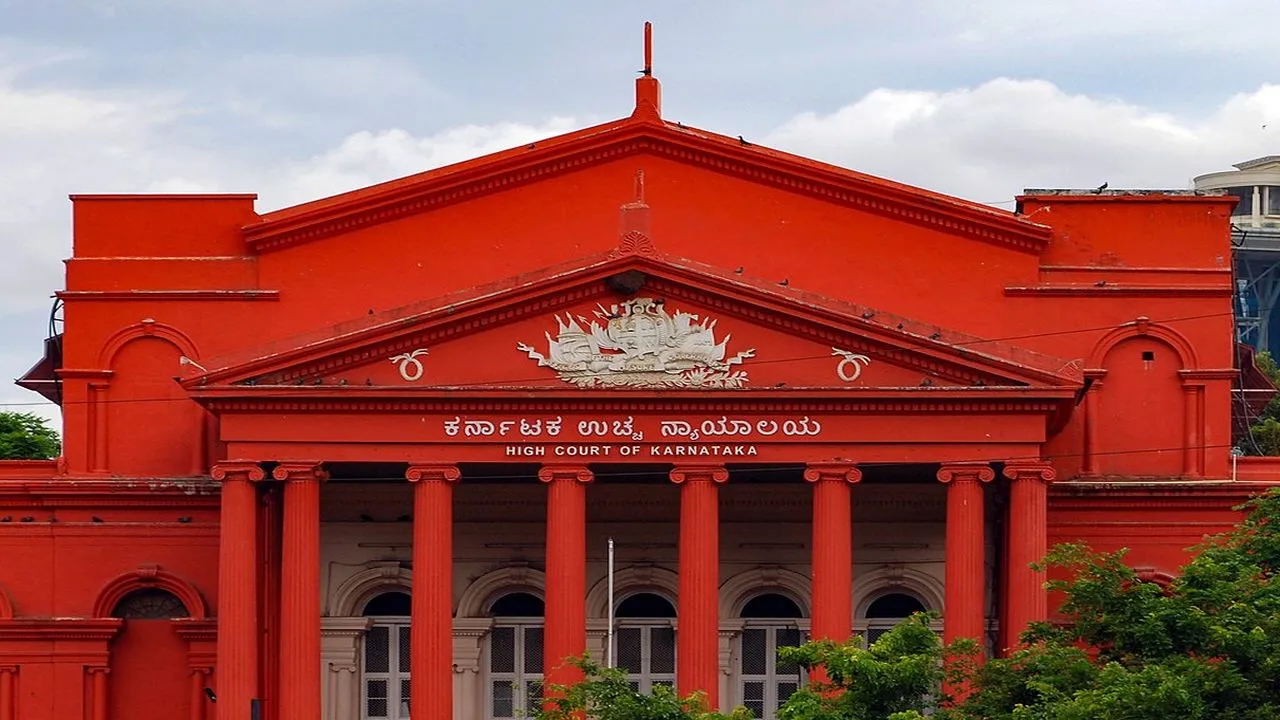
The judgement was passed by a single-judge bench, comprising Justice NS Sanjay Gowda

The Karnataka High Court, on Wednesday, 8 January, struck down the Union Government’s Green Energy Open Access Rules, 2022, declaring them invalid on the grounds of legislative overreach.
The court ruled that the government overstepped its authority by framing rules that should have been enacted through parliamentary legislation or by state regulatory bodies as outlined under the Electricity Act, 2003.
Introduced by the Union Ministry of Power, The Green Energy Open Access Rules, was aimed at promoting renewable energy by simplifying access to green electricity for consumers.
However, the court found that the rules encroached upon the powers of the Karnataka Electricity Regulatory Commission (KERC) and contradicted the federal structure mandated by the Constitution.
The single-judge bench, comprising Justice NS Sanjay Gowda, remarked in its judgment: “If the Parliament made a law specifically conferring power on the Regulator to frame Regulations which governed every aspect of open access, it is inconceivable that the Central Government can side-step the requirement of the Parliament enacting a law in that regard and straight away proceed to frame the impugned Rules.”
The Green Energy Open Access Rules, 2022, were designed to promote sustainability as part of India’s pledge to cut emissions by 45 percent by 2030.
The rules lowered the threshold for open access transactions from 1 MW to 100 kW, enabling smaller consumers to participate in purchasing renewable energy.
Under the framework, consumers were entitled to demand green energy from DISCOMs, which were mandated to supply it. The approval process was streamlined through a national portal, requiring decisions within 15 days or considering them automatically approved.
Industrial and commercial consumers were given the option to voluntarily adopt green energy, benefiting from fixed charges and a capped cross-subsidy surcharge.
The rules also introduced Renewable Purchase Obligations and green certificates to incentivise green energy consumption.
Meanwhile, the petitioners, comprising multiple hydropower companies, had argued that the rules imposed unfair financial and operational burdens, disrupting existing agreements with the state government.
The court also struck down the Karnataka Regulatory Commission (Terms and Conditions for Green Energy Open Access) Regulations, 2022, which were framed by the Karnataka Electricity Regulatory Commission (KERC) in alignment with the now-invalidated centre’s rules.
The judgment pointed out that the KERC Regulations were drafted as a direct consequence of obligations under the Green Energy Open Access Rules, 2022. With the central rules annulled, the corresponding state regulations were rendered legally unsustainable.
“The preamble to the [KERC] Regulations also indicates that the Regulations were framed only because of the Rules framed by the Government in the year 2022. It is hence clear that the Regulations are framed only as a consequence of the 2022 Rules and they are not regulations framed independently by the Commission. Therefore, the consequent Regulations framed by the KERC will also have to be struck down,” the court observed.
However, it directed the regulator to create fresh regulations if it wishes to achieve the same purposes mandated by the now-invalidated Union government rules.
The court also emphasised the principle of legislative delegation.
“…the architecture of the Electricity Act has been designed in such a way that specific roles are carved out for different authorities with the ultimate objective of ensuring the creation of a fair, transparent and vibrant electricity sector which would be beneficial to the nation as a whole,” the court observed.
“…the Central Government has framed a rule which has the effect of directing a State Commission (which is statutorily made responsible for dealing with all aspects of distribution of electricity) to amend its own regulations to ensure it is in conformity with the GEOA Rules framed by the Central Government. The Regulatory Commissions have, in effect, been specifically directed under the Central Government Rules to amend their Regulations, which is clearly impermissible under the Act.”
(Edited by Dese Gowda with inputs from Nolan Patrick Pinto)



