

Published Apr 16, 2025 | 11:48 PM ⚊ Updated Apr 16, 2025 | 11:48 PM

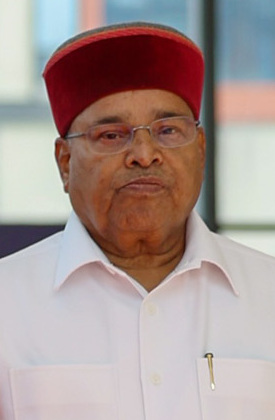
Governor Thaawar Chand Gehlot. (PMO/Wikimedia Commons)

Synopsis: Karnataka Governor Thawarchand Gehlot has referred a provision of the KTPP Bill, 2025, granting 4 percent reservation for OBC Muslims in public contracts, to President Droupadi Murmu. Passed in March by the state legislature, the bill faced strong opposition from BJP and JD(S), who termed it unconstitutional and accused the government of promoting societal polarisation
Karnataka Governor Thawarchand Gehlot has referred a controversial provision of the Karnataka Transparency in Public Procurement (KTPP) Bill, 2025, to President Droupadi Murmu for assent.
The clause in question seeks to grant a 4 percent reservation for Backward Classes Muslims under the socially and economically backward classes (SEBC) category in public contract works.
The bill, which was passed by the Karnataka Legislative Assembly and Council in March 2025, has drawn sharp criticism from opposition parties, including the Bharatiya Janata Party (BJP) and Janata Dal (Secular).
Both parties have labeled the provision as unconstitutional and accused the ruling government of attempting to polarise society along religious lines. In a formal petition, opposition leaders urged the Governor not to grant assent to the bill.
In defence of the legislation, Deputy Chief Minister DK Shivakumar maintained that the reservation was not religion-based, but aimed at addressing the social and educational disadvantages faced by certain sections of the Muslim community.
He added that the move is intended to reduce unemployment by creating opportunities for participation in public procurement processes.
“The reservation is rooted in backwardness criteria, not religion,” Shivakumar stated. “It is a step toward social justice and inclusive growth.”
According to a recent Supreme Court ruling, the Governor cannot keep a bill pending for more than one month. With that deadline approaching, the decision to escalate the matter to the President adds a new layer of complexity to the ongoing debate.
The final verdict now rests with President Murmu, whose decision could set a significant precedent regarding the intersection of affirmative action, economic empowerment, and constitutional law.
(Edited by Ananya Rao with inputs Rashmi Patil)



