

Published Mar 17, 2026 | 3:55 PM ⚊ Updated Mar 17, 2026 | 3:55 PM

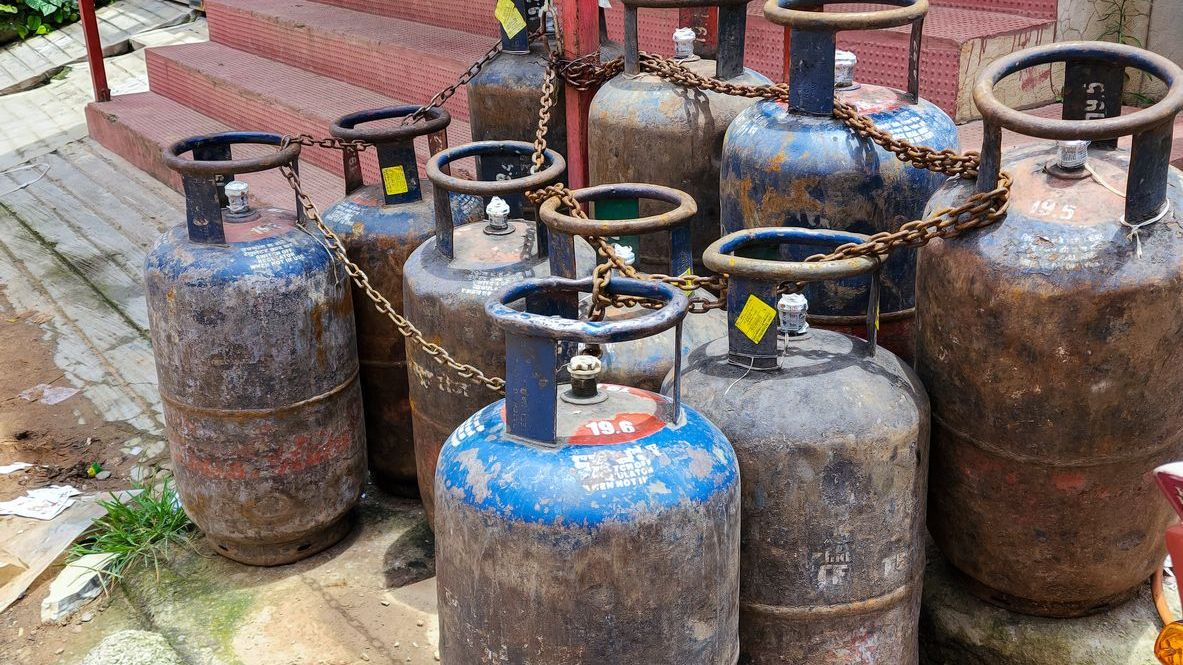
Commercial LPG cylinders. (iStock)
Synopsis: Under this policy, sectors have been classified based on priority. Under priority 1, educational institutions, student hostels, hospitals and other essential institutions will receive 100 percent of their LPG requirement. Under priority 2, government and PSU institutions, canteens at airports, railway and bus stations will receive an average of 1,200 cylinders daily.
The Karnataka government has introduced a priority-based framework to regulate commercial LPG distribution across the state. In a letter to oil marketing companies, the food, civil supplies and consumer affairs department said that the average daily sale of commercial LPG in the state by the three oil marketing companies together is approximately 44,000 cylinders.
“Out of this quantity, approximately 8800 cylinders shall be earmarked under 20 percent as per indicative guidelines received by GOI,” the letter said.
Out of this, 7,000 cylinders per day shall be earmarked for regulated distribution under the priority-based regulated distribution.
Under this policy, sectors have been classified based on priority
(With inputs from Anisha Reddy)


