

Published Feb 29, 2024 | 10:38 AM ⚊ Updated Feb 29, 2024 | 10:38 AM

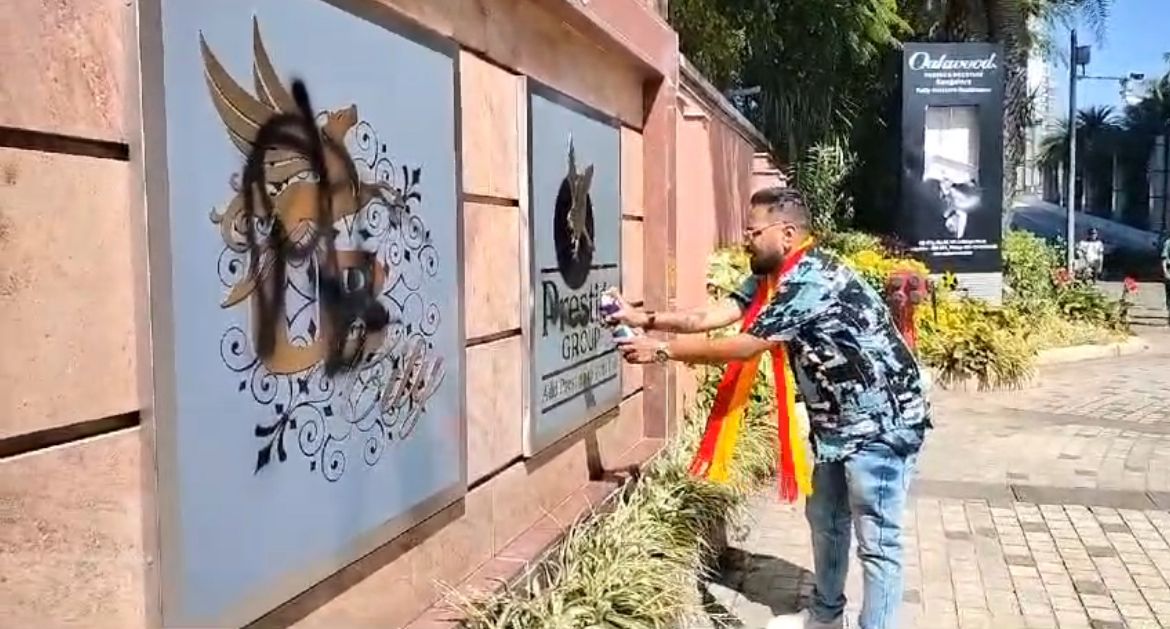
During the protests, members of the KRV smeared black ink on English signboards. (Screengrab)

In a recent announcement, on Thursday, 29 February, Karnataka Deputy Chief Minister DK Shivakumar confirmed that the state government has decided to extend the deadline for commercial establishments to adhere to the 60 percent signage in Kannada rule.
The initial deadline of 28 February has now been extended by an additional two weeks.
Taking to X, Shivakumar said, “Considering that it takes time to change the signage, Karnataka Govt has decided to extend the deadline given to commercial establishments by 2 more weeks so that the 60 percent signage in Kannada rule can be followed.”
He added, “It is important that we uphold our mother tongue in utmost respect, therefore we expect this law will be duly followed, and we shall see compliance to it by the end of the 2-week extended period.”
ಬೆಂಗಳೂರಿನ ಎಲ್ಲಾ ಅಂಗಡಿ ಮುಂಗಟ್ಟುಗಳು, ವಾಣಿಜ್ಯ ಮಳಿಗೆಗಳು ಮೊದಲಾದಕಡೆ ಶೇ.60ರಷ್ಟು ಕನ್ನಡ ನಾಮಫಲಕಗಳನ್ನು ಅಳವಡಿಸಲು ಹೆಚ್ಚಿನ ಸಮಯ ಬೇಕೆಂಬುದನ್ನು ಪರಿಗಣಿಸಿ, ಈಗಾಗಲೇ ನೀಡಲಾಗಿದ್ದ ಗಡುವನ್ನು 2 ವಾರಗಳ ಕಾಲ ವಿಸ್ತರಿಸಲಾಗಿದೆ.
ಕನ್ನಡ ನಾಡಿನಲ್ಲಿ ಕನ್ನಡವೇ ಸಾರ್ವಭೌಮ, ಹಾಗಾಗಿ ನಮ್ಮ ಹೃದಯದ ಭಾಷೆಯನ್ನು ಎತ್ತಿಹಿಡಿಯುವುದು ಅತಿ…
— DK Shivakumar (@DKShivakumar) February 29, 2024
In December, the Bruhut Bengaluru Mahanagara Palike (BBMP) set a deadline of 28 February for commercial establishments to ensure that 60 percent of the writings on their nameboards are in Kannada. This move was in line with a Bill passed by the Karnataka Legislative Assembly on 15 February.
This decision came after non-Kannadiga traders in Bengaluru were harassed and abused by activists of the Karnataka Rakshana Vedike (KRV) — a pro-Kannada organisation — for having signboards predominantly in English or Hindi.
On 28 February, BBMP Chief Commissioner Tushar Girinath issued notices to approximately 51,000 shops and commercial establishments across eight zones, directing them to make the necessary changes. The civic authority had deployed various measures, including health inspectors and marshals, to ensure compliance.
Even as the civic body issued notices to these establishments after a 40-day campaign, the traders’ associations in Bengaluru requested the BBMP not to initiate coercive action against businesses. They also sought more time to change the boards.
Non-compliance with the order could lead to the suspension of trade licenses or penalties.



