


They alleged that the Karnataka DGP recommended 26 of 36 IPS officers for Central deputation from the 2012 batch without their consent.

Published Jan 13, 2024 | 9:00 AM ⚊ Updated Jan 13, 2024 | 12:16 PM

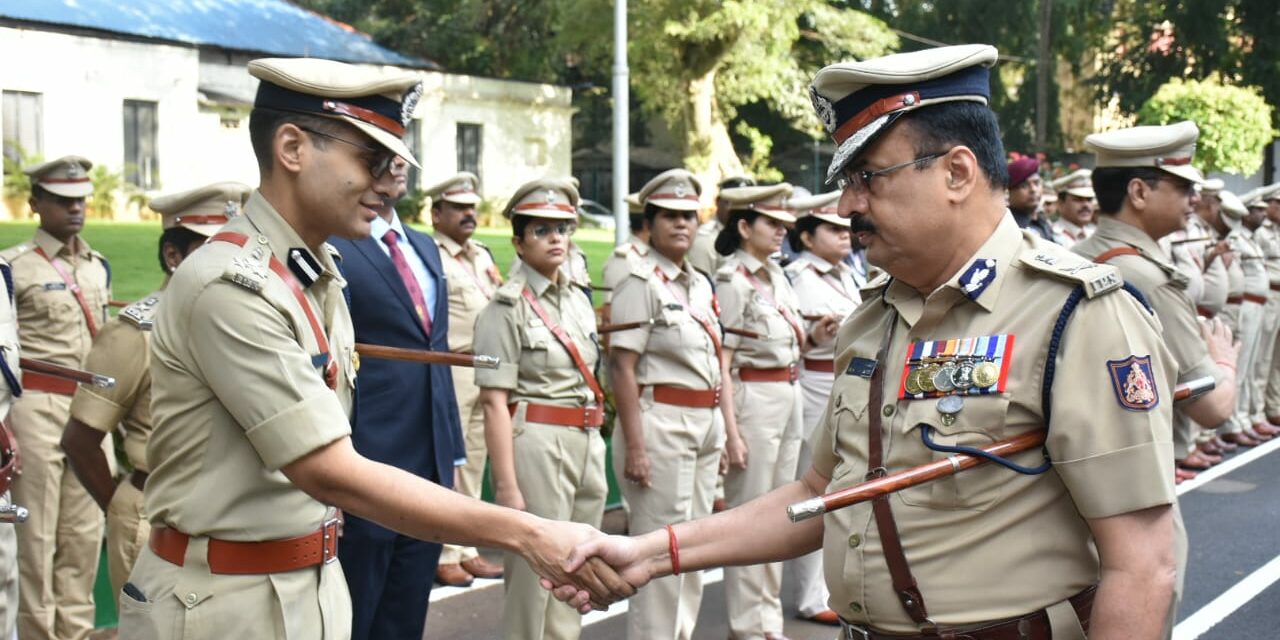
Several IPS officers of 2012 batch are cursing the Karnataka DGP Alok Mohan for not taking their consent while preparing the list for central deputation. (Pic- Karnataka State Police).
Karnataka Director General of Police (DGP) Dr Alok Mohan’s decision to recommend 26 Indian Police Service (IPS) officers from the 2012 batch for Central deputation has not gone down well with them.
Several of them have argued that their names were added to the list without their consent.
In the list of IPS officers recommended for Central deputation for 2023-24, the DGP has suggested three officers each of Director General (DG) and Additional DG (ADG) ranks, two officers of Inspector General of Police (IG) rank, and 28 officers of the Superintendent of Police (SP) rank.
Among the 28 SP-rank officers, a whopping 26 are from the 2012 batch alone. This decision has raised the eyebrows of many current and former IPS officers.
Several IPS officers of the 2012 batch have said the DGP included their names in the list without their consent or knowledge.
However, former senior IPS officers — most of whom retired at the DGP rank — pointed out that there was no rule that the DGP had to obtain the consent of the IPS officers before sending the recommendation list for Central deputation.
Some officers said that it was a grey area, with some previous instances of DGPs obtaining the consent of officers before sending the list to the Union government.
The IPS officers of the 2012 batch recommended for the Central deputation are Nikam Prakash Amrit, Liakkiya Karunagaran, Dr Bheemashankar Guled, Rahul Kumar Shahapurwad, Dharmender Kumar Meena, Joshi Srinath Mahadev, CB Vedamurthy, KM Shantharaju, Hanumantharaya, D Devaraha, Dr Siri Gowri, Dr K Dharani Devi, CK Baba, Abdul Ahad, S Girish, M Puttamadaiah, T Sreedhar, Dr M Ashwini, AN Prakash Gowda, JK Rashmi, TP Shivakumar, N Vishnuvardhana, Sanjeev M Patil, K Parashuram, HD Anand Kumar, and Kala Krishnaswamy.
The other IPS officers of SP rank are Maharashtra cadre’s Nimit Goyal and Karnataka cadre’s BM Laxmi Prasad — both from the 2014 batch.
The DG-level officers include Amrit Mohan Prasad, Renuka Mishra, and Alok Ranjan — who belong to the 1989, 1990, and 1991 IPS batches, respectively.
Among the ADG-rank officers, Sandeep Salunke is from the 1990 batch, while Sanjay Saxena and Archana Tyagi as from the 1993 batch.
The IG-rank officers of the 1994 batch recommended for Central deputation are Dr Nirmal Kumar Azad and Malini Agrawal.
According to a former IPS officer: “IPS officers of SP rank are selected for Central deputation considering their good record, suitability, the state’s willingness to spare the officer, and the central organisation to take an officer, based on specific needs of the organisation. And consent is also taken.”
He added: “At the level of IG and above, there is a process called empanelment: A list is prepared by the Union government of officers suitable for Central deputation.”
Once the DGP prepares the list, it is sent to the chief secretary of the state government, who then sends it to the Union government.
Taking exception to the list prepared by DGP Alok Mohan for Central deputation, several IPS officers of the 2012 batch called it “dictatorship” as he recommended their names without their consent.
When South First contacted IPS officers of the 2012 batch, most of them blamed the DGP for not taking their consent while preparing the list, while a few of them refrained from commenting on the matter.
On condition of anonymity, an IPS officer of the 2012 batch told South First: “I was shocked to see my name in the list of officers recommended for Central deputation. The DGP recommended my name without taking any sort of consent from me.”
He added: “The DGP cannot play with our lives and family. It is nothing but tyranny by the DGP. I understand that it is not mandatory, but he should have taken consent at least on humanitarian grounds.”
The officer also said: “We do counselling before issuing transfer orders even for police constables. Can’t they do this minimal thing of taking consent before recommending names for Central deputation?”
Another IPS officer of the 2012 batch, who said his name was recommended without his consent as well but also wished to be unnamed, told South First: “There is a huge influx of officers because of promotions given to state police officers.”
He explained: “There are seven IPS officers in the 2012 batch who cleared the UPSC exam and 28 officers are promoted. The reality is there are only 57 executive posts available, and 130 IPS officers of SP rank are fighting for these posts.”
The officer continued: “It is the fault of the government that our batch has been affected. The DGP might have recommended my name for the Central deputation, but we are not ready to go.”
Another disgruntled IPS officer said: “Usually, the Central deputation is assigned based on willingness. The Union Ministry of Home Affairs asks state governments every year to offer a list of officers for Central deputation. Then the state government asks officers. But this time, they have not asked for the officer’s willingness.”
He noted: “There is no clarity on when the list was prepared. The superiors have to take consent before recommending names.”
While the 2012-batch IPS officers claimed that consent was necessary while preparing the recommendation list for Central deputation, former IPS officers — especially those who retired at the DGP rank in Karnataka — said it was a “sensitive issue”.
Some of the retired officers claimed that it was not mandatory, but a few said the consent had to be obtained.
Irrespective of the rules, the former IPS officers insisted that the serving IPS officers go for Central deputation to get broader knowledge about policing and leadership skills, and to also understand the national perspective and culture.
Former DGP ST Ramesh told South First: “Rule 6(2) of the IPS (Cadre) Rules says that consent shall be obtained and approval of the cadre controlling authority before an officer is nominated for deputation. Courts have also ruled in favour of consent.”
The rule states: “A cadre officer may also be deputed for service under — an international organisation, an autonomous body not controlled by the government, or a private body, by the Central government in consultation with the state government on whose cadre he is borne.”
However, it also adds that “no cadre officer shall be deputed to any organisation or body… except with his consent.”
Ramesh noted: “There are several instances of DGPs taking the consent of officers before recommending their names for Central deputation, and consent was not taken in some cases. Even when I was in service, I received deputation orders without my consent.”
Another former IPS officer said: “The recommendation of names for Central deputation with or without consent is troublesome. Consent is a very desirable thing, whereas no consent was taken and a deputation order was given against the officer’s wishes in many cases. The matter regarding deputation without consent is a touchy issue.”
He pointed out: “Officers should work with the Central government in the interest of the service. It will help them get a national perspective and provide exposure. One would also understand the culture of Central police organisations as it varies from organisation to organisation.”
The officer also said: “The cadre strength of a state is decided scientifically. It includes a deputation reserve. It is because the Union government does not recruit officers to run various Central agencies at the leadership levels.”
He continued: “Every IPS officer should do a stint on deputation. That’s why it is called the All India Service. Every state has a certain deputation reserve included in the sanctioned strength of IPS officers.”
Retired DGP Ramesh stressed: “Cadre management is very crucial. It ensures that a certain percentage of officers is available for deputation. Cadre management also includes providing promotion opportunities at the right time.”
Pointing out the advantages of going on Central deputation, he said: “The officer who goes on Central deputation brings back a certain knowledge and experience. They also get exposure to the Union government, unlike a frog in the well.”
He added: “One has to work with a national perspective. It helps them understand during their service how policing is done at the national level.”
Ramesh also said: “Officers on deputation also come in contact with a large number of colleagues working across the country, which helps them coordinate across the nation if and when the need arises. Officers must go on Central deputation,” reiterated former DGP Ramesh.
Another retired DGP, DV Guruprasad, told South First: “It is not mandatory to take the consent of the IPS officers before recommending their names for Central depuration. Even in my case, my then superior did not take my consent.”
He pointed out: “The IPS is nothing but an All India Service. IPS officers are expected to serve both in the Centre and the state.”
He added: “Around 40 percent of the deputation quota remains unfulfilled. There are no more than 12 officers on Central deputation from Karnataka.”


