

Published Mar 06, 2026 | 3:42 PM ⚊ Updated Mar 06, 2026 | 3:42 PM

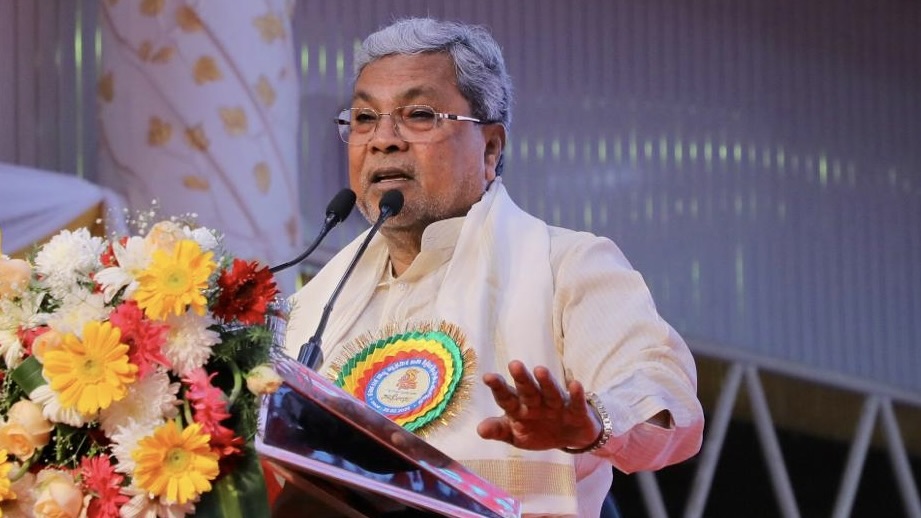
Karnataka Chief Minister Siddaramaiah.
Synopsis: Karnataka Chief Minister Siddaramaiah credited his government’s targeted industrial and IT policies with strengthening growth and attracting fresh investment into the state, with FDI inflows rising 2.6-fold to $9.4 billion in the first half of 2025–26. Presenting the 2026–27 State Budget, the Chief Minister said the government will expand initiatives such as the Global Capability Center policy and the LEAP programme to draw investment and jobs beyond Bengaluru.
Karnataka remains a leader in India’s information technology sector. The government’s “Beyond Bengaluru” initiative aims to help channel fresh investments into emerging tech and industrial hubs across the state, Chief Minister Siddaramaiah said while presenting his record 17th Budget.
“Karnataka’s achievements in information technology, biotechnology, start-ups, electronics and aerospace sectors are attracting global investment and talent,” the Chief Minister said during his Budget speech.
In his over three-hour address, Siddaramaiah highlighted how the state has positioned itself as a frontrunner in IT and industrial growth through a mix of targeted policies and sector-specific incentives.
The state’s industrial sector recorded a growth of 6.7 percent in 2025–26, according to the Budget. In the first half of that year, Karnataka received foreign direct investment (FDI) equity inflows worth $9.4 billion, which accounted for 26.7 percent of the country’s total inflows.
Several major state economies such as Maharashtra, Gujarat and Delhi recorded a decline in FDI inflows during this period compared with the previous year. But Karnataka registered a 2.6-fold increase, the Chief Minister said, adding that this is a sign of the state’s growing attractiveness as an investment destination.
Karnataka accounts for nearly 43 percent of India’s IT exports and remains among the leading states in the Electronics System Design and Manufacturing (ESDM) and semiconductor sectors, according to the Budget.
Siddaramaiah called it a “matter of pride” that major global companies such as Foxconn, Lam Research and Applied Materials have recently invested in the state. “The state anticipates investments to the tune of ₹45,000 crore from companies in this sector,” he said.
Karnataka also became the first state in India to introduce a dedicated Global Capability Center (GCC) Policy in 2024. As a result, more than 550 GCCs are operating in the state. Under the policy, the government aims to establish 500 new GCCs by 2029. These are expected to create employment for 3.5 lakh people and generate economic output of $50 billion.
To support this ecosystem, Karnataka State Electronics Development Corporation Limited (KEONICS) will establish a new IT park in Mangaluru to promote GCCs.
The state government is also focusing on strengthening the micro, small and medium enterprises (MSME) sector. The Karnataka State Small Industries Development Corporation (KSSIDC) has established eight industrial estates across different districts to support MSME growth.
One of the flagship initiatives is the Local Economy Accelerator Programme (LEAP), launched in September 2025 with an outlay of ₹1,000 crore to create cluster-based economic accelerators in regions beyond Bengaluru. The state’s IT expansion beyond the capital is also beginning to show results. In Mysuru, more than 30,000 employees are working across nearly 100 IT companies.
The Karnataka Industrial Policy 2025–30, announced in February 2025, aims to strengthen the state’s position as a leading high-tech industrialised state and attract investments from across the country and abroad. Siddaramaiah said during the Budget presentation that the policy is expected to bring greater investment inflows in the coming years.
Several industry and IT initiatives will roll out outside Bengaluru in the current financial year as part of the government’s push to decentralise economic growth.
Under the LEAP initiative in 2026–27, the government will focus on building long-term industry–academia partnerships, the Chief Minister said during the Budget presentation. A “Super 100” industry–academia adoption programme will be implemented in collaboration with the Karnataka Digital Economy Mission (KDEM).
The government is also introducing additional incentives under the Karnataka Industrial Policy 2025–30 to promote industrialisation beyond Bengaluru. For the first time, industries setting up in the most backward regions will receive an additional 5 percent incentive, while those investing in backward regions will receive an additional 3 percent incentive.
Meanwhile, investments worth ₹30,000 crore and around 75,000 jobs are expected at the Dharwad Industrial Node under the Bengaluru–Mumbai Industrial Corridor project. To support the node’s development, the government has allocated ₹600 crore to acquire 1,000 acres of land, of which ₹200 crore will be provided in the current financial year.
The government also plans to develop Mysuru as the state’s second major IT hub to ease congestion in Bengaluru and boost regional economic activity.
(Edited by Dese Gowda)


