

Published Jan 09, 2023 | 1:46 PM ⚊ Updated Jan 12, 2023 | 2:47 PM

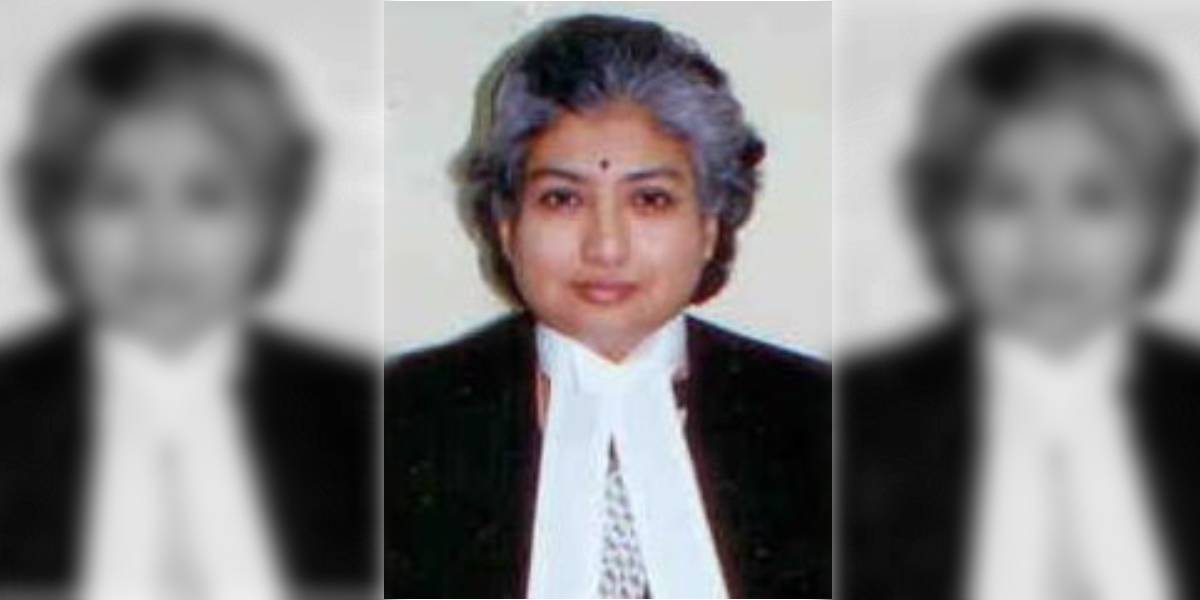
Justice BV Nagarathna (Karnataka judiciary website)

Justice BV Nagarathna recently delivered two back-to-back dissents in the span of just two days, reigniting a glimmer of hope among those who look up to the judiciary as the conscience-keeper of a democratic society, at the very least, in terms of upholding the country’s very own Constitution.
In the current political climate, where the erosion of parliamentary democracy coupled with the increasing autocracy of the state has led to the downfall of institutions, it becomes important to trace her judicial trajectory.
To briefly put it, the overnight demonetisation of 86.4 percent of currency notes, which had a disastrous effect on the economy, was brought into effect through a gazette notification dated 8 November, 2016, with the government exercising powers under Sub-Section (2) of Section 26 of the RBI Act.
In her dissenting opinion on the demonetisation decision, Justice Nagarathna states that for a notice to be issued under the said section, the central board of the bank must initiate the recommendation of demonetisation of any series of notes and if the Central government accepts this, it can carry out the recommendation by issuing a notification in the gazette.
She states that while the central board can recommend demonetisation of any series of any denominations and the government may or may not act upon the same, the power to demonetise all series of notes (if such need arises) lies with the Central government through a plenary legislation or passing of ordinance (if secrecy is needed). In her view, such exhaustive power lies only with the Central government as it has wider ramifications on the economy and citizens. Referring to Parliament as a “nation in miniature”, she states that in matters of importance like demonetisation, Parliament can not be left aloof.
While pointing to the failure of the government to take Parliament into confidence, she further notes that the central board of the bank hardly had 24 hours to consider the proposal of the government and the use of words such as “as desired” by the Central government in the language of the RBI demonstrates that there was no independent application of mind by the RBI.
Therefore, according to her, the issuance of the gazette notification resulting in demonetisation was an unlawful act.
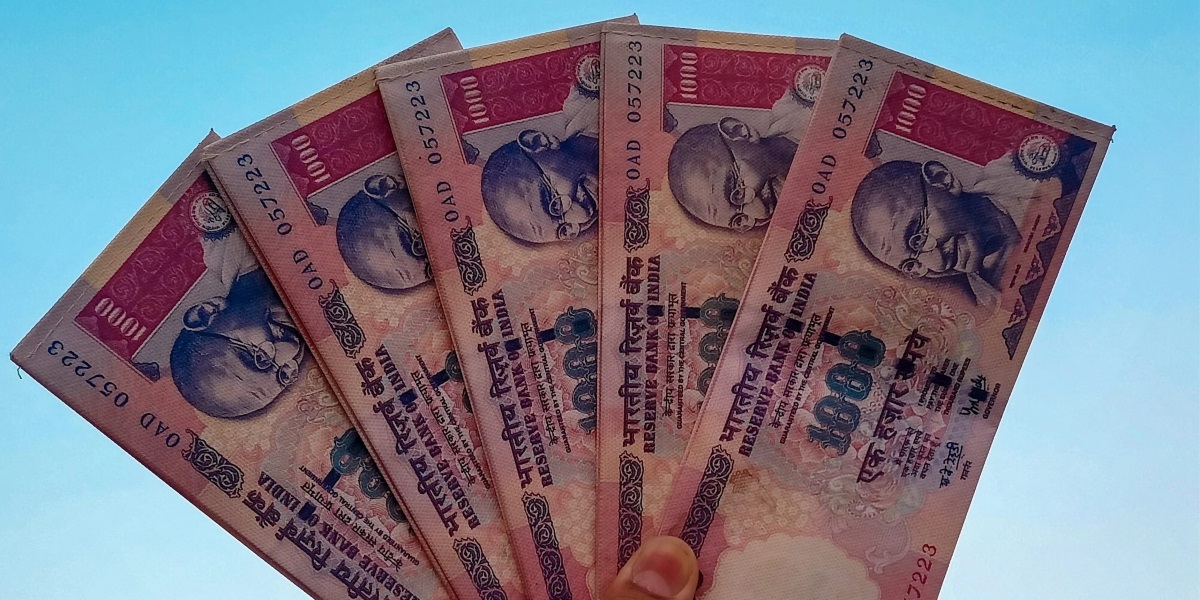
Demonetised 1,000 rupee notes (Creative Commons)
But it must be pointed out that Justice Nagarathna concurred with the majority view that a retrospective relief cannot be granted and did not dwell into the adverse effects of demonetisation even though much of the proceedings were dedicated to the distress caused to the citizens.
Ironically, even as she said that her judgment shall only look into the legality of the matter and not the success of the economic measures, she gave a clean chit to the government by stating that demonetisation was well-intentioned.
In the Kaushal Kishor case, Justice Nagarathna held in her dissent that “a statement made by a minister, if traceable to any affairs of the state or for protecting the government, can be attributed vicariously to the government by invoking the principle of collective responsibility, so long as such statement represents the view of the government too. If such a statement is not consistent with the view of the government, only then is it attributable to the minister personally”.
While the above observation is a welcome one, interestingly, she also held that the fundamental rights under Article 19 and 21 are non-enforceable against persons other than the state or its instrumentalities even as she took note of the factor that the Supreme Court has broadened the definition of what constitutes the state.
Meanwhile, the majority judgment held that the ambit of Articles 19 and 21 can be expanded to create obligations upon both public and private actors. They bolstered the judgment referring to the Vishaka case, a class action petition, wherein the guidelines were imposed on both state and non-state actors not to violate fundamental rights guaranteed to working women under Articles 14, 15, 19(1) (g), and 21 of the Constitution.
During her time as a judge at the Karnataka High Court, while issuing an order to revert back to midday meals in the areas where schools have been reopened, Justices Nagarathna and JM Khazi held that the provision of midday meal is a necessary concomitant of the fundamental right under Article 21A of the Constitution of India for children aged six to fourteen. They also said that the health and nutrition of students is very much a necessary concomitant for education.
A Bench led by her also sought allocation of a budget to be made for the supply of smartphones and technological devices, stating that economic backwardness or poverty should not become a reason for lack of continuity in education.
In another judgment alongside Justice AS Oka, she ordered the state government to document its systematic strategy to assist transportation of six lakh migrants stating that lack of capacity to pay for transport must not divest the migrants of their constitutional rights.
In one of her judgments, she observed: “While truthful dissemination of information is an essential requirement of any broadcasting channel, sensationalism in the form of ‘breaking news’, ‘flash news’ or in any other form must be curbed,” particularly pointing her fingers at electronic media.
Even though she sought the setting up of an independent and autonomous statutory body to regulate broadcast media, she clarified that the same must not be misconstrued as control by the government or powers that be.
While scholars would argue that Justice Nagarathna, who is in line to become the first woman Chief Justice of India, has broadly engaged in welfarist jurisprudence, particularly with regard to her judgments during Covid times, it is to be seen whether or not her judicial trajectory will continue to remain the same.
Despite calling demonetisation a well-intentioned measure and concurring with the majority on no retrospective relief, her dissent in the case will surely stand out considering the insensitive comment of the majority — “Every noble cause claims its martyrs” — referring to the many deaths of people from socio-economically backward classes during the demonetisation.
(Apoorva Yarabahally is pursuing Masters in International Law at South Asian University. These are the personal views of the author)



