

Published Sep 28, 2026 | 2:58 PM ⚊ Updated Sep 28, 2026 | 2:58 PM

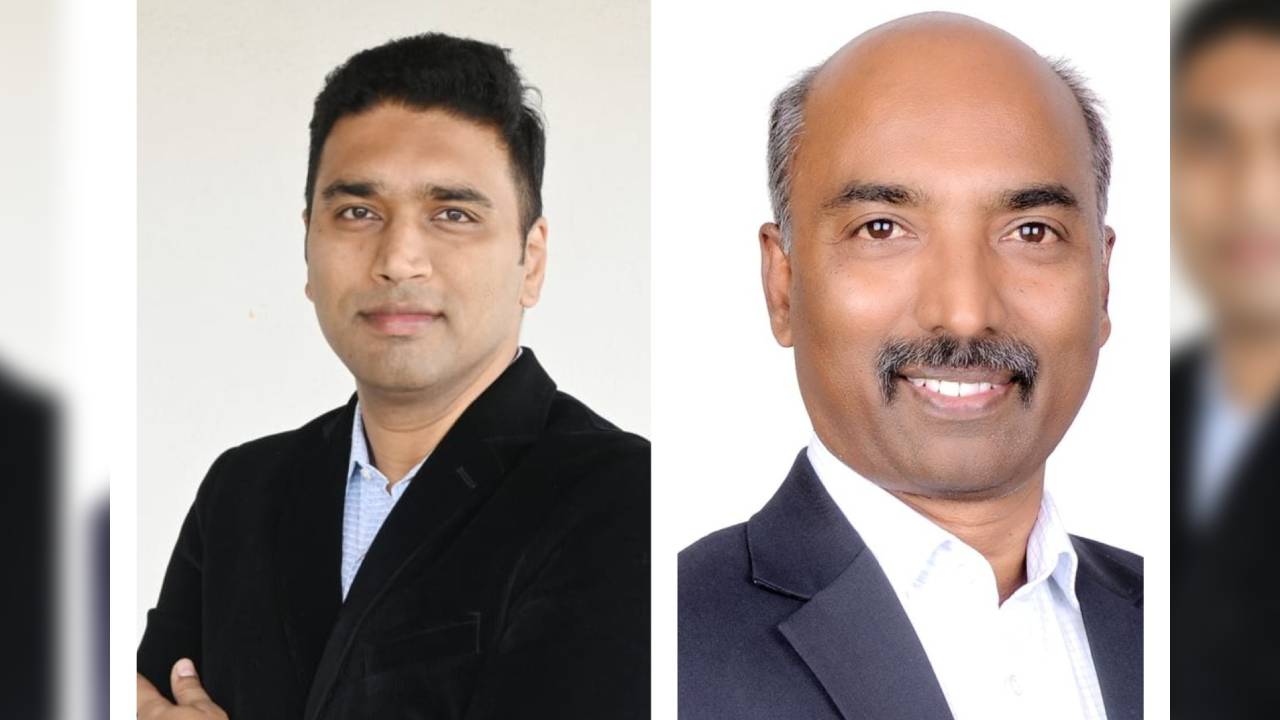
Excelsoft CIO Adarsh Sudhindra and CEO Doreswamy P

Synopsis: Mysuru-based Excelsoft Technologies uses AI to track behavioural signals, flag suspected cheating, and conduct digital examinations even with limited internet connectivity. But as AI transforms both testing and cheating, its executives say technology has a fundamental limit: it can secure an examination system. Still, it cannot eliminate the human vulnerabilities behind question-paper leaks.
A candidate repeatedly looking away from a screen and casting seemingly furtive glances around could be searching for answers—or plain nervous.
For artificial intelligence (AI) monitoring an online examination, telling the difference is difficult.
In a conversation with South First, Excelsoft Technologies CEO Doreswamy Palaniswamy and CIO Adarsh Sudhindra said their firm’s AI remote-proctoring system does not make that judgment based on a candidate’s single movement. Instead, it captures 42 different signals during an examination, drawing on front- and side-view cameras as well as microphone, mouse and keyboard data.
These include head and eyeball movements, body posture, background voices and changes in a candidate’s answering pattern. The model feeds a combination of these data points into the system, which determines the probability of a candidate cheating rather than declaring that they have cheated.
“The model never says, ‘Yes, person X cheated in this scenario.’ It says the probability of Person X cheating is 90% or 75%,” Sudhindra said.
The system categorises the resulting flags as low, medium, or high severity, after which a human usually reviews the high-severity flags.
“AI only gives evidence in terms of probability, and a human will have to decide,” he said. “So the accountability always lies with the human.”
That human safeguard is becoming increasingly important as artificial intelligence shows up on both sides of the examination.
While AI has shortened software development cycles from months to weeks and made building products easier, it has also brought its own problems, as the same technology is now being used to cheat in examinations.
“While we can now develop products faster and more efficiently, cheating has also picked up on a big scale using AI,” Palaniswamy said. “It has become a cat-and-mouse game. Catch-up is happening, but something else is coming up.”
Excelsoft, incorporated in Mysuru in 2000, describes itself as a learning and assessment technology company. Its product covers the examination lifecycle, from candidate onboarding and question setting to test delivery, remote proctoring and evaluation. Its systems support both online and paper-based examinations, and remote proctoring has become a significant part of its business since the COVID-19 pandemic.
Saras, one of Excelsoft’s flagship products, was developed more than two decades ago as an enterprise-level online and paper-based testing platform and, according to the company, is licensed to hundreds of customers globally. In 2006, the company designed and built an assessment platform for Pearson based on its Saras software. More recently, it provided Saras for the Philippines Civil Service Commission’s digital civil service examination.
One feature is the ability to keep an online examination running even when internet connectivity is interrupted.
“We have built a local database into the browser in JavaScript on the webpage itself. It is secure and double encrypted, while the student continues to take the exam,” Sudhindra said. “As soon as the internet is restored, the test driver syncs the responses back onto the cloud.”
Excelsoft has taken the idea further with “Saras in a Box”, which Sudhindra described as a device roughly the size of a matchbox containing a compiled version of the company’s assessment platform.
“This box is built for turning any room into a test-centre network,” he said.
Where basic connectivity exists, the device can be connected to a router to create a local examination network. In places without internet or Wi-Fi, Sudhindra said the box can create its own local Wi-Fi network, allowing candidates in the room to connect directly and take the examination.
Also Read: IIT-Bombay director says he will resign after Dalit student’s suicide sparks protests
The distinction matters in India, where examination integrity has become a national policy concern.
Government examinations have repeatedly come under scrutiny due to paper leakages and irregularities, including controversies surrounding the NEET and the Karnataka Public Service Commission (KPSC) examinations in recent times.
On why this technology was not adopted more widely in the Indian Examination ecosystem, Palaniswamy said the Indian market was not ready when Saras was launched. Digital assessments began gaining greater acceptance only over the past five to seven years, a shift that was accelerated by the COVID-19 pandemic.
But he pointed to a more fundamental limitation: technology can secure the delivery of an examination; it cannot necessarily prevent someone with access from deliberately leaking a question paper.
“Structurally, if you look at the Indian market, the news is that the paper leaks are not at a technology level. It is actually more about who is sending the question paper, and there is an integrity issue over there,” Doreswamy said.
“Even if technology comes in and if somebody wants to leak that question paper, we cannot avoid that problem.”
On how AI could change the examination landscape, “The exam structure will change. It has already started, “ Sudhindra said. He said there would be fewer multiple-choice questions and more skill, competency and conversation assessment tests.
Excelsoft said its algorithm can input behavioural signals and its platform has several safeguards, but a human still makes the final decision. However, if the examiner is responsible for the leak, Palaniswamy says no technology can stop it.
(Edited by Majnu Babu).



