

Published Mar 16, 2026 | 8:00 AM ⚊ Updated Mar 16, 2026 | 8:00 AM

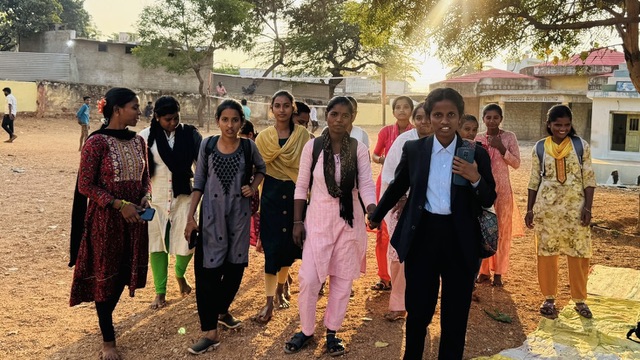
The Spoorthy girls are making a difference in Koppal villages.
Synopsis: In Koppal villages, where a girl child is considered as a smouldering coal that could burn down families, child marriages were normal. A group of girls, powered by KHPT, are now fighting to ring in a new normal for their peers so that they could learn, make informed decisions and soar in life rather than getting confined to their matrimonial homes. However, the army of girls — the Sphoorthis — need arms in the form of access to education close to villages, better transport facilities and more.
A few kilometres down the now-narrowed highway, the landscape below the rocky hills changes. A musky, warm and evocative odour of unseen livestock permeates the feverish yellow of the evening sun.
The dusty road winds through the plains and into the village, where ruminating cows with bored looks perk their ears in sudden alertness and drop their guard almost instantly. The famous minor edicts of the great Maurya, Ashoka, are somewhere up the bordering hills, hidden from the eyes of the casual visitor.
Downhill, in the villages of Koppal in northeast Karnataka, an unwritten edict — misogynist, patriarchal and retrograde — holds sway.
Unwritten it could be, but it has been drilled into the psyche of the villagers, who, to date, follow them, depriving girls of their dreams and clipping their aspirations before they take wings.
A change, a second thought, is now palpable in the villages. The change has been initiated from within, by girls — not just for girls alone, but for healthy, forward-looking generations to come.
June 2025, Gangavathi: Karnataka Minister for Backward Classes Development, Kannada and Culture, Shivaraj Tangadagi minced no words at a quarterly review meeting in Koppal, a backward district in Karnataka.
“Police and the Women and Child Welfare Department officials must take the issue of child marriages seriously,” his tone was that of a warning.
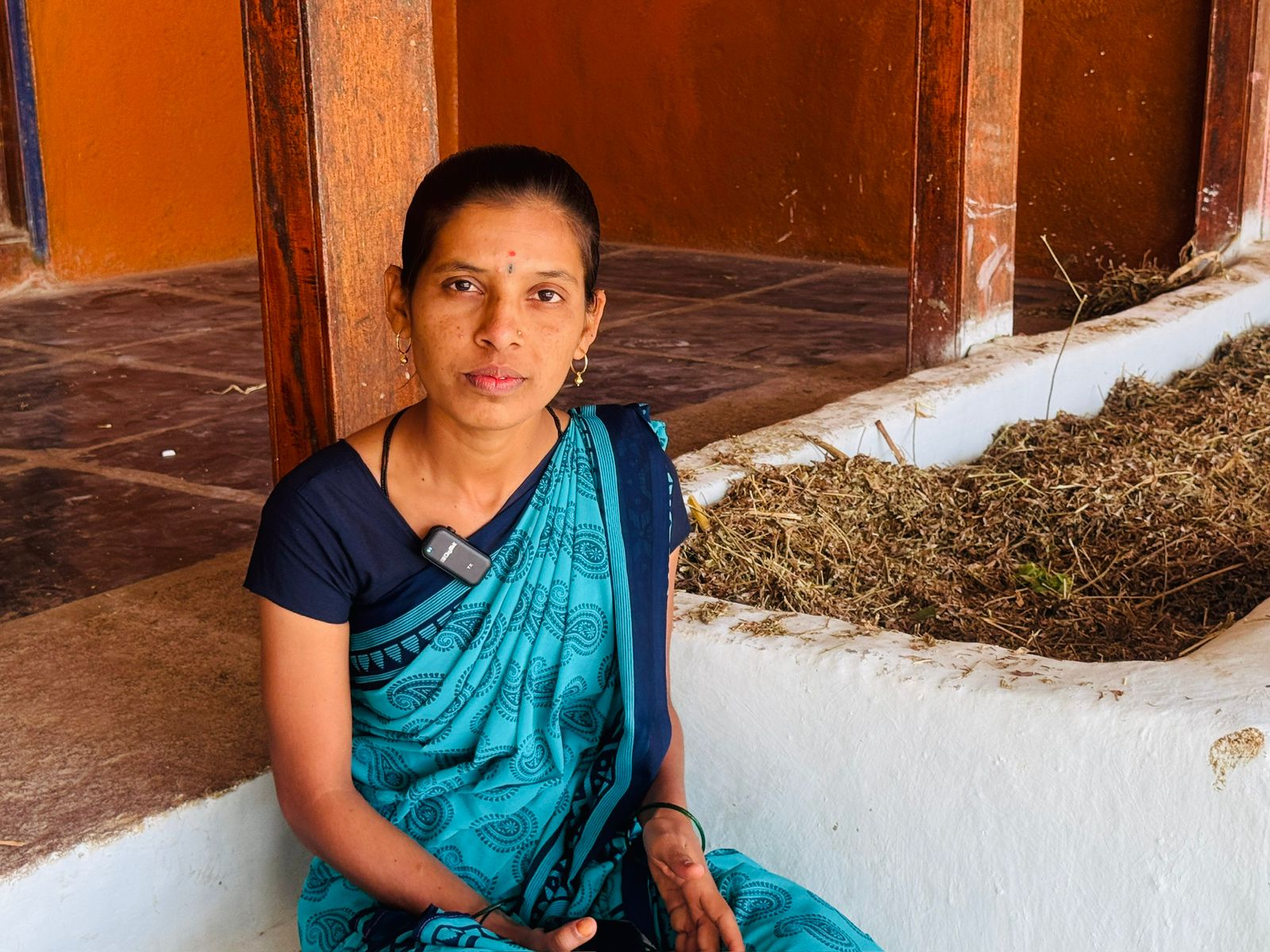
Lakshmi, a guest teacher in Venkatapura, says that no child marriages have occurred in her village since 2023, thanks to KHPT’s Sphoorthi girls.
Tangadagi, also the Minister in charge of Koppal, was furious on receiving the news that at least four child marriages had been held in April and May. He sought to know the action initiated in those four cases.
The minister was not satisfied with the official response that First Information Reports (FIRs) have been filed. He knew the issue was too deep-rooted, and it required more effort.
“FIRs alone won’t work,” he said.
A year later, in March, social scientist Dr Satyanarayana Ramanaik, leading the adolescent health thematic at Karnataka Health Promotion Trust (KHPT) would tell South First the need for engaging, innovating and empowering adolescents for health and well-being — and how his organisation, a non-profit, has been striving to end the social evil of child marriages.
March 2026, Ginigera village, Koppal: The evening sun played peekaboo through the foliage of neem tree. A group of girls were chatting beneath the tree, beside an active volleyball court. Their conversation centred on the upcoming jatra (fair) at the local temple.
The girls are all eyes and ears, their youthful exuberance masking the high alert they maintain. A colourful, silk blouse piece for a young girl arriving at the local tailor, a sudden visit of a horde of relatives of a villager having a girl at home, or the parents of a girl speaking to the priest in hushed tones — nothing escapes their attention.
Those are the telltale signs of an impending child marriage, experience has taught them. Such signs spur them into action. They collectively visit the house concerned and try to persuade the parents against marrying off their girl at a young age.
If their initial attempt fails, they take a step up their efforts.
The girls, numbering around 15, are the agents of change, striving to correct the course of their society. They know the change should come from within. They are the Sphoorthi girls — a group of girls leading girls.
Summers are harsh in Koppal. The season is harsher on under-18 girls as it marks a never-to-return-from turning point in their lives.
The Sphoorthis are now speaking up, not for themselves alone, but for other girls too.
The jatras are in summer. Schools will be closed, and children are away from the watchful eyes of their teachers. It is the season of weddings.
The Sphoorthi girls have shifted to high-alert mode. The arrival of a bus bringing in the relatives of a villager, a blouse stitched too early, and an aunt arriving at dusk signal what they dread the most.
A visit to the villagers’ residence most often validates their suspicion. The familiar teenage girl there has changed. She looks confused, sad, and strangely silent.
“We’re taking her to a fair,” the relatives tell the Sphoorthis.
The pattern is now too familiar for the Sphoorthi girls. It is time to act. They know that the girl will not return from the ‘fair’. Instead, they will be seeing a bewildered girl, prematurely forced into womanhood, with a mangalsutra around her neck, her growth stunted in an abrupt end to childhood.
The ‘fair’ mentioned was a lie, and too unfair to the girl. She had been married off before attaining adulthood. Her innocence now lies amidst shattered dreams, still, silent and slain.
The Sphoorthis’s job is a service to society. Read the signs of an impending child marriage, intervene, convince and prevent.
KHPT statistics revealed that the Sphoorthi girls have so far prevented 531 child marriages in Koppal and Yelburga, two blocks where almost every household has a girl child. National Family Health Survey-5 showed that 58.6 percent of girls in Koppal got married before turning 18 years.
Koppal, some 350 km from Bengaluru, is a different world most Bengalureans may not understand.
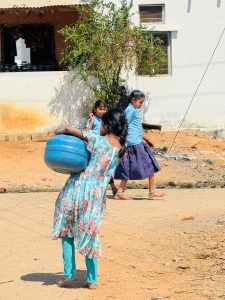
While boys return to the cosy idleness of their homes, girls come back to work.
In Koppal villages, patriarchy is real, but not realised. It is a belief system, apparently ingrained into the DNA of the villagers, irrespective of their gender.
Men — fathers, grandfathers, uncles and brothers — decide the life and needs of women. Boys, however, are relatively free. They are not a ‘risk’ like girls, an accepted ‘fact’ in Koppal villages.
Patriarchy, like elsewhere, has a routine. As the sun sets, the men return from the dusty fields, tired and famished. The women, who too had a long day, spring into action once again, sweeping the residential compound, doing dishes, feeding cattle, and cooking dinner.
Girls, some in faded school uniforms, join in even as the boys — if back home — catch up with the world beyond on mobile phones.
A seven-year-old girl was seen balancing a plastic pot of water on her hip, her frail frame struggling to steady her under the weight. Another one squatted near the tub of water, rinsing cooking utensils. Yet another one climbed onto a ledge and spread washed clothes out to dry.
Their jobs were far from over. They have to help their mothers in the kitchen, check their younger siblings, and do the dishes before hitting the bed.
The post-dusk hours in the village reveal a stark difference between boys and girls. While boys return to the cosy idleness of their homes, girls come back to work.
The same girls are married off in their teens. Once married, they get ‘promoted’ to the women’s role in their matrimonial homes.
The scenes repeat, day after day, across the cluster of houses in the village. Redundancy has long ceased to be equated with boredom.
Patriarchy has overshadowed cognitive thinking. Women seem to have accepted the lives patriarchy has defined for them.
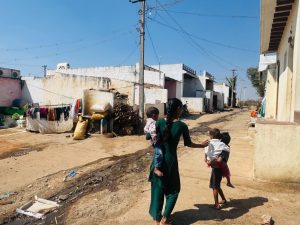
Girls have to help their mothers in the kitchen, tend to younger siblings, and perform other household chores.
The Sphoorthis have noticed it. “Patriarchy here is powerful as it operates without overt violence,” one of them told South First.
“It is imposed through everyday conversations: ‘Don’t talk back’, ‘Don’t laugh loud’, ‘Don’t draw attention’, ‘What will the people say?’ and through small sanctions, like stopping the girls’ tuition, denying a bus pass, forcing to do extra housework, isolating from friends, being watched by male relatives, being blamed for harassment, being told education is ‘unnecessary’,” she outlined the life of a girl in the village.
The Sphoorthis are now speaking up, not for themselves alone, but for other girls too.
Koppal was among the districts with several health markers off and also had child marriages listed. KHPT, set up in 2003 with a focus on reducing the prevalence of HIV in Karnataka, expanded its work to address a wide range of public health issues across the country.
While working on adolescent health, it was found that a community-centric approach was needed to address several structural barriers that were hindering the empowerment of adolescent girls.
“This is where the Sphoorthi comes in,” Dr Satyanarayana Ramanaik said.
“The Sphoorthi – ‘Girls Lead Girls’ model is a community-driven intervention that addresses the root causes of adolescent girls’ vulnerabilities in northeast Karnataka,” he added.
The project is currently being implemented in the seven North Karnataka districts: Belagavi, Bagalkot, Vijayapura, Kalaburgi, Raichur, Yadgir, and Koppal. In Koppal, it is being implemented in 51 villages.
Dr Ramanaik explained the model: “It aims to reduce school dropouts, delay child marriages, improve nutrition, and build collective strength among girls aged 12–16.”
How will it work? “When adolescent girls are equipped with life skills, accurate information and supportive environments, they can make informed choices, like delay their marriage, continue education, and reduce their vulnerability to violence and poor health,” he elaborated.
Dr Ramanaik said Sphoorthi also strengthens the ecosystem around girls.
“The programme focuses on improving parent-daughter relationships and uses a role model girls-to-peer mentoring model to ensure sustainable change,” he added.
The intent is not just individual change, but community shift, Maitreyi Ravikumar, Lead, Women’s Health at KHPT said.
“By embedding gender-transformative content in community structures, Sphoorthi enables girls to access services, assert their rights, and lead social change from within,” she explained.
“Unlike most empowerment models, which are individual-centric, the Sphoorthi model works with multiple stakeholders, particularly parents, community leaders and boys through various samvada — discussion sessions and activities, who are critical for this journey,” Dr Ravikumar explained.
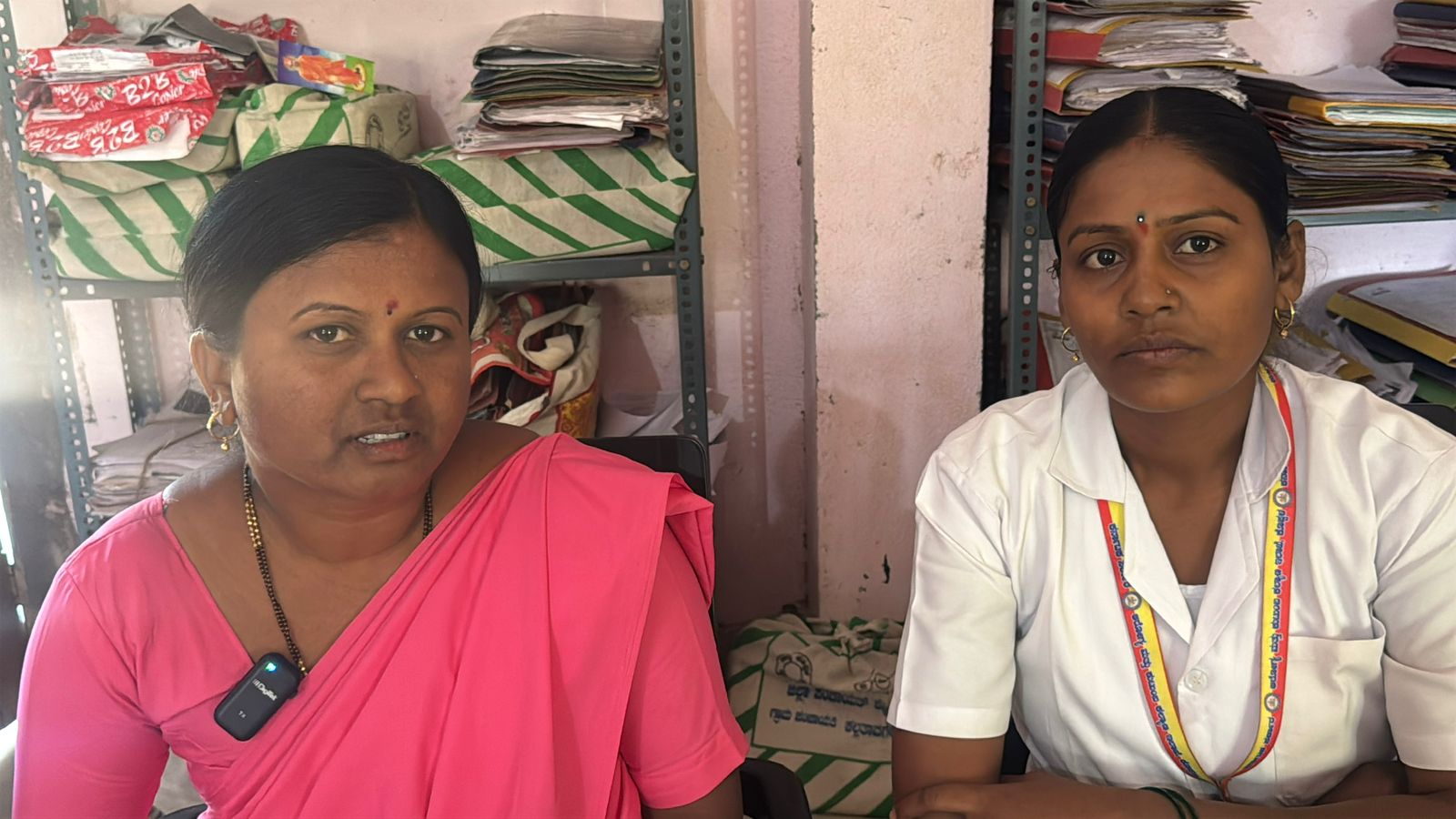
An ASHA worker and an ANM at Kaltavergera Panchayat.
“The model also works by building three dimensions of power: power within the girl by increasing her self-esteem and agency; power with — building support groups and shared aspirations with parents and peers; and power over, which is opportunities for girls to engage public platforms such as gram panchayats to articulate their needs,” she added.
In many villages, the collective now is not dismissed or ignored. It is feared, not by or for violence, but for escalation.
“Before this group was formed, we used to feel very scared,” one girl said. “If we complain, my identity would be revealed, creating trouble for me not just outside but even within my family. Now, we are a group, and we know the legal rights,” she beamed.
Tanushree is just 14. She explained why they move in a group.
“If only one girl goes and talks, they won’t listen,” she said. “They will tell us, ‘You are so young, why do you want to get into all this? Will you pay for the girl’s life?”
She highlighted the common refrain the villages have about girls: “Hennumakkalu bisiyada chendu, udiyalli itkolaak agalla.” (A girl is like a burning coal–keep her with you, and you’ll get burnt). It is something all girls have heard growing up. Many of them believe it, too.
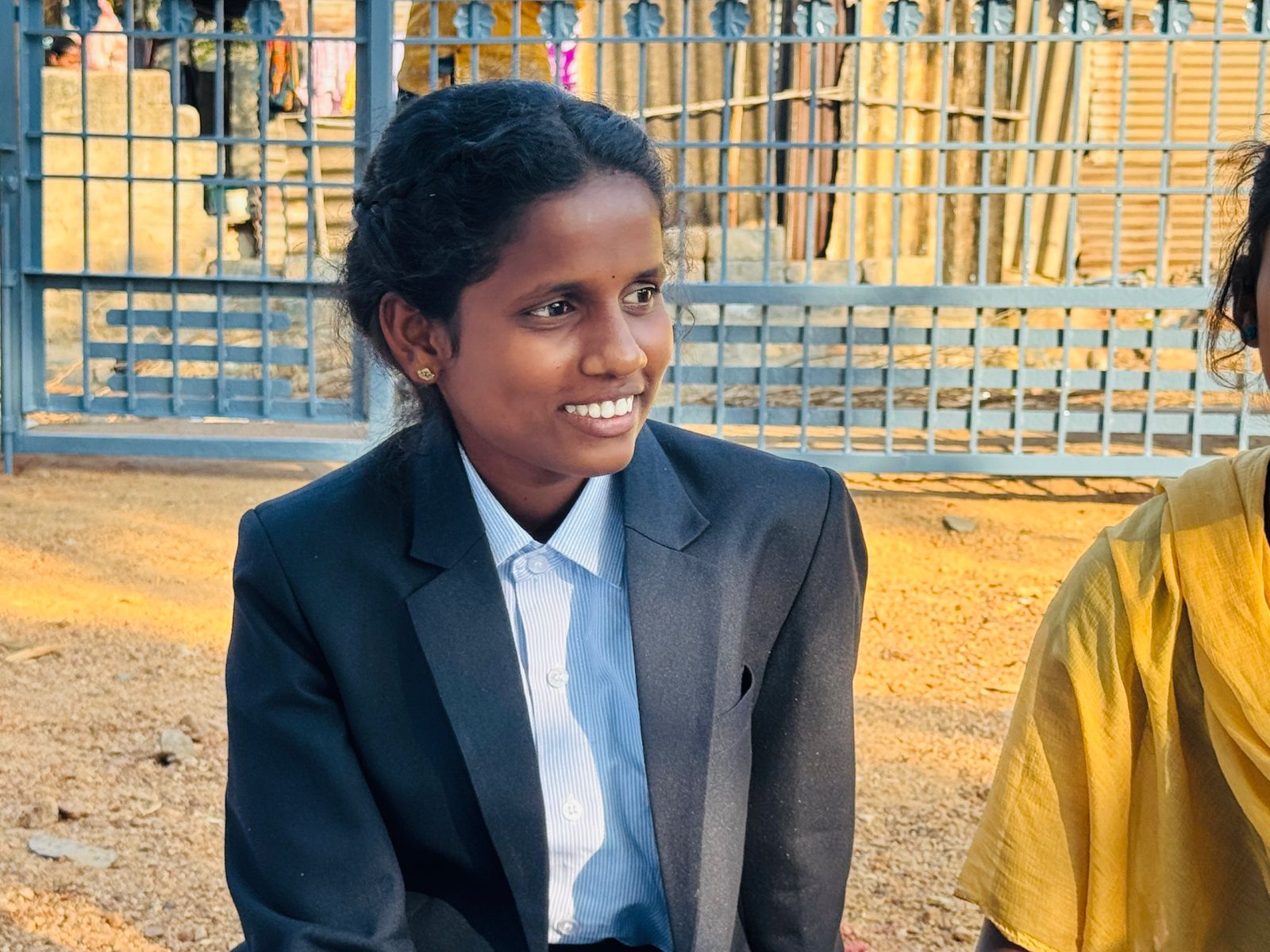
Uma, a ‘barefoot counsellor’ in Ginigera village.
The villages — more specifically, patriarchy — have disguised fear as tradition: a girl framed as danger.
Lakshmi, another Spoorthi girl, said families shift their tone when the Sphoorthis meet them. Somewhere, the village has begun to understand the consequences of child marriages.
“They get worried that one of us will dial the Child Helpline (number), 1098,” she said. “They know it will bring a huge fine and a jail term. So, when we go in a group, they get scared,” she said.
The collective follows an escalation method. First, the girls speak to the families. If dismissed, they involve ward members or panchayat representatives. If that too fails, they call 1098, and the larger child protection machinery steps in.
The system is imperfect, the girls know. Sometimes, even after their intervention, the wedding takes place behind their backs.
Uma, who joined as a Spoorthi girl, is now a counsellor. She almost got married while studying in Class 8. She took a strong stand against it and convinced her grandfather to allow her to study,
She recalled a case where wedding preparations were in full swing: A bus full of relatives, blouse piece at the local tailor, the excuse of a fair. The collective alerted a KHPT worker, and the police intervened and stopped the wedding.
“A week later,” Uma added wryly, “the marriage took place.”
This is the reality the girls work with: temporary wins, and victories requiring constant monitoring.
The girls aren’t alone. They have allies in ASHAs, Anganwadi staff, and school teachers — a wider web of community workers who know how volatile their intervention could be.
Savithri, a public health worker in the Kukkanapally area, said she has stopped four child marriages in her nine-year tenure through community information and 1098 calls.
She also spoke about what followed after one such intervention.
“I couldn’t go to that village for almost a month,” she said. “Parents kept following up, wondering who had given the information. They suspected me. They accused me of ‘spoiling’ their daughter’s life.”
Savithri spoke about the fights, arguments, and even a case of an Anganwadi teacher who had to leave the village. “But now those girls got married only after 18,” she said with the conviction that the risks taken were worthy.
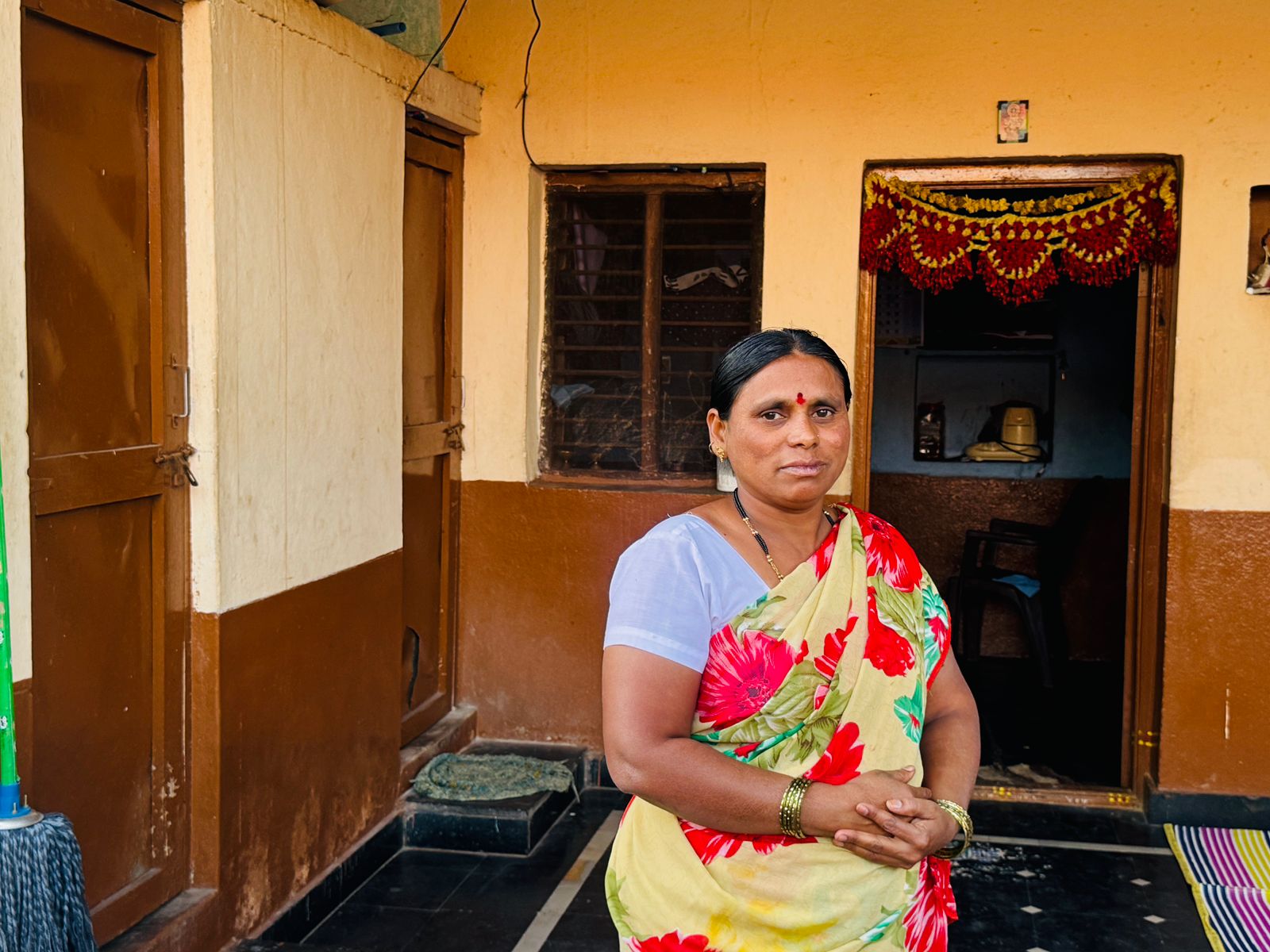
Lakshmi was married before she turned 18. Now she is determined that no girl should have to marry before that age.
Manjula, another community worker, pointed to the anxieties families use to justify early marriage.
“Parents say, when we go for work, children are alone at home. We are worried someone might create trouble – that’s why they get them married. They are scared,” she said.
Fear is weaponised in the villages, where even teenage pregnancy becomes a solution.
She narrated the case of a teenage girl, brought up by her grandmother in abject poverty. The girl became pregnant.
“No abortion,” Manjula said. “They got her married. Her haemoglobin level was only six,” she said, adding that the uteruses of young girls would not be strong.
Headmaster Ambarish Tallur of a government lower primary school in Venkatapura taluk is another fighter against child marriage. Families often approach him for age certificates, which he denies if the child is below 18.
“The families are mostly convinced when I tell them of the medico-legal complication that may arise,” he said. He also pointed to other issues pushing children out of schools: transport is scarce, buses are irregular and crowded, and distances are long.
“If the government can look into these issues, it would be good,” he opined. “Many boys, too, also drop out.”
The girls’ collective, too, repeatedly raised these issues. It is not enough to stop a wedding if a girl has nowhere to go – no high school nearby, no safe transport, no hostel access, no stable family support.
Not all girls need to be coerced into marriages. Some agree, complicating the issue.
They have reasons: Families having “no belief in us”, neighbours’ gossip, or a girl speaking to a boy branded as one with a loose character, or parents fear intercaste relationships, maternal uncles’ pressure on families, insistence by grandparents, illness or death of a parent.
For some others, getting married early is normal, inevitable, or even desirable.
Sangeetha from Ginigera village said she was excited when her marriage was fixed with her maternal uncle, because “several girls were doing the same.”
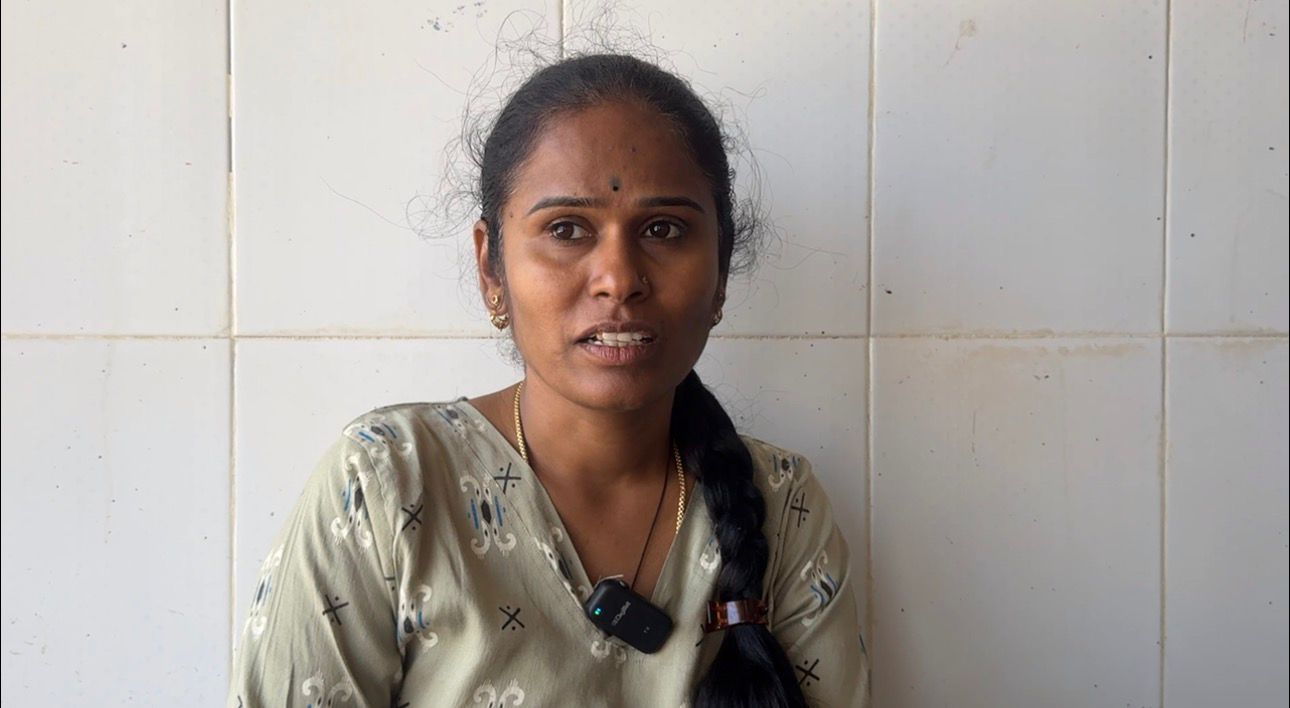
Uma Reddy
Another described how her grandfather’s fear after her mother had abandoned the family became a reason to “lock down” her and her sisters’ futures. The older man feared that the girls, too, would follow their mother’s path.
A young woman, now a counsellor in Ginigera village, said she got married at the age of 13 after she had dropped out of school post-Class 8 and “fell in love” with her maternal uncle.
She spoke of her horrid experience of living in a home where alcoholism and violence reigned. She laughed while narrating it now. Her scarred laughter was a way to survive the memory, and mask the turbulence deep inside her mind.
“My husband and grandparents would start drinking every night. There was no end to their fights and abuses. I was only 13 and didn’t know what was happening around me,” she explained.
“Once, I was so frustrated that I consumed a pesticide,” she said. “They would torture me to work in the fields, at home, and still beat me.”
Fed up, she returned to her mother, cleared the SSLC examination, and is now pursuing a degree. She is one of the Sphoorthis, spurring her to be herself and chase her dreams.
The Sphoorthis also identify girls who are likely to elope. They speak to them about the importance of education, financial independence, and jobs.
It is not perfect. But it is a form of peer governance – girls steering other girls away from desperate decisions.
KHPT said the wedding season spreads across the months of December to May, but March becomes especially crucial since schools vacation creates gaps in supervision.
In some places, mass wedding-like arrangements are made around temple fairs.
“Marriage could take place at midnight,” KPHT programme officer Uma Reddy, in charge of about 150 villages, said. “The preparations, however, begin early. The families need a priest, transport, and relatives. So, the girls watch out for the preparations. They look out for sudden, deep cleaning of houses. They watch for gatherings. They wait for the bus.”
Uma recalled nights when Sphoorthis had called her repeatedly–even at 2 am– worried that if they slept, a wedding might take place.
In Venkatapura village, the girls stopped six weddings in as many families on a single day and convinced the village of the impending legal troubles and the danger to the ‘brides’.
“It was in 2023. Since then, no child marriages have taken place in our village,” Lakshmi, a guest teacher at a lower primary school in Venkatapura, said.
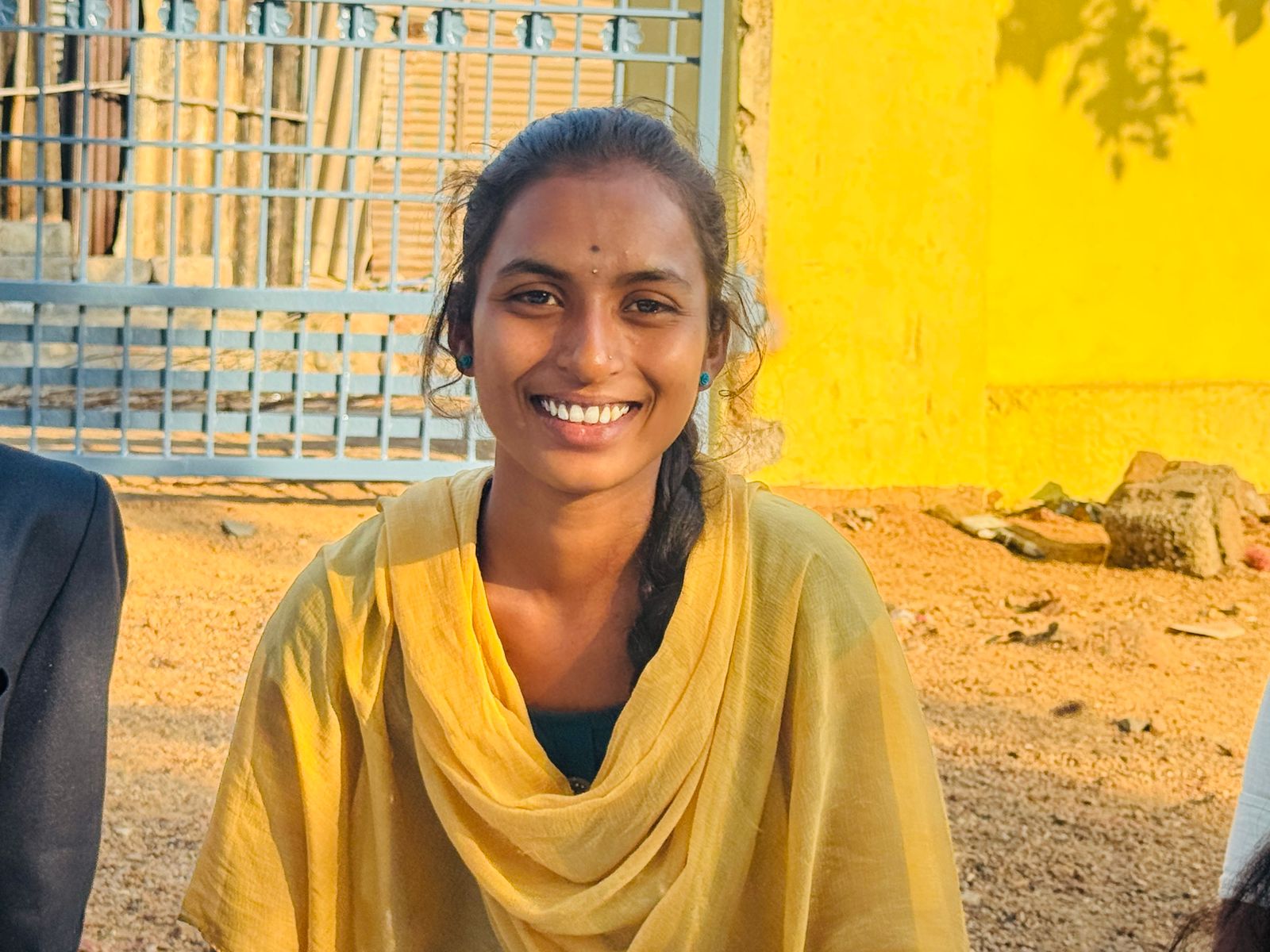
Lakshmi, a Sphoorthi girl.
The most visible change is that child marriage is neither invisible nor spoken about in whispers.
Girls now discuss it openly. They speak about the law, about 1098 (Childline), about risks, about rights, and everything that was earlier unspeakable. Community workers said the helpline number is now familiar, posters are visible, and protocols are more practised.
Some parents and elders have begun reflecting their awareness, though often with riders.
A man in one village said he wants his daughter to complete her degree because it will give her a job. But he hastened to add that his promise could be fragile. If his neighbours report ‘bad behaviour’, he would marry her off.
This is the tug-of-war the collective is engaged in. Progress comes with bargaining, and consent has to be surveilled.
Lakshmi Devi, a young woman in Venkatapura, said it was rare for girls to pursue education once they hit menarche.
“The moment they hit menarche, they will take them away from school,” she said.
Now, some girls stay longer in schools, because families have seen role models, and the village has begun to associate education with dignity, not rebellion.
But inadequacies still bog the girls down. Inadequate transport facilities, poverty, seasonal migration of sugarcane workers, faraway hostels, and the ubiquitous fear-invoking narratives built around girls’ ‘honour’.
A girl can escape a wedding and still be left to live a life with no school or safe transport. The Spoorthy girls are working towards not just stopping child marriages, but also opening up a better future for girls, empowering them to make informed choices.
In Koppal’s lanes, child marriage is often described as tradition, safety, protection, and inevitability.
But the girls describe it as something else: a decision made on their behalf, a gate that closes before they got a glimpse of the road ahead.
The Sphoorthis’ presence is now both disruptive and ordinary: girls in uniforms and half-braided hair showing up at doorsteps, asking questions:
These are the questions men do not want to answer. Women are forced into silence by default.
In villages where silence has traditionally protected child marriage, questions become a form of resistance.
As March proceeds to April and April to May, as fairs begin and wedding season quietly revs up, Spoorthy girls merge into the crowd, like a force in the shadows.
Uma Reddy opined that the State’s Women and Child Welfare Department (WCD) and NGOs in Karnataka must be alert. KHPT has been on alert since last month.
Recently, at Itagi Bheemabika, there were around 30 weddings held over five to six days. NGOs and the WCD department monitored them closely. No child marriage took place, Uma Reddy said.
Hulki is a historical place, and has a significant police presence. KHPT girls, too, visit the place.
“We don’t know when they will tie the mangalsutra. In Kookanpalli, there is the Amreshwara temple, which is a ‘notorious’ spot. Couples who run away from their homes go there to tie the knot. Child marriages, too, are held there. For the next few months, we will be watching Kookanpalli,” she added.
Uma Reddy explained that even if the marriages are mostly held late at night, the Sphoorthis will get alerts.
“They (the families) definitely need a priest. If someone goes to a temple and ties the mangalsutra, it is not automatically accepted as a wedding. They need at least five to six people and a priest to perform the puja,” she added.
Villagers, not individuals, attending a special puja alert the Sphoorthis. It is a sign that portends child marriage.
The girls’ gang is now vigilant and won’t let a single clue slip. Villagers fear them. Still, the girls need arms, which must come from the government. The arms they seek are easy access to education and allied facilities for girls.
(Edited by Majnu Babu).


