


Published Mar 02, 2026 | 3:24 PM ⚊ Updated Mar 02, 2026 | 3:24 PM

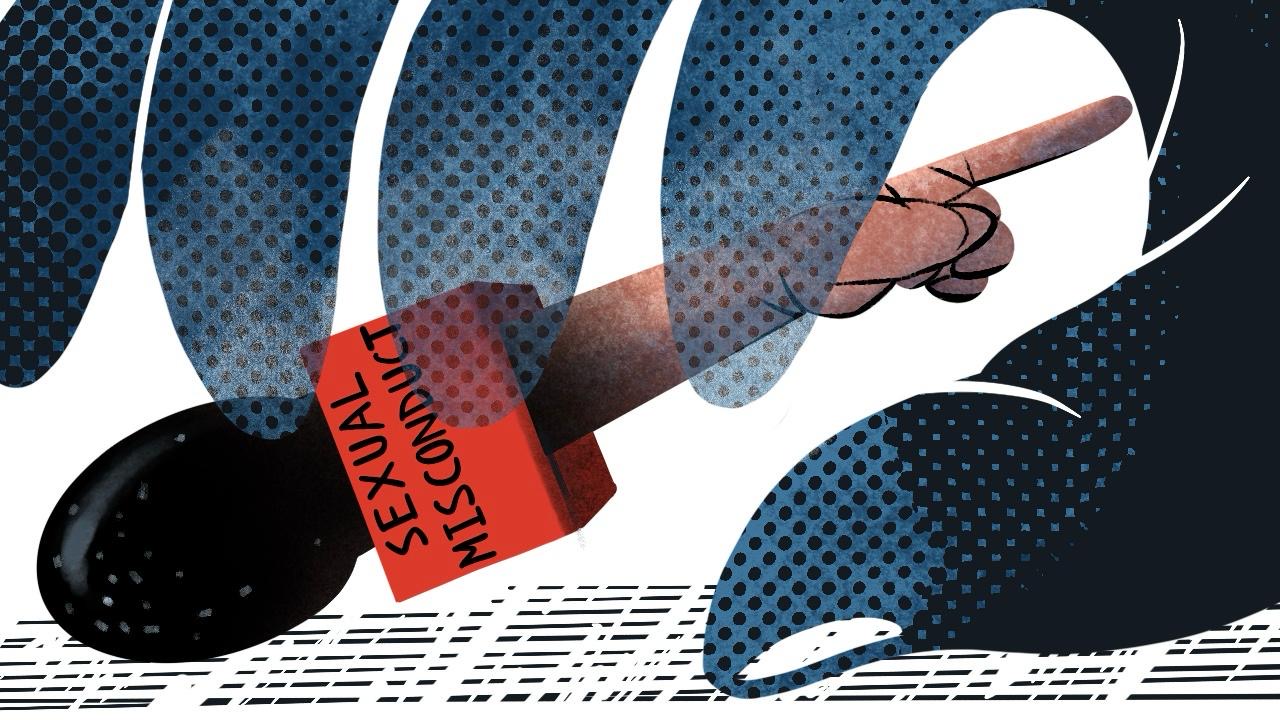
Synopsis: Weeks after the suspension of Karnataka DGP K Ramachandra Rao, following the emergence of videos purportedly showing him engaging in inappropriate acts with a woman in his office, little action has followed apart from a gag order against the media. The official silence and curbs on the press in this case follow a familiar pattern in the state when allegations of sexual misconduct against those in power arise.
A little over a month after K Ramachandra Rao, a DGP-rank IPS officer in Karnataka, courted controversy over an alleged “sex scandal”, the case has largely slipped from public view.
Rao, who was heading the Directorate of Civil Rights Enforcement, was swiftly suspended by the state government pending an inquiry, a day after videos purportedly showing him engaging in inappropriate acts with a woman in his office surfaced on 19 January.
Karnataka Home Minister G Parameshwara said the officer’s dismissal was not out of the question.
“Since we had to take immediate action, we have placed him under suspension without considering the fact that he is a senior officer. Based on the inquiry report, we will take next course of action,” he told reporters.
But since then, little has been said about the status of the probe, whether any support has been extended to the survivor seen in the videos, or what safeguards are to be put in place to prevent a repeat.
The only concrete step to follow was a gag order against the media.
It came after Rao filed a civil suit against two media organisations, TV9 Kannada and News9, seeking restraining orders days after the incident first came to light.
A Bengaluru sessions court granted the request and directed more than 30 media outlets to remove allegedly defamatory content about Rao.
“By means of ex parte temporary injunction, the defendants, their reporters, and anchors or anybody claiming through them are hereby restrained from making, publishing, telecasting, broadcasting, uploading or circulating any news, defamatory comments, statements or allegations or call recordings against the plaintiff in print media, electronic media, television channels, websites, Facebook, Twitter, Instagram, Telegram, WhatsApp, Youtube etc., till next date of hearing,” the judgment reads.
The official silence and curbs on the media are a familiar pattern in the state when allegations of sexual misconduct surface against those in power.
Karnataka has seen repeated instances of politicians and senior officials facing similar allegations, followed by purported footage surfacing on social media.
In one of the first such cases to draw widespread attention, during an Assembly session in 2012, the then Karnataka Minister for Cooperation, Laxman Savadi, was caught watching pornography on his mobile phone while the House was in session.
TV cameramen positioned in the elevated media gallery recorded Savadi, seated in the front row, watching the clips. Within an hour of the session ending, channels broadcast the uncensored visuals.
The then Minister for Ecology, Environment and Ports, J Krishna Palemar, and Women and Child Welfare Minister CC Patil were also captured on camera looking at Savadi’s phone and reacting animatedly.
In the aftermath, Savadi, Patil and Palemar resigned from the cabinet.
But a House committee later cleared Patil and Palemar, citing “lack of evidence”, while Savadi was reprimanded only for using a mobile phone inside the Assembly.
Instead, after the ‘scandal’ broke, the then Speaker, KG Bopaiah, banned private television channels from recording and broadcasting live proceedings of the House. The ban was later lifted, but imposed again in 2019.
Savadi later returned to public office, serving as Karnataka’s eighth Deputy Chief Minister and as Transport Minister from 2019 to 2021 in the fourth B S Yediyurappa ministry.
Then, in 2014, former Chief Minister and BJP leader Sadananda Gowda obtained a temporary injunction restraining the media from telecasting allegations made by a young female actor, who had accused his son, Karthik Gowda, of rape and cheating after promising to marry her.
RT Nagar police in Bengaluru registered an FIR in the case, charging Karthik under Sections 376 (rape), 366 (kidnapping) and 420 (cheating) of the Indian Penal Code.
But in 2016, the Karnataka High Court quashed the criminal proceedings, observing that the circumstances did not show any dishonest or fraudulent intention to deceive the complainant, and calling her case “ambiguous”.
In 2019, too, during his first Lok Sabha election campaign, Bengaluru South MP Tejasvi Surya was accused of sexual harassment by a woman (The Karnataka State Commission for Women later withdrew its complaint after the woman reportedly rubbished the allegations).
He, too, obtained an ex parte injunction, this time against 49 media outlets, restraining them from reporting “any defamatory statement in any manner”.
The move was met with widespread condemnation from news organisations. An editorial in The Hindu called it “poll-time censorship”, while The Indian Express said the gag order “has a chilling effect on the press at a crucial time, robs voters of information, and thereby interferes with the election.”
After much criticism that the order shielded Surya from scrutiny during the campaign, the Karnataka High Court said media outlets were free to publish any news items that were “not defamatory in their opinion”.
Even so, a similar script played out in 2021, when local Kannada television channels aired sexually explicit video and audio clips of a purported relationship between the then Water Resources Minister, Ramesh Jarkiholi, and a young, unidentified woman.
Jarkiholi was accused of seeking sexual favours in return for a government job. He resigned from the cabinet after protests and criticism from the opposition and sections of society (An SIT later gave him a clean chit, noting there was “no evidence” to prove the allegations.)
Again, the initial response included curbs on the media.
When the clips surfaced, a City Civil Court in Bengaluru temporarily restrained 68 media houses from telecasting or publishing any defamatory news, or showing footage or images related to six BJP leaders in the then BS Yediyurappa cabinet: Health Minister Sudhakar K, Labour Minister Shivaram Hebbar, Agriculture Minister B C Patil, Co-operation Minister H T Somashekar, Youth Empowerment and Sports Minister Narayan Gowda, and Urban Development (excluding Bengaluru) Minister Byrathi Basavaraj.
They said some media houses were reporting that around 19 other CDs contained alleged ‘sex scandals’ involving MLAs and ministers.
All six ministers, along with Jarkiholi, were among the 17 MLAs whose defection from the JD(S)-Congress coalition in 2019 helped BS Yediyurappa topple the HD Kumaraswamy government and return as Chief Minister.
In Ramachandra Rao’s case, the Karnataka State Commission for Women demanded a probe under the Sexual Harassment of Women at Workplace (Prevention, Prohibition and Redressal) (POSH) Act, 2013.
“The conduct of the senior police officer who is entrusted with the responsibility of protecting women creates a sense of insecurity among women and sends a wrong message to civil society,” the commission said, adding that the matter squarely attracts provisions of the POSH Act.
Women’s rights activists have backed the call for stronger institutional safeguards.
KS Vimala of the All India Democratic Women’s Association (AIDWA) said that while courts may be legally justified in granting injunctions, the consequences can be serious.
“Offenders may take shelter under such orders and go scot-free,” she said, stressing that Internal Committees under the POSH Act must be formed in all workplaces and implemented in letter and spirit.
But the legal position on institutional accountability is unsettled.
In September 2025, the Supreme Court upheld a Kerala High Court order holding that political parties are not required to constitute Internal Complaints Committees under the POSH Act – a ruling that activists say exposes gaps in accountability within political structures.
In a 2024 blogpost, Journalist Rituparna Chatterjee, a member of the Network of Women in Media, India (NWMI), wrote:
“The apparent absence of policies within most political parties to address such crimes, together with the lack of a zero tolerance approach for such behaviour, have over the decades enabled a culture of power-enforced toxic masculinity in political life.”
She pointed out that the now suspended JD(S) MP Prajwal Revanna was allowed to contest the Hassan Lok Sabha seat in 2024 even after allegations of sexual abuse were conveyed to Union Home Minister Amit Shah in a letter dated 8 December 2023 from BJP leader Devaraje Gowda.
Revanna, too, reportedly obtained a gag order against 86 media organisations in June 2023, anticipating the leak of explicit videos and photographs.
That was among the earliest public references to the material, which was later circulated on pen drives and across social media in Hassan district ahead of the following year’s Lok Sabha elections.
In a statement in 2020, the NWMI criticised what it called a growing trend of “powerful men seeking gag orders on the media” in sexual assault and harassment cases.
Detailing such instances, the group said:
“It would result in serious miscarriage of justice if powerful and influential men of means manage to take refuge in laws designed to protect women by flouting all tenets of a fair trial and abusing the justice system. Anonymity is given by law to a woman survivor, and not to hide the misdeeds of a male accused.”
(Edited by Dese Gowda)


