

Published Apr 28, 2026 | 4:53 PM ⚊ Updated May 12, 2026 | 11:44 AM

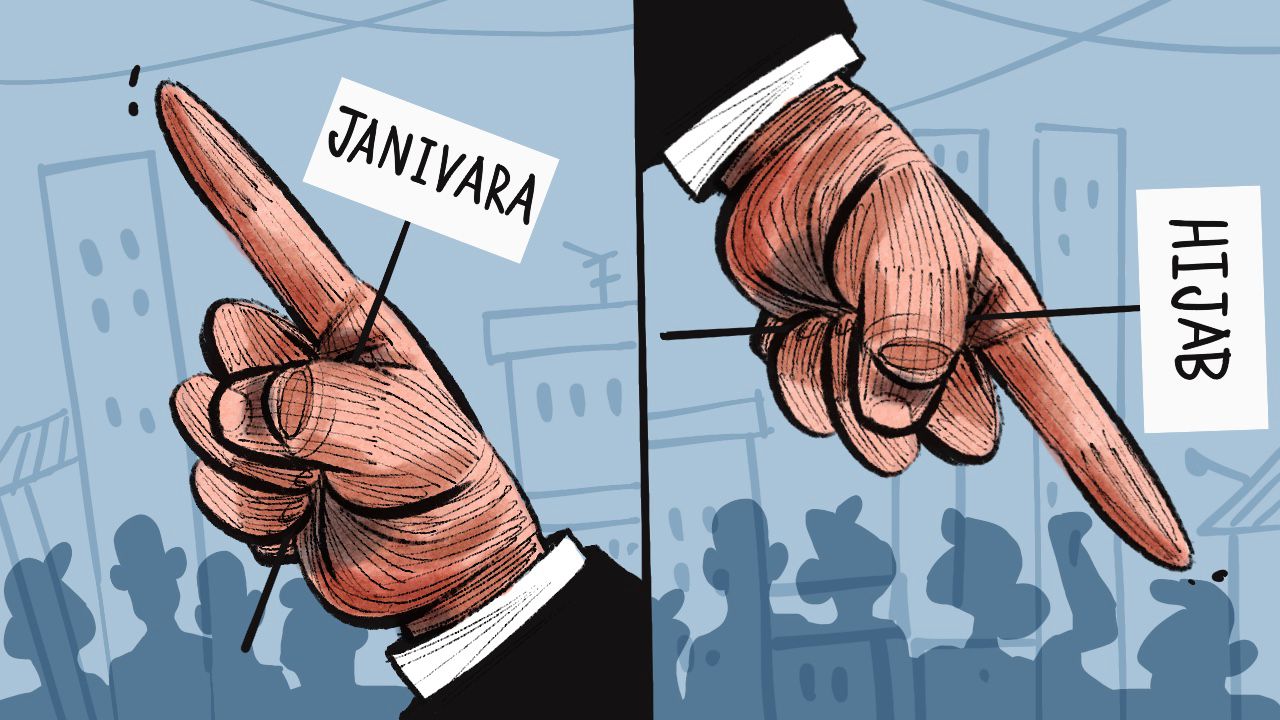
The incidents have been politicised with BJP accusing Congress government of being "anti-Hindu."

Synopsis: Karnataka’s CET exam saw controversy after students in Bengaluru were allegedly forced to remove their sacred threads despite KEA guidelines. Staff were suspended and arrested, with a probe calling the act “intentional.” The incident contrasts with Karnataka’s unresolved hijab ban, which led to mass dropouts and remains pending before the Supreme Court, highlighting inconsistent state responses to religious identifiers in education.
Over the past few days, Karnataka has seen another flashpoint over exam dress codes—this time involving the janivara (sacred thread). On the first day of the Common Entrance Test (CET) last week, three students were allegedly asked by staff at a college in Koramangala to remove their sacred threads before entering the examination hall.
This was despite explicit instructions from the Karnataka Examinations Authority (KEA) that students should not be compelled to remove religious identifiers.
At Krupanidhi PU College in Bengaluru, staff are accused of enforcing such a restriction anyway. The incident, reported on 24 April, prompted swift action: the staff involved were suspended and arrests followed within two days. An FIR has since been filed against the staff for allegedly hurting religious sentiments, based on a complaint lodged by the students’ parents.
While further inquiry is underway, the episode is markedly different from a similar conflict over dress code that erupted over four years ago under the BJP-led government.
In December 2021, six students at a government women’s PU college in Udupi staged a protest after being barred from attending classes while wearing the hijab. In that instance, no comparable action was taken against college authorities for restricting students’ religious attire.
Also Read: Hijab then, Janivara now: Students asked to remove ‘thread’ at exam centres, probe ordered
This is not the first instance of students being allegedly asked to remove their janivaras in educational institutions or ahead of examinations.
In April 2025, students appearing for CET in Bidar and Shivamogga were allegedly asked to remove their sacred threads before appearing for the exam.
In Bidar, the student reportedly left the centre without writing the exam after he was asked to remove his sacred thread. Following these incidents, the KEA had issued instructions not to force any students to remove any religious identification or symbol.
In the current case, a panel constituted by Bengaluru Urban Deputy Commissioner Jagadeesha G to probe the incident, submitted its report to the government on Monday.
While addressing the media on Monday, Jagadeesha stated that the college staff who were deputed for CET duty forced the students to remove their sacred thread despite giving the staff training on dress code and appointing a separate dress code officer.
The panel’s prima facie findings termed the act “intentional” and recommended that the KEA refrain from designating the college as an examination centre in the future.
The incident has since been politicised with BJP accusing Congress government of being “anti-Hindu.”
“Congress, alias the modern Muslim League government in the state, has unofficially implemented Sharia law. On one side, the government changed the school timings of Urdu medium schools during the month of Ramzan. On the other hand, in the name of examination checking, it is allowing the removal of mangalsutra and cutting of janivara,” Leader of the Opposition in the Karnataka Assembly, R Ashoka, alleged in a post on X.
Also Read: Udupi: Guest teacher terminated after allegedly making students remove their janivaras
The state’s response to a similar question of religious expression in classrooms has not always followed this trajectory. During the row over restrictions on hijab in educational institutions, most police action was directed at students who resisted the ban and staged protests outside their colleges.
The issue began in December 2021, when students at a government PU college in Udupi were denied entry for wearing the hijab. In January 2022, one of the students moved Karnataka High Court seeking a declaration that wearing a hijab is a fundamental right guaranteed under Article 14 and 25 of the Constitution of India.
The next month, the government issued an order prohibiting Muslim girl students from wearing the hijab in classrooms, stating that “clothes which disturb equality, integrity and public law and order should not be worn”. Even as the High Court was hearing the case, students continued to resist the ban and entered classrooms while wearing hijab.
In one such incident in Tumakuru, the Principal of Empress College of Tumakuru lodged a complaint with the Tumakuru City Police against 15 to 20 students for violating prohibitory orders – the first such FIR against students for protesting against college administrations seeking permission to attend classes with hijab.
In March 2022, the High Court upheld the ban, stating that wearing a hijab did not qualify as an essential religious practice and is not protected under the right to freedom of religion guaranteed under Article 25 of the Constitution of India. The verdict was challenged in the Supreme Court, which delivered a split verdict in October 2022.
Nearly four years later, the matter remains pending before the Supreme Court, having been referred to a larger bench. The absence of a final ruling has left students in a state of uncertainty.
A 2023 report by People’s Union for Civil Liberties (PUCL) found that Muslim girl students were not only actively prevented from accessing their right to education but also faced humiliation and harassment in classrooms at the hands of the faculty, college administration, and classmates.
It noted that the government’s response in the 2022 monsoon session of the Karnataka Legislative Assembly revealed that a total of 1,010 hijab-wearing girls dropped out of PU colleges “because of the hijab ban and other reasons as well.” While the Siddaramaiah-led Congress government had initially promised to revoke the ban on hijab, it is yet to take a final call.
In late 2023, the CM announced that had directed the withdrawal of the ban order. However, in 2025, School Education and Literacy Minister Madhu Bangarappa said that the state government had not decided on the issue as the case was before the Supreme Court.



